

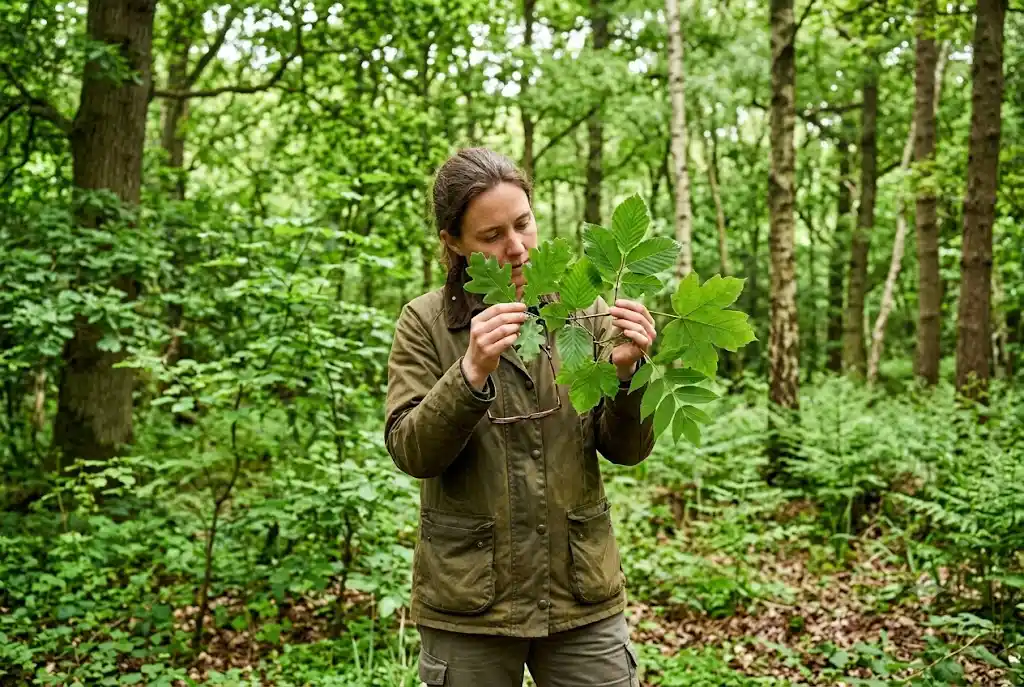
Being able to identify a tree by leaf is one of the most practical skills for anyone interested in arboriculture, gardening, or countryside exploration in the UK. Whether you’re a homeowner managing your landscape or a professional working with trees, understanding leaf structure offers a reliable starting point for recognising species quickly and accurately.
This guide explains how to identify tree leaves, distinguish species, and build confidence using a structured, observation-based approach suitable for British environments.
Why Leaf Identification Matters
Leaves are among the most distinctive features of a tree. Unlike bark or branching patterns that can vary with age and environment, leaves often provide consistent clues about a tree’s identity.
Learning to identify a tree by its leaves is particularly useful during spring and summer, when foliage is fully developed. It also complements other techniques such as identify tree by bark, especially during winter months.
Key Features to Observe When Identifying Tree Leaves
1. Leaf Shape
The overall shape of a leaf is one of the first things to examine. In the UK, common shapes include oval, lobed, heart-shaped, and needle-like.
For example, oak trees are recognised by their lobed leaves, while beech trees have smooth, oval-shaped leaves with slightly wavy edges.
2. Leaf Arrangement
Look at how leaves grow on the twig:
- Alternate: Leaves grow one at a time along the stem.
- Opposite: Leaves grow in pairs directly across from each other.
This distinction is critical when trying to classify trees accurately and narrow down possibilities.
3. Leaf Margins
The edges of leaves vary significantly:
- Smooth (entire)
- Serrated (toothed)
- Lobed
These details help refine identification when combined with shape and arrangement.
4. Leaf Size and Texture
Texture can range from glossy and waxy to rough or hairy. Size also matters, as some species consistently produce small, delicate leaves while others have large, broad ones.
Common British Trees and Their Leaves
Understanding local species is key to building identification skills. Here are a few examples commonly found across the UK:
- Oak: Deeply lobed leaves with rounded edges.
- Maple: Distinctive palmate leaves with pointed lobes.
- Silver Birch: Small triangular leaves with serrated edges.
- Sycamore: Broad leaves with five lobes.
If you want a deeper understanding of tree structures and classifications, exploring facts about trees can provide valuable context.
Using Leaf Identification Alongside Other Methods
While leaves are highly useful, relying on them alone can sometimes lead to confusion, especially between similar species. That’s why professionals often combine multiple techniques.
For example, pairing leaf analysis with bark observation (see identify tree by bark) or considering seasonal changes can significantly improve accuracy.
Understanding growth patterns is also helpful when learning how to distinguish trees in more complex environments such as woodlands or managed landscapes.
Seasonal Considerations in the UK
In the UK climate, leaves change throughout the year. Spring brings fresh growth, summer shows full maturity, and autumn introduces colour variation before leaves fall.
During winter, identification becomes more challenging, which is why arborists rely more heavily on bark, buds, and branching structures.
If you’re planning tree planting alongside identification, understanding the best time to plant trees in the UK can help you work more effectively with seasonal cycles.
Tools and Resources for Tree Identification
Modern identification doesn’t rely solely on memory. You can use:
- Field guides specific to British trees
- Mobile apps for quick recognition
- Local arboricultural resources
A helpful starting point is the Woodland Trust’s British tree guide, which provides detailed information on native species.
When to Consult a Professional Arborist
In some cases, especially for property management or safety concerns, professional advice is essential. Misidentifying a tree can lead to improper care or legal issues.
If you’re unsure, consider consulting arborists near me who can provide expert identification and guidance tailored to your local environment.
Final Thoughts
Learning to identify a tree from its leaf is a valuable skill that improves with practice. By focusing on shape, arrangement, and texture, you can quickly narrow down species and build long-term knowledge.
Combined with other techniques and a solid understanding of British tree characteristics, leaf identification becomes an essential part of arboricultural expertise in the UK.
