

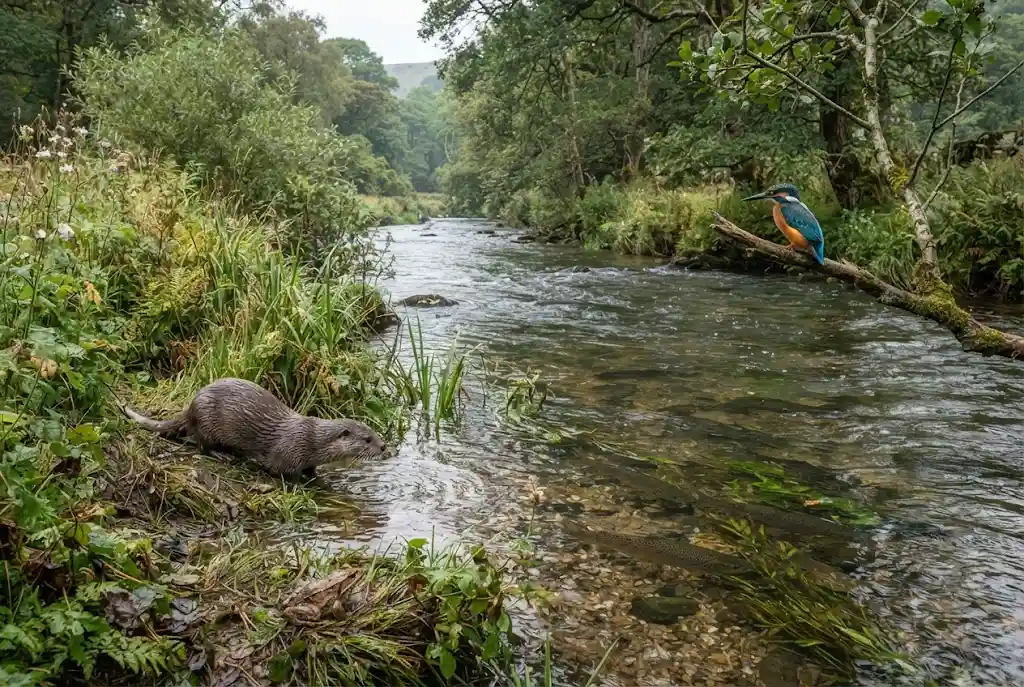
An animal river is more than a flowing body of freshwater. Rivers create complex habitats where mammals, fish, amphibians, reptiles, birds, insects, and countless smaller organisms interact with water, vegetation, riverbanks, and surrounding land. These freshwater ecosystems support wildlife throughout their entire length, from mountain streams and woodland rivers to broad lowland channels and floodplain wetlands.
Understanding river animals helps explain why freshwater conservation matters. A healthy river provides food, shelter, breeding areas, drinking water, migration routes, and connections between different habitats. When rivers become polluted, fragmented, overused, or physically altered, the effects can spread across the wider ecosystem.
What Is an Animal River Habitat?
The phrase animal river can be understood as a river environment that supports animal life. Rivers are dynamic habitats because water levels, temperature, flow speed, oxygen levels, vegetation, and sediment can change throughout the year.
Different parts of a river can support very different wildlife. Fast-moving headwaters may favour animals adapted to cold, oxygen-rich water, while slower sections can provide suitable conditions for fish, waterbirds, amphibians, and aquatic invertebrates. Riverbanks also create important terrestrial habitats where animals can feed, shelter, nest, or move between ecosystems.
This means river conservation cannot focus only on the water channel. The surrounding vegetation, floodplains, wetlands, woodland, and banks can all contribute to a functioning river ecosystem.
Types of River Wildlife
River wildlife includes an exceptionally broad range of species. Some spend almost their entire lives in water, while others depend on rivers only for food, drinking water, breeding, or seasonal movement.
Fish
Fish are among the most recognisable animals associated with rivers. Species vary considerably depending on water temperature, flow, depth, oxygen availability, food sources, and geographic location.
Some river fish prefer fast-flowing water, while others are better suited to slower pools and floodplain environments. Fish also form important parts of aquatic food webs, providing food for larger fish, birds, reptiles, and mammals.
Amphibians
Frogs, toads, newts, and other amphibians frequently depend on freshwater habitats for reproduction. Many species lay eggs in or close to water, while adults may spend considerable time in surrounding vegetation or damp ground.
Because amphibians can be sensitive to changes in water quality and habitat conditions, their presence can provide useful information about the health of particular freshwater environments.
Reptiles
Some reptiles are closely associated with rivers, streams, lakes, and wetlands. Depending on the region, river environments may provide habitat for turtles, terrapins, snakes, crocodilians, and other reptiles.
These animals can occupy different ecological roles. Some hunt fish and amphibians, while others feed on vegetation or smaller organisms. Their dependence on aquatic and shoreline habitats makes riverbank conservation important.
Birds
Rivers provide feeding and nesting opportunities for many bird species. Kingfishers, herons, ducks, geese, waders, and other water-associated birds can use rivers and their surrounding habitats.
Birds may feed directly in shallow water, search riverbanks for insects and small animals, or use rivers as part of wider migration and movement routes. Trees and vegetation along riverbanks can also provide valuable nesting and resting sites.
Mammals
Several mammals depend heavily on freshwater environments. Otters are closely associated with rivers and streams, while beavers can actively alter waterways by constructing dams and creating wetland habitats.
Other mammals may visit rivers primarily to drink or feed. Large herbivores, for example, can use river corridors as reliable sources of water and vegetation, particularly during dry periods.
Names of Animals in Water
When people search for names of animals in water, they may be thinking about both freshwater and marine species. However, river ecosystems have their own distinctive communities.
Common examples of animals associated with freshwater include:
- Fish
- Frogs
- Newts
- Turtles and terrapins
- Otters
- Beavers
- Kingfishers
- Herons
- Waterfowl
- Dragonfly larvae
- Freshwater mussels
- Crayfish
- Aquatic insects
However, a river community is much larger than this visible list. Microscopic organisms, worms, crustaceans, molluscs, insect larvae, and other small creatures form essential parts of the ecosystem. Many of these organisms provide food for fish and birds while helping process organic material in the water.
Wetland Organisms and River Ecosystems
Rivers frequently interact with wetlands, particularly where seasonal flooding creates marshes, floodplain pools, reedbeds, and other areas of shallow water. These environments support a wide variety of wetland organisms.
Wetlands can act as feeding grounds, breeding areas, nurseries, and refuges. Plants such as reeds and aquatic vegetation provide structure, while shallow water can support amphibians, insects, fish, birds, and numerous microscopic organisms.
The connection between rivers and wetlands is especially important because water naturally moves across landscapes. During periods of high rainfall, rivers may overflow into floodplains. These temporary changes can redistribute nutrients, create feeding opportunities, and provide breeding habitats for certain species.
Why Riverbanks Matter to Wildlife
A river should not be viewed as an isolated strip of water. The land alongside it can be just as important for wildlife.
Vegetated riverbanks can provide shade, nesting locations, food, shelter, and movement corridors. Trees can also help regulate water temperature by reducing direct sunlight, while roots can stabilise soil and reduce erosion.
Dense vegetation creates additional habitat for insects and small mammals, which in turn provide food for birds and predators. In this way, the riverbank becomes part of a wider ecological network.
How River Pollution Affects Animals
Pollution can affect river wildlife in several ways. Chemicals, untreated wastewater, excess nutrients, plastics, sediment, and other contaminants can alter water quality and damage habitats.
Changes in water quality may affect animals directly through exposure or indirectly by reducing food availability. Excess nutrients, for example, can contribute to ecological changes that reduce oxygen levels in water. Fish and other aquatic organisms may then struggle to survive.
Plastic pollution can create additional risks when animals ingest waste or become entangled in it. Preventing pollutants from entering waterways is therefore an important part of freshwater conservation.
Other Threats to River Wildlife
Pollution is only one challenge facing freshwater animals. River ecosystems can also be affected by dams, channel modification, water abstraction, invasive species, habitat destruction, climate change, and the removal of natural vegetation.
Physical barriers can be particularly important for species that migrate along rivers. Some fish need to move between different parts of a river during their life cycle. If those routes become blocked, breeding and feeding patterns can be disrupted.
Reduced water flow can create similar problems. Rivers need sufficient water to maintain suitable conditions for aquatic organisms and the habitats connected to them.
How Healthy Rivers Support Biodiversity
A healthy river normally contains a mixture of habitats rather than one uniform channel. Deep pools, shallow areas, gravel beds, muddy sections, vegetation, fallen wood, and connected floodplains can each provide different ecological opportunities.
This habitat diversity allows more species to coexist. A fish may use a deep pool for shelter, while aquatic insects occupy gravel on the riverbed and birds feed along shallow margins. Mammals may use the bank vegetation as cover, creating a connected community across water and land.
River ecosystems can therefore contribute significantly to wider biodiversity. Protecting them also helps preserve the ecological relationships that connect freshwater habitats with forests, grasslands, and wetlands.
Protecting River Wildlife
Protecting river animals starts with maintaining clean, connected, and naturally functioning waterways. Practical conservation measures can include reducing pollution, protecting riverbank vegetation, restoring damaged habitats, improving fish passage, controlling invasive species, and managing water abstraction responsibly.
Wetland protection is equally important because rivers and wetlands often function as connected systems. Conserving wetland organisms and their habitats can strengthen the resilience of entire freshwater landscapes.
Public awareness also has a role. People can help by avoiding littering near waterways, disposing of chemicals responsibly, respecting wildlife habitats, and supporting well-managed conservation initiatives.
The Connection Between Rivers and Forest Wildlife
River corridors often pass through woodland and forest environments, creating ecological connections between freshwater and terrestrial habitats. Animals that live in forests may visit rivers for water, food, or movement, while aquatic species can depend on organic material falling from surrounding vegetation.
This relationship shows why it is useful to study what types of animals live in the forest when considering freshwater biodiversity. Forests and rivers are not always separate ecological systems; in many landscapes, they function together.
Why River Conservation Matters
Rivers support much more wildlife than people see at the surface. Fish, amphibians, reptiles, birds, mammals, insects, molluscs, and microscopic organisms can all form interconnected communities around freshwater.
Protecting an animal river habitat therefore means protecting the entire system that supports these species. Clean water, healthy banks, natural vegetation, functioning wetlands, and connected habitats all contribute to resilient freshwater ecosystems.
As pressure on freshwater resources increases, understanding river wildlife becomes increasingly important. Conservation efforts that protect both waterways and their surrounding habitats can help ensure that rivers continue to support diverse animal communities for generations to come.
For reliable information about freshwater habitats and aquatic biodiversity, readers can consult resources from the Environment Agency, which has responsibilities relating to England’s water environment and environmental protection.

2 Comments
Pingback: What Types of Animals Live in the Forest? Wildlife Guide
Pingback: UK Rainforest Map: Where Britain's Rainforests Are Found