

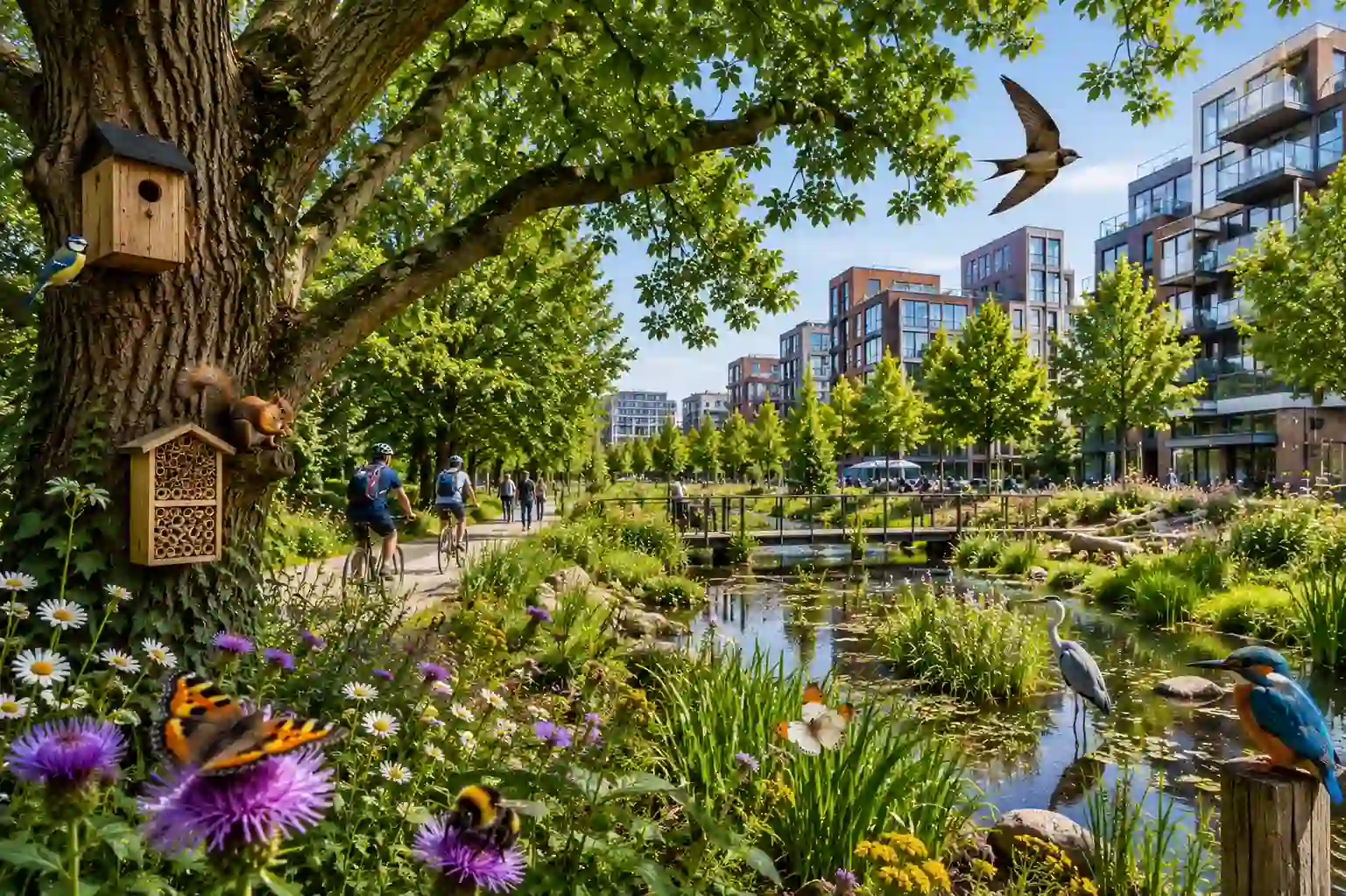
Biodiversity conservation has become one of the most important environmental priorities in modern urban planning. As towns and cities continue expanding across the UK, natural habitats are increasingly affected by development, pollution, climate change, and infrastructure growth.
Urban biodiversity conservation focuses on protecting and strengthening ecosystems within built environments by preserving wildlife habitats, supporting native species, expanding green infrastructure, and maintaining healthy urban forests.
Modern cities are no longer viewed solely as spaces for housing and infrastructure. Increasingly, urban environments are being designed to support healthier ecosystems, improve environmental resilience, and create more sustainable living conditions for both people and wildlife.
What Is Urban Biodiversity Conservation?
Urban biodiversity conservation involves protecting the variety of plant and animal life that exists within towns, cities, parks, urban forests, waterways, and green spaces.
Conservation strategies often focus on:
- Protecting wildlife habitats
- Preserving mature trees
- Supporting pollinator populations
- Expanding urban green spaces
- Restoring ecological corridors
- Promoting native species planting
- Reducing habitat fragmentation
These efforts help create healthier urban ecosystems that remain environmentally resilient over the long term.
Why Biodiversity Matters in Cities
Biodiversity supports ecosystem stability and environmental health. Healthy ecosystems help regulate climate conditions, improve air quality, support pollination, manage water systems, and strengthen resilience against environmental stress.
Urban biodiversity contributes to:
- Healthier ecosystems
- Improved air quality
- Climate resilience
- Flood reduction
- Pollinator protection
- Public wellbeing
- Environmental sustainability
Many local authorities now integrate biodiversity planning into wider urban environmental sustainability policies.
Urban Trees Play a Central Role
Healthy urban trees are among the most important components of biodiversity conservation in cities.
Trees provide:
- Nesting habitats
- Food sources for wildlife
- Pollinator support
- Shade and cooling
- Ecological connectivity
- Improved environmental conditions
Mature trees are especially valuable because they support complex ecosystems that younger trees cannot immediately replace.
Many councils and developers now prioritise tree conservation and canopy protection within urban planning strategies.
Pollinators and Urban Ecosystems
Pollinators such as bees, butterflies, moths, and hoverflies are essential for maintaining healthy ecosystems and food production systems.
Urban biodiversity conservation helps protect pollinators by supporting:
- Flowering tree species
- Native vegetation
- Wildflower habitats
- Green corridors
- Pesticide reduction strategies
Many biodiversity-focused landscaping projects now integrate native tree species because they often provide stronger ecological support for local pollinator populations.
Habitat Fragmentation Is a Growing Challenge
Urban expansion can divide ecosystems into isolated areas, making it difficult for wildlife populations to move safely between habitats.
Habitat fragmentation can reduce:
- Wildlife mobility
- Pollinator activity
- Genetic diversity
- Ecosystem stability
- Long-term biodiversity resilience
Urban biodiversity conservation strategies increasingly focus on creating connected green infrastructure systems through:
- Tree-lined streets
- Urban forests
- Green roofs
- Park corridors
- Wildlife-friendly landscaping
These ecological connections help strengthen urban ecosystem resilience.
Climate Change Is Increasing Environmental Pressure
Climate change is placing growing pressure on urban ecosystems throughout the UK. Rising temperatures, stronger storms, prolonged drought periods, and changing rainfall patterns all affect biodiversity and environmental stability.
Healthy urban ecosystems help improve climate resilience by:
- Reducing urban heat island effects
- Supporting flood management
- Improving carbon storage
- Protecting wildlife habitats
- Strengthening ecosystem adaptability
The evolving UK arboriculture industry increasingly prioritises biodiversity protection as part of climate adaptation planning.
Green Infrastructure Supports Biodiversity
Green infrastructure refers to interconnected natural and semi-natural systems integrated into urban environments.
Examples include:
- Urban forests
- Parks and green spaces
- Rain gardens
- Street trees
- Green roofs and walls
- Sustainable drainage systems
Well-designed green infrastructure improves environmental quality while supporting wildlife habitats and ecological stability.
Many cities now combine biodiversity planning with wider urban forestry benefits programmes.
The Importance of Sustainable Urban Planning
Urban biodiversity conservation is becoming increasingly important within planning and development sectors.
Developers and environmental planners now frequently integrate:
- Habitat protection measures
- Tree retention strategies
- Biodiversity net gain planning
- Ecological impact assessments
- Climate-resilient landscaping
Many projects also rely on environmental impact assessment processes to reduce ecological damage during development.
Technology Is Improving Biodiversity Monitoring
Modern conservation and urban forestry increasingly rely on digital tools to monitor ecosystems and improve biodiversity planning.
Common technologies now used include:
- GIS habitat mapping
- Drone wildlife surveys
- Remote environmental sensors
- Digital tree inventories
- Biodiversity monitoring software
Many organisations now use digital tools for arborists to improve long-term ecosystem management and environmental planning.
Why Professional Tree and Landscape Management Matters
Maintaining healthy urban ecosystems requires ongoing professional management. Poor maintenance, habitat destruction, or unnecessary tree removal can weaken biodiversity and reduce ecosystem resilience.
Professional arborists providing professional tree care help maintain healthy urban tree populations that support wildlife habitats and environmental sustainability.
Long-term biodiversity protection depends heavily on sustainable tree management and environmentally responsible urban planning.
The Future of Urban Biodiversity Conservation
As urban populations continue growing, biodiversity conservation will become even more important for maintaining healthy and sustainable cities.
According to the Woodland Trust, protecting urban trees and green spaces plays a major role in supporting biodiversity, climate resilience, and public wellbeing.
Future urban planning strategies are likely to place even greater emphasis on:
- Urban canopy expansion
- Native species planting
- Wildlife-friendly infrastructure
- Climate-resilient green spaces
- Long-term ecosystem restoration
By investing in urban biodiversity conservation today, communities can help create greener, healthier, and more environmentally resilient cities for future generations.
