

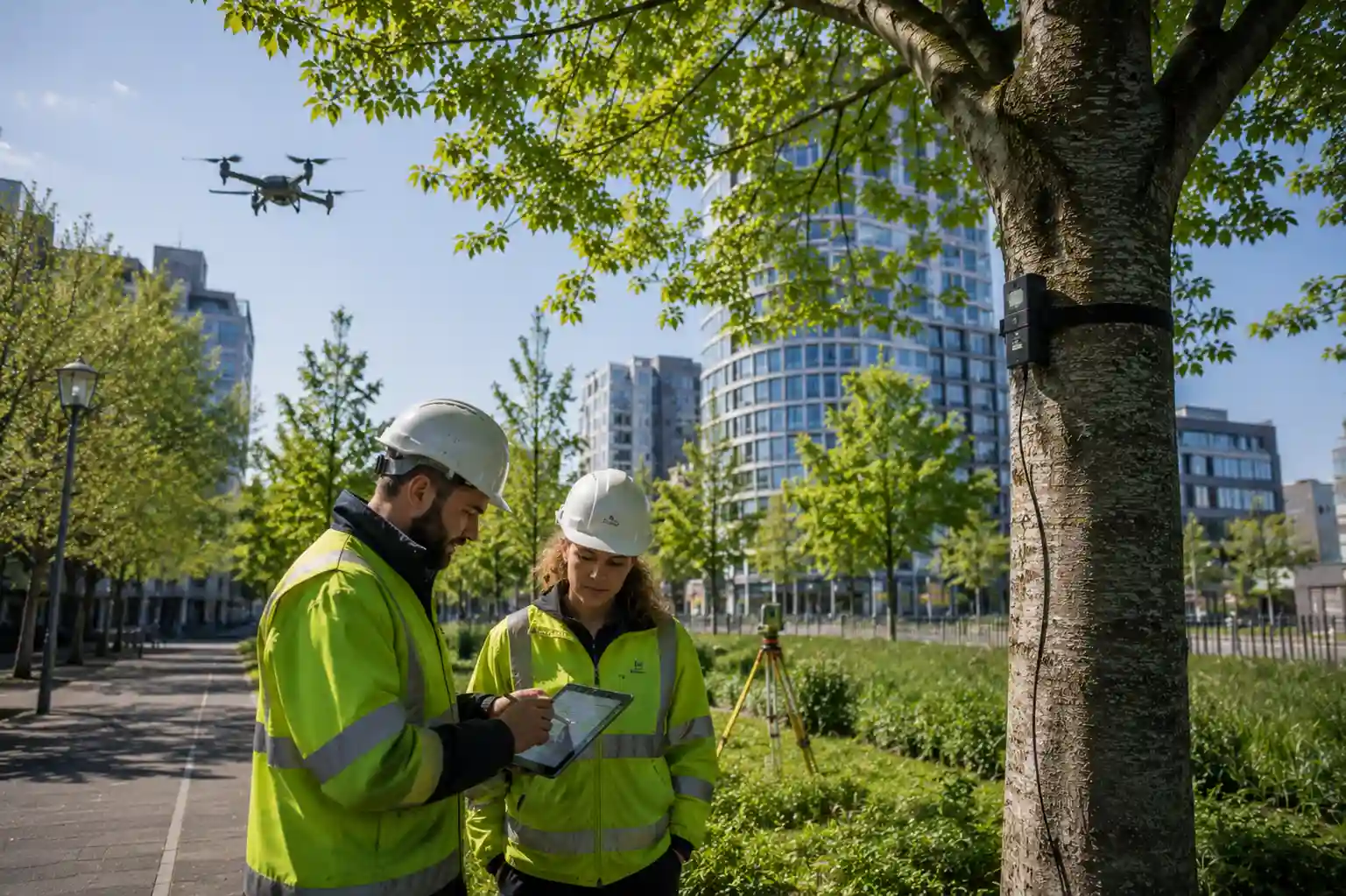
Technology continues transforming the arboriculture industry across the UK. Professional arborists now rely heavily on advanced digital systems to improve tree inspections, risk assessments, urban forestry management, sustainability planning, and long-term maintenance efficiency.
As climate change, urbanisation, and environmental regulations place increasing pressure on urban forests, digital tools are helping arborists make faster, safer, and more data-driven decisions.
From drone inspections and GIS mapping systems to smart environmental sensors and cloud-based management software, modern arboriculture is becoming increasingly technology-driven.
In 2026, digital innovation is playing a major role in improving environmental planning, tree preservation, biodiversity protection, and sustainable urban development across the UK.
Why Digital Arboriculture Is Growing Rapidly
Urban tree populations are becoming more complex to manage due to increasing development pressure, climate-related stress, and stricter environmental regulations.
Traditional inspection methods alone are often no longer sufficient for managing large urban forests efficiently.
Digital tools help arborists:
- Improve inspection accuracy
- Reduce safety risks
- Track tree health more efficiently
- Manage urban forests at scale
- Improve sustainability planning
- Support regulatory compliance
- Reduce long-term maintenance costs
Many organisations now integrate technology directly into wider urban tree management and sustainability programmes.
Drone Technology for Tree Inspections
Drones have become one of the most valuable digital tools used by modern arborists. They allow professionals to inspect large trees and difficult-to-access canopy areas safely without extensive climbing operations.
Drone surveys are commonly used for:
- Canopy inspections
- Storm damage assessments
- Tree health monitoring
- Urban forest mapping
- Construction site surveys
- Vegetation management planning
High-resolution aerial imagery allows arborists to identify structural problems, deadwood, canopy thinning, and storm damage more efficiently.
Many firms providing professional arboriculture services now rely heavily on drone technology during inspections and reporting.
GIS Tree Mapping Systems
Geographic Information Systems (GIS) are increasingly important for urban forestry management. GIS platforms allow arborists and councils to create detailed digital tree inventories across large urban areas.
GIS tree mapping systems help track:
- Tree species
- Age and condition
- Maintenance history
- Risk assessments
- Canopy coverage
- Biodiversity value
- Planting schedules
Digital mapping improves long-term planning while supporting more efficient urban forestry benefits strategies.
Tree Inspection and Reporting Software
Mobile inspection software has become standard across much of the arboriculture industry.
Digital inspection platforms allow arborists to:
- Create on-site reports
- Record tree condition data
- Capture inspection photos
- Track maintenance schedules
- Generate risk assessments
- Store cloud-based records
Digital reporting improves efficiency while helping organisations maintain accurate long-term maintenance records.
Many councils and contractors now require digital reporting systems for compliance and planning documentation.
Smart Environmental Sensors
Environmental monitoring systems are becoming increasingly advanced within urban forestry and arboriculture sectors.
Smart sensors can monitor:
- Soil moisture levels
- Temperature fluctuations
- Air quality conditions
- Tree movement during storms
- Root zone health
- Environmental stress indicators
Real-time monitoring helps arborists detect problems earlier while improving preventative maintenance planning.
These systems also support more effective tree health inspection programmes.
Decay Detection Technology
Internal decay is one of the most difficult tree health issues to identify using visual inspection alone.
Modern arborists increasingly use specialised decay detection tools such as:
- Sonic tomography systems
- Resistograph drilling tools
- Thermal imaging equipment
- Digital cavity analysis systems
These technologies help evaluate internal structural conditions while reducing unnecessary tree removals.
Advanced diagnostics also improve the accuracy of tree risk assessment inspections.
Cloud-Based Urban Forestry Management
Cloud-based software platforms are helping councils, contractors, and arborists manage large urban tree populations more efficiently.
Cloud systems allow organisations to:
- Access real-time inspection data
- Coordinate maintenance teams
- Monitor work schedules
- Track environmental performance
- Store long-term management records
Cloud integration also improves communication between planners, environmental consultants, arborists, and contractors.
AI and Predictive Analytics
Artificial intelligence is beginning to play a larger role in digital arboriculture.
AI-powered systems may help:
- Predict disease outbreaks
- Analyse growth patterns
- Identify storm vulnerability risks
- Improve irrigation planning
- Forecast maintenance needs
As urban forestry datasets continue expanding, predictive analytics are expected to become increasingly valuable for long-term sustainability planning.
Technology Supports Sustainable Urban Forestry
One of the biggest advantages of digital arboriculture is its ability to support more sustainable environmental management.
Technology helps organisations:
- Reduce unnecessary tree removals
- Improve water efficiency
- Protect biodiversity
- Improve maintenance targeting
- Reduce environmental stress
- Improve climate resilience planning
Many councils now integrate digital systems into wider urban environmental sustainability strategies.
Digital Tools Improve Construction Planning
Development projects increasingly rely on digital arboricultural planning tools to reduce environmental damage during construction work.
Technology supports:
- Root protection planning
- Construction impact assessments
- Tree retention strategies
- Environmental compliance monitoring
- Site planning optimisation
Many projects combine digital monitoring with tree preservation services to improve sustainability outcomes during development.
Climate Change Is Accelerating Technology Adoption
Climate-related environmental pressures are accelerating digital innovation throughout the arboriculture industry.
The evolving UK arboriculture industry increasingly relies on technology to manage drought stress, storm damage risks, biodiversity protection, and urban heat challenges.
Digital monitoring systems allow arborists to respond more effectively to changing environmental conditions.
The Future of Digital Arboriculture
Digital technology will continue reshaping arboriculture and urban forestry over the coming years.
Future innovations are likely to include:
- AI-powered urban forestry systems
- Autonomous inspection drones
- Advanced environmental monitoring networks
- Integrated smart city green infrastructure
- Predictive climate resilience modelling
According to the Arboricultural Association, technology is becoming increasingly important for supporting sustainable urban forestry and professional tree management.
As cities continue expanding and environmental pressures increase, digital tools for arborists will remain essential for protecting healthy urban forests and supporting more sustainable communities across the UK.
