

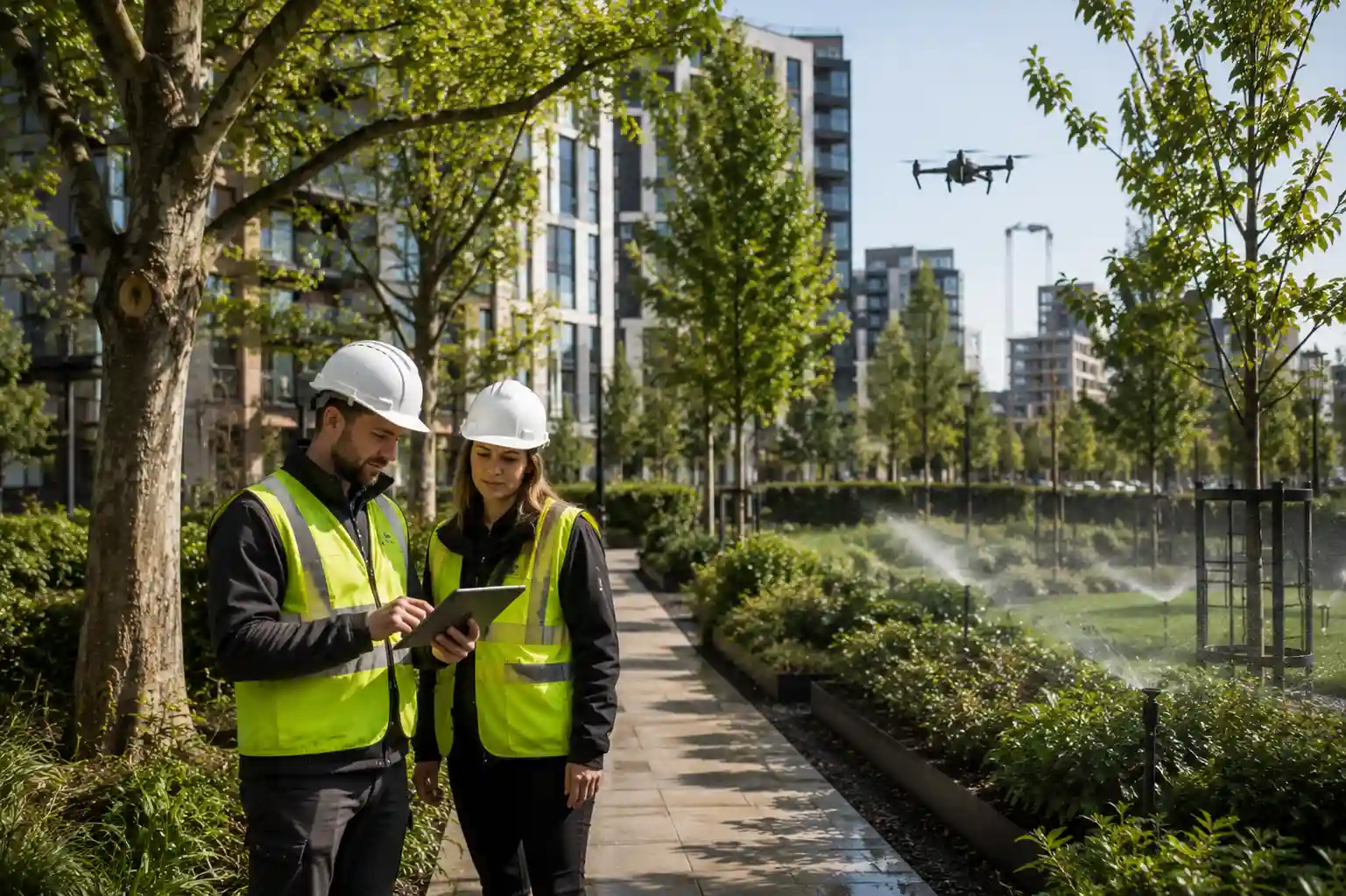
Technology is rapidly transforming the landscaping and arboriculture industries across the UK. From automated irrigation systems and drone surveys to digital tree monitoring and AI-powered environmental analysis, smart technology is helping professionals manage outdoor spaces more efficiently, sustainably, and accurately than ever before.
As climate change, urbanisation, and environmental sustainability become increasingly important, landscaping and tree care professionals are adopting smarter systems that improve resource management, reduce environmental impact, and support healthier urban environments.
Modern landscaping is no longer focused solely on aesthetics. Smart landscaping technology now plays a major role in sustainability planning, urban forestry management, biodiversity protection, and long-term environmental resilience.
What Is Smart Landscaping Technology?
Smart landscaping technology refers to digital systems, automated tools, sensors, and data-driven solutions used to improve landscape maintenance, irrigation, arboriculture, and environmental management.
These technologies help landscapers and arborists:
- Monitor plant and tree health
- Improve irrigation efficiency
- Reduce water waste
- Track environmental conditions
- Improve maintenance planning
- Support sustainability goals
- Enhance urban green infrastructure
Many organisations now integrate smart systems into wider urban tree management and environmental planning strategies.
Smart Irrigation Systems Improve Water Efficiency
Water conservation is becoming increasingly important as climate change creates longer dry periods and greater pressure on urban water systems.
Smart irrigation systems use automated controls, weather data, and soil moisture sensors to optimise watering schedules.
Benefits of smart irrigation include:
- Reduced water waste
- Healthier soil conditions
- Improved plant growth
- Lower maintenance costs
- Better drought resilience
Many sustainable landscaping projects now combine automated irrigation with sustainable landscaping trees and native planting strategies.
Drone Technology Is Improving Tree Inspections
Drones have become increasingly valuable within arboriculture and landscape management. They allow professionals to inspect large trees and difficult-to-access areas safely and efficiently.
Drone surveys help arborists:
- Inspect canopy health
- Identify storm damage
- Monitor tree growth
- Assess structural defects
- Map urban forests
Drone technology can significantly reduce inspection time while improving safety for arborists working in complex urban environments.
Many firms providing professional arboriculture services now rely heavily on aerial surveying technology.
Digital Tree Mapping and Urban Forestry Management
Modern councils and environmental planners increasingly use digital mapping systems to manage urban tree populations more effectively.
GIS-based tree inventories help track:
- Tree species
- Age and condition
- Maintenance schedules
- Canopy coverage
- Risk assessments
- Biodiversity value
Digital mapping supports more efficient long-term urban forestry benefits planning while improving sustainability decision-making.
Environmental Sensors Help Monitor Tree Health
Smart environmental sensors are becoming increasingly common within landscaping and arboriculture industries.
These systems can monitor:
- Soil moisture levels
- Temperature changes
- Air quality
- Root zone conditions
- Tree movement during storms
- Environmental stress indicators
Real-time monitoring allows arborists to identify problems earlier and respond before serious damage occurs.
Routine digital monitoring also supports more effective tree health inspection programmes.
AI and Predictive Landscape Management
Artificial intelligence and predictive analytics are beginning to influence modern landscaping and environmental management.
AI-powered systems can help:
- Predict irrigation needs
- Identify disease risks
- Analyse growth patterns
- Forecast storm vulnerabilities
- Improve maintenance scheduling
As data collection improves, predictive environmental management is expected to become increasingly important within sustainable urban planning.
Smart Technology Supports Sustainability
One of the biggest advantages of smart landscaping technology is its ability to improve environmental sustainability.
Digital management systems help reduce:
- Water waste
- Chemical overuse
- Energy consumption
- Unnecessary maintenance
- Environmental stress on trees
Many sustainability-focused projects now combine smart systems with broader urban environmental sustainability and climate resilience strategies.
Technology Is Changing Construction and Development Planning
Construction and land development projects increasingly rely on digital landscaping and arboricultural planning systems.
Technology helps developers:
- Protect mature trees
- Monitor root protection areas
- Plan sustainable drainage systems
- Track environmental compliance
- Improve biodiversity planning
Many projects integrate smart monitoring with tree preservation services to reduce environmental damage during development work.
Smart Landscaping Improves Public Spaces
Smart technology is also helping councils and property managers improve public outdoor environments.
Modern smart landscapes may include:
- Automated irrigation systems
- Environmental monitoring stations
- Smart lighting integration
- Climate-responsive planting
- Digitally managed green spaces
These technologies help create healthier, safer, and more efficient public landscapes within modern cities.
The Role of Digital Tools in Modern Arboriculture
Professional arborists increasingly rely on advanced digital systems to improve inspection accuracy, maintenance planning, and environmental management.
Many firms now use:
- Mobile inspection software
- Cloud-based tree inventories
- Remote monitoring systems
- Drone imaging technology
- Digital reporting platforms
Modern digital tools for arborists are helping improve efficiency while supporting more sustainable urban forestry management.
Climate Change Is Accelerating Technology Adoption
Climate-related environmental pressures are accelerating the adoption of smart landscaping systems across the UK.
The evolving UK arboriculture industry increasingly relies on technology to help manage drought stress, storm damage risks, urban heat, and biodiversity protection.
Smart systems allow arborists and planners to respond more effectively to changing environmental conditions while improving long-term resilience.
The Future of Smart Landscaping Technology
Smart landscaping and digital arboriculture technologies are expected to continue evolving rapidly over the coming years.
Future innovations may include:
- AI-driven environmental analysis
- Autonomous maintenance systems
- Advanced climate modelling
- Real-time urban forestry monitoring
- Integrated smart city green infrastructure
According to the Royal Horticultural Society, sustainable landscaping and environmentally responsible gardening practices will continue playing an important role in climate adaptation and biodiversity protection.
As cities continue evolving, smart landscaping technology will remain essential for creating greener, healthier, and more sustainable outdoor environments throughout the UK.
