

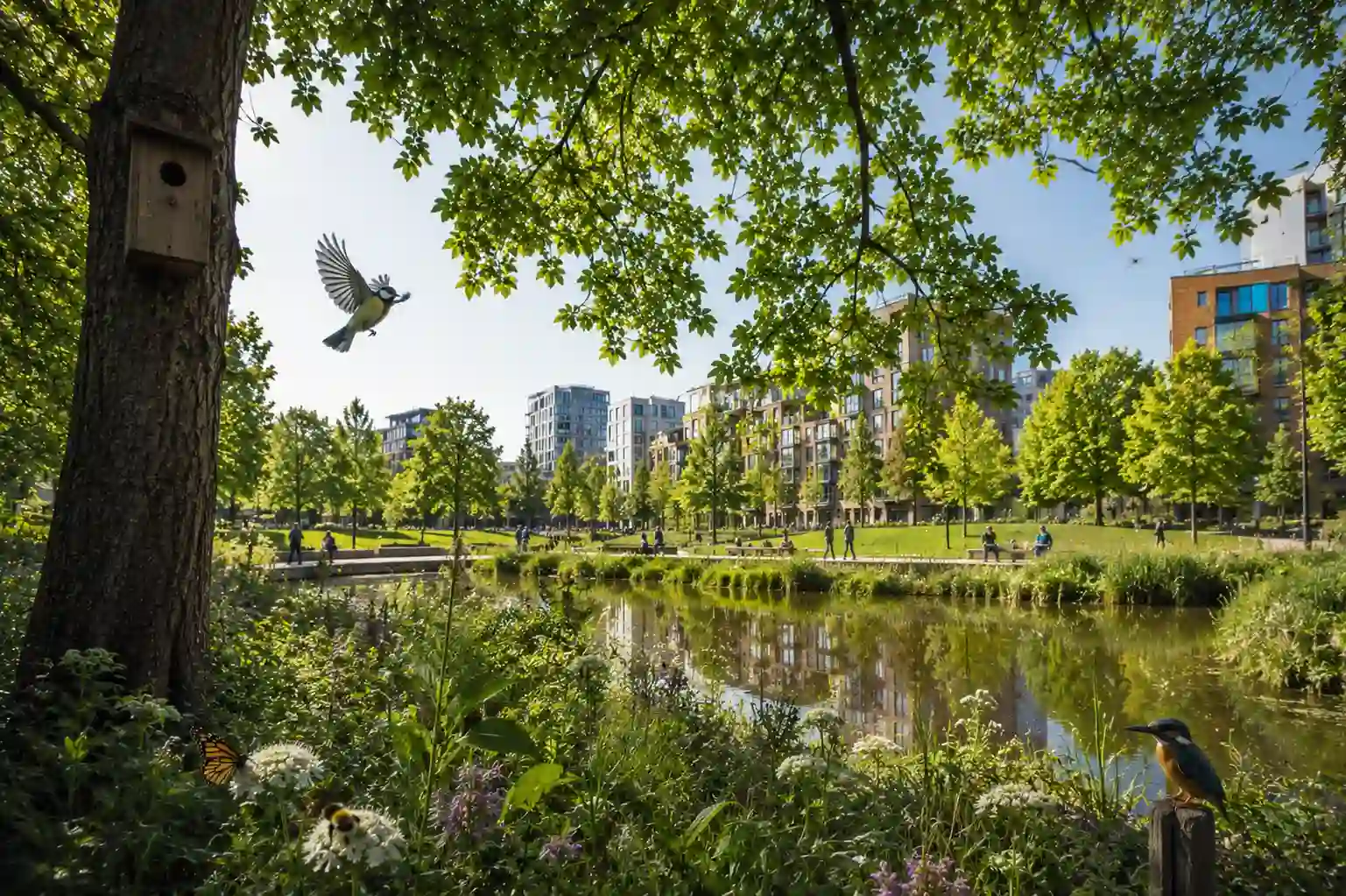
Trees are essential for supporting healthy ecosystems and protecting wildlife within urban environments. Across the UK, urban trees provide food, shelter, nesting habitats, and ecological corridors for a wide range of birds, insects, pollinators, and small mammals.
As towns and cities continue expanding, natural habitats are increasingly fragmented by roads, buildings, and infrastructure development. Healthy urban trees help restore ecological balance by creating vital green spaces that support biodiversity and strengthen environmental resilience.
Modern urban planning now recognises that protecting wildlife and biodiversity is closely connected to maintaining healthy urban forests and sustainable green infrastructure.
Why Urban Wildlife Needs Healthy Trees
Urban environments can be challenging for wildlife due to habitat loss, pollution, heat stress, and limited food sources. Trees help reduce these pressures by providing natural environments that support ecological stability within towns and cities.
Healthy trees support wildlife by providing:
- Nesting habitats
- Food sources
- Pollinator support
- Seasonal shelter
- Ecological corridors
- Climate protection
Many councils now integrate biodiversity-focused tree planting into wider urban tree management and sustainability strategies.
Trees Support Bird Populations
Birds rely heavily on urban trees for nesting, shelter, and food throughout the year. Mature trees provide safe nesting areas while also supporting insect populations that many bird species depend on for feeding.
Urban trees can help support:
- Songbirds
- Owls
- Woodpeckers
- Finches
- Urban migratory species
Large canopy trees are particularly valuable because they provide greater habitat diversity and long-term ecological stability.
Protecting mature trees through tree preservation services helps maintain important wildlife habitats within urban areas.
Pollinators Depend on Urban Trees
Pollinators such as bees, butterflies, moths, and hoverflies play a critical role in ecosystem health and food production. Many pollinator species rely on trees for nectar, pollen, shelter, and breeding habitats.
Flowering trees are especially important because they provide seasonal food sources during key pollination periods.
Urban trees help support pollinators by:
- Providing nectar-rich flowers
- Creating sheltered habitats
- Supporting biodiversity networks
- Reducing habitat fragmentation
Many biodiversity-focused landscaping projects now prioritise native tree species because they often provide stronger ecological benefits for local pollinator populations.
Urban Trees Create Ecological Corridors
One of the biggest challenges facing urban wildlife is habitat fragmentation. Roads, buildings, and heavily developed areas can isolate wildlife populations and restrict movement between habitats.
Tree-lined streets, parks, and green corridors help connect fragmented ecosystems by creating safe movement routes for wildlife.
These ecological corridors support:
- Bird migration
- Pollinator movement
- Small mammal habitats
- Urban ecosystem connectivity
Urban greening projects increasingly focus on creating connected green infrastructure systems that improve biodiversity across entire cities.
Healthy Trees Improve Urban Ecosystems
Trees contribute directly to healthier urban ecosystems by improving environmental conditions that benefit both wildlife and people.
Healthy urban trees help:
- Improve air quality
- Reduce urban heat
- Improve soil stability
- Manage stormwater runoff
- Increase environmental resilience
These environmental improvements strengthen overall ecosystem stability while supporting healthier habitats for wildlife populations.
Many cities now integrate urban forestry into broader urban environmental sustainability initiatives.
Climate Change Is Affecting Urban Wildlife
Climate change is placing increasing pressure on ecosystems throughout the UK. Rising temperatures, changing rainfall patterns, and habitat disruption are affecting both wildlife populations and urban tree health.
Healthy urban forests help improve climate resilience by:
- Reducing urban heat island effects
- Supporting biodiversity adaptation
- Providing cooler habitats
- Improving environmental stability
The evolving UK arboriculture industry increasingly recognises biodiversity protection as a major part of climate adaptation planning.
Why Native Trees Are Important for Wildlife
Native tree species often provide stronger ecological support for wildlife because they evolved alongside local ecosystems over thousands of years.
Native trees typically support:
- More insect species
- Better pollinator habitats
- Stronger food chains
- Healthier biodiversity networks
Many urban forestry and conservation projects now prioritise native planting to strengthen ecosystem resilience and biodiversity outcomes.
Projects involving tree conservation frequently focus on preserving mature native species because of their high ecological value.
The Role of Sustainable Urban Forestry
Long-term biodiversity protection depends on maintaining healthy and sustainable urban forests.
Professional arborists and urban planners often implement:
- Strategic tree planting
- Habitat-focused landscaping
- Biodiversity-friendly maintenance
- Long-term canopy management
- Wildlife-sensitive pruning schedules
Many cities now integrate biodiversity goals into wider urban forestry benefits programmes designed to improve environmental quality and public wellbeing.
Technology Is Improving Wildlife and Tree Monitoring
Modern arboriculture and conservation increasingly rely on digital tools to monitor ecosystems and urban wildlife populations.
Common technologies now used include:
- Drone habitat surveys
- GIS biodiversity mapping
- Remote environmental sensors
- Digital tree inventories
- Wildlife monitoring systems
Many organisations now use digital tools for arborists to support more accurate environmental planning and biodiversity management.
The Importance of Professional Tree Care
Healthy trees are essential for maintaining healthy wildlife habitats. Poor maintenance, disease, or unnecessary tree removal can weaken ecosystems and reduce biodiversity.
Professional arborists providing professional tree care help maintain tree health while supporting long-term environmental sustainability.
Routine inspections, disease management, and sustainable maintenance practices all help preserve safe and ecologically valuable urban trees.
The Future of Urban Biodiversity Protection
As urban populations continue growing, protecting wildlife habitats within towns and cities will become increasingly important.
According to the Woodland Trust, healthy trees and woodlands play a critical role in supporting biodiversity, climate resilience, and ecosystem stability.
Future urban planning strategies are likely to place even greater emphasis on:
- Urban canopy expansion
- Wildlife-friendly landscaping
- Native tree planting
- Biodiversity-focused planning
- Climate-resilient green infrastructure
By protecting healthy urban trees today, communities can help create greener, healthier, and more biodiverse environments for future generations.
