

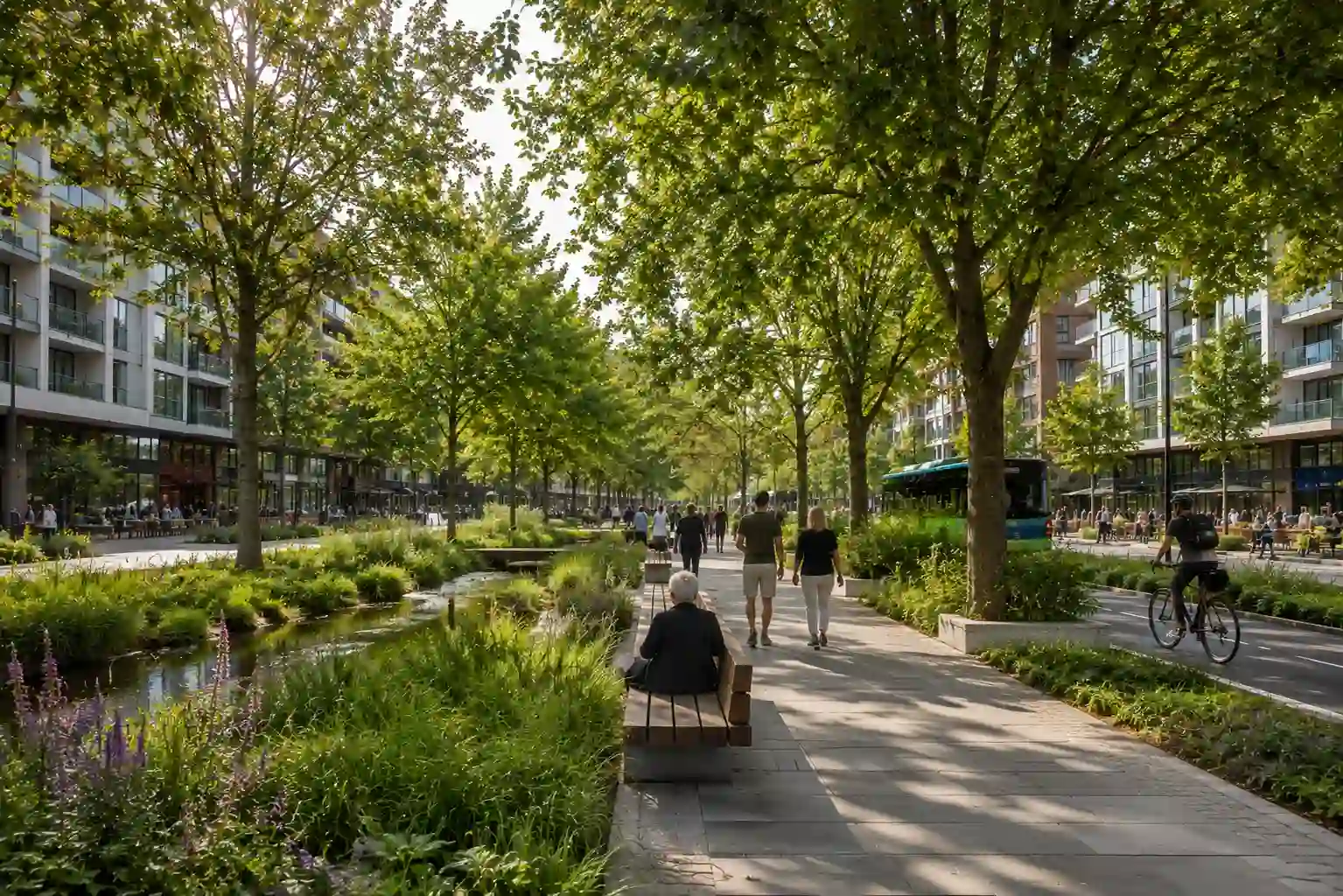
Urban trees have become one of the most important natural assets in modern cities. As urban populations continue growing across the UK, towns and cities face increasing environmental challenges including pollution, flooding, rising temperatures, biodiversity loss, and declining air quality. Trees play a vital role in helping urban environments remain healthier, more resilient, and environmentally sustainable over the long term.
From reducing heat and improving air quality to supporting wildlife and managing stormwater runoff, urban trees deliver a wide range of environmental benefits that directly improve quality of life. For this reason, local authorities, developers, environmental planners, and property owners are increasingly integrating tree-focused strategies into sustainable urban development plans.
Long-term urban environmental sustainability depends heavily on maintaining healthy urban forests and expanding green infrastructure throughout cities and communities.
Why Urban Trees Matter More Than Ever
Modern cities contain large areas of hard surfaces such as roads, pavements, and buildings that absorb and retain heat. Urban development can also reduce natural habitats, increase pollution levels, and place pressure on drainage systems.
Trees help counter these problems by restoring natural environmental balance within urban landscapes.
Healthy urban trees can:
- Improve air quality
- Reduce urban heat island effects
- Store carbon dioxide
- Support biodiversity
- Reduce flood risks
- Improve public wellbeing
- Enhance green infrastructure
- Create healthier outdoor environments
These environmental benefits make urban trees a key part of modern sustainable tree management strategies across the UK.
How Trees Improve Air Quality
Air pollution remains a major environmental concern in many UK cities. Traffic emissions, industrial activity, and urban congestion contribute to harmful airborne pollutants that affect both environmental quality and public health.
Trees help improve air quality by absorbing pollutants and filtering fine particulate matter from the atmosphere.
Urban trees can also:
- Capture dust particles
- Reduce airborne pollutants
- Release oxygen
- Lower carbon dioxide levels
- Improve local microclimates
These benefits are particularly valuable near roads, schools, residential developments, and commercial districts where pollution exposure tends to be highest.
Many urban forestry projects now prioritise tree planting as part of wider urban forestry benefits programmes designed to improve public health outcomes.
Reducing Urban Heat and Climate Stress
Urban environments often experience significantly higher temperatures than surrounding rural areas due to dense infrastructure and limited vegetation. This phenomenon, known as the urban heat island effect, is becoming more severe as climate change increases average temperatures.
Trees help cool cities naturally through shade and evapotranspiration, reducing surface temperatures and improving outdoor comfort levels.
Well-positioned urban trees can:
- Reduce heat absorption from buildings
- Lower energy consumption
- Create shaded pedestrian areas
- Improve thermal comfort
- Reduce pressure on cooling systems
As climate pressures continue increasing, many councils are expanding urban canopy targets to strengthen long-term environmental resilience.
Supporting Urban Biodiversity
Urban trees provide essential habitats for birds, pollinators, insects, and small mammals. Without healthy green spaces, biodiversity within cities can decline rapidly.
Trees support wildlife by providing:
- Shelter and nesting areas
- Food sources
- Pollinator habitats
- Ecological corridors
- Seasonal biodiversity support
Landscape planners increasingly prioritise native and wildlife-friendly species as part of broader urban biodiversity conservation initiatives.
Projects involving native tree species often provide stronger ecological value because they support local wildlife systems more effectively than some non-native varieties.
Flood Prevention and Stormwater Management
Flooding and surface water management are growing concerns for many urban areas throughout the UK. Heavy rainfall combined with extensive paved surfaces can overwhelm drainage systems and increase flood risks.
Trees help reduce these problems by absorbing rainfall and slowing stormwater runoff.
Root systems also improve soil stability and increase water infiltration into the ground, helping reduce pressure on urban drainage infrastructure.
Many sustainable urban planning projects now integrate:
- Rain gardens
- Tree-lined drainage systems
- Permeable landscapes
- Green corridors
- Urban woodland expansion
These strategies help cities become more resilient to climate-related weather extremes.
Improving Public Health and Wellbeing
Urban trees contribute directly to healthier living environments. Access to green spaces has been linked to improved mental wellbeing, lower stress levels, and increased outdoor activity.
Tree-filled environments can also help:
- Reduce noise pollution
- Encourage social interaction
- Improve community wellbeing
- Create more attractive public spaces
- Enhance recreational opportunities
Many councils now include urban greening projects within broader public health and sustainability strategies.
The Role of Professional Tree Management
Long-term environmental sustainability depends on maintaining healthy urban tree populations. Poor maintenance, unsuitable species selection, or neglect can reduce environmental benefits and create safety risks.
Professional arborists provide professional tree care services that help ensure trees remain healthy, structurally stable, and environmentally beneficial over time.
Routine inspections, preventative maintenance, and climate-resilient planting strategies all play a major role in sustainable urban forestry management.
Technology and Sustainable Urban Forestry
Technology is helping cities manage urban trees more effectively than ever before. Modern urban forestry programmes increasingly rely on digital systems for monitoring, planning, and maintenance management.
Common technologies include:
- GIS tree mapping
- Drone surveys
- Remote environmental sensors
- Digital maintenance records
- Canopy analysis software
Many organisations now use digital tools for arborists to improve long-term planning and environmental decision-making.
Protecting Existing Mature Trees
Mature trees provide far greater environmental value than newly planted saplings. Large established trees store more carbon, create larger cooling canopies, and support more wildlife.
This is why protecting existing trees has become a major focus in modern urban planning.
Construction projects increasingly rely on tree preservation services to minimise environmental damage and preserve valuable urban canopy cover during development.
The Future of Sustainable Cities
Urban trees will continue playing a critical role in helping UK cities adapt to climate change, improve environmental quality, and create healthier communities.
According to the Forest Research organisation, urban forests provide measurable long-term environmental and economic benefits when managed sustainably.
As sustainability becomes increasingly central to urban planning, investment in healthy urban tree populations will remain essential for building greener, more resilient, and environmentally responsible cities across the UK.
