

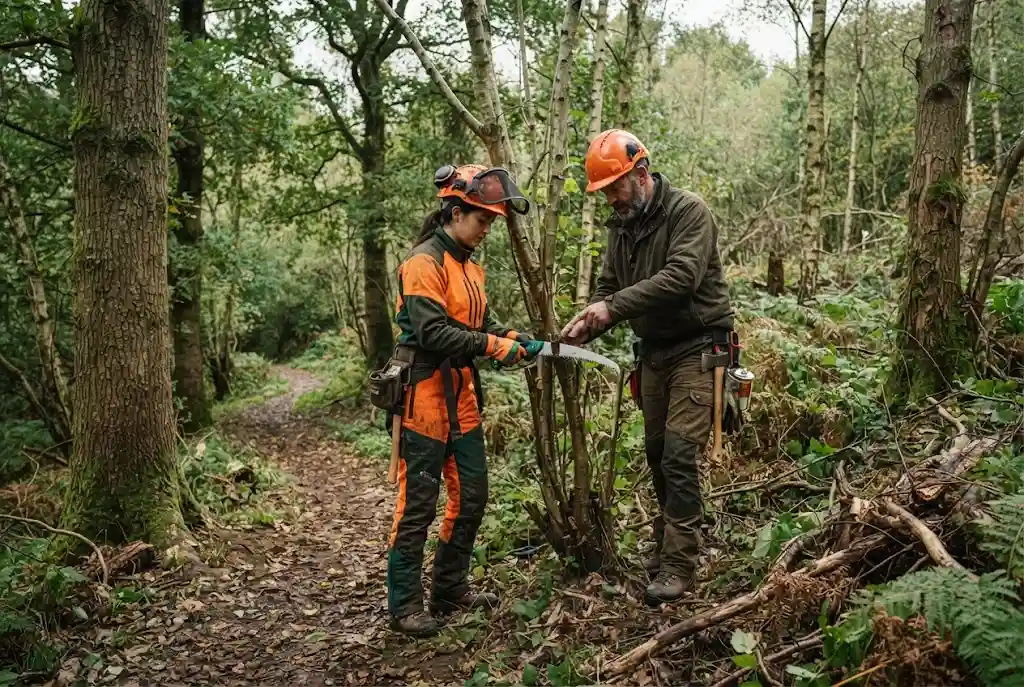
Forestry Commission apprenticeships provide an important route into the UK’s forestry sector for people who want to develop practical skills while gaining recognised workplace experience. Forestry is a diverse industry, and modern careers can involve woodland management, forest operations, environmental protection, timber production, conservation, planning and professional management.
For anyone considering a career outdoors, forestry apprenticeships can combine structured learning with practical work. They can also provide a clearer pathway into the qualifications and experience needed for longer-term forestry careers in the UK.
What Are Forestry Commission Apprenticeships?
Forestry Commission apprenticeships are apprenticeship pathways associated with forestry roles and skills development in England. Apprenticeships combine employment with learning, allowing participants to develop occupational skills while working towards an approved qualification or standard.
The Forestry Commission is the government department responsible for forestry policy, regulation and support in England. Forestry England, meanwhile, manages the nation’s public forests in England. Understanding the distinction between these organisations is useful when researching forestry careers and employment opportunities.
Apprenticeship availability can change as vacancies open and close, so prospective applicants should always check current government and employer information before applying.
Why Consider Forestry Apprenticeships?
Forestry is a practical industry, and classroom learning alone cannot provide every skill required for working safely and effectively in woodland environments. Apprenticeships can bridge this gap by combining formal learning with supervised workplace experience.
Depending on the role, an apprentice may develop knowledge of woodland operations, machinery, tree establishment, harvesting, conservation, environmental management, health and safety or forest planning.
The practical nature of forestry also makes workplace experience particularly valuable. Working alongside experienced professionals can help apprentices understand how forestry principles are applied in real woodland conditions.
Forestry Apprenticeships Available in England
Government information currently identifies several forestry apprenticeship standards covering different levels of responsibility and professional development. These include Forest Craftsperson, Forestry Works Manager and Professional Forester pathways.
The Forest Craftsperson standard is aimed at practical forestry work. The role can involve tasks such as tree establishment, vegetation management, harvesting operations and maintaining woodland infrastructure, depending on the employer and specific job.
At a higher level, a Forestry Works Manager apprenticeship is designed for people developing the skills needed to plan and manage forestry operations. The work can involve coordinating teams, resources, contractors and operational activities while maintaining safety and environmental standards.
The Professional Forester pathway is designed for higher-level professional forestry responsibilities. It can support development towards roles involving forest management planning, sustainable woodland management and broader professional decision-making.
What Do Forestry Apprentices Learn?
The exact content of forestry training depends on the apprenticeship standard and employer. However, forestry apprentices generally need to develop a combination of technical knowledge, practical competence and professional behaviours.
Practical Woodland Skills
Practical skills can include tree planting, woodland maintenance, vegetation control and other forest operations. Depending on the role, apprentices may also learn about harvesting, timber extraction, forest roads and the use of specialist equipment.
Because forestry work can involve machinery, uneven terrain and changing weather conditions, safe working practices are a fundamental part of professional training.
Tree and Woodland Management
Understanding how trees grow and how woodlands develop is another important part of forestry education. Apprentices can learn about species selection, establishment, growth, silviculture and the factors that affect tree health.
This knowledge supports wider principles of sustainable forestry management. The UK Forestry Standard provides the framework for sustainable forest management across the UK, covering environmental, economic and social considerations.
Environmental Management
Modern forestry extends well beyond timber production. Forest professionals may need to consider biodiversity, habitats, soil, water, landscape and climate resilience when planning or carrying out woodland work.
This means forestry apprentices need to understand how practical operations can affect the wider environment. Developing this awareness early can be valuable for anyone who wants to progress into forest management or conservation-related roles.
Forestry Qualifications and Career Development
One of the main advantages of an apprenticeship is the opportunity to gain recognised skills and qualifications while developing workplace experience. The qualification or standard associated with a particular apprenticeship depends on its level and structure.
Forestry qualifications can also be obtained through other routes, including further education, higher education and specialist training. The right route depends on the career a person wants to pursue and the entry requirements of the role.
Someone interested in practical forestry may choose a vocational route, while another person aiming for professional forest management may eventually need higher-level study and professional development.
Forestry Courses and Training Routes
Not everyone enters forestry through an apprenticeship. Forestry courses are available through different educational and training providers, with options ranging from practical land-based programmes to higher-level forestry and environmental subjects.
When comparing forestry courses, prospective students should consider the type of career they want to enter. A course focused on practical woodland skills may be more appropriate for an operational career, while a degree-level programme can provide a broader academic foundation for professional forestry roles.
It is also worth considering practical experience alongside formal study. Volunteering, seasonal work and relevant outdoor experience can help candidates understand the realities of forestry and demonstrate commitment when applying for jobs.
What Does a Forestry Career Look Like?
Forestry careers UK opportunities cover a surprisingly broad range of occupations. The industry needs people who can work directly in woodland as well as specialists who manage projects, analyse information and support long-term forest planning.
Possible career areas include forest operations, woodland management, arboricultural work, conservation, timber production, environmental assessment, forestry consultancy and forest planning.
As technology becomes more important in land management, forestry can also involve geographic information systems, remote sensing, digital mapping, data collection and other technical tools.
Forest Craft and Operational Roles
Operational forestry roles can suit people who enjoy practical outdoor work. Depending on the position, responsibilities can include planting, maintenance, harvesting support, habitat work and managing woodland infrastructure.
These roles require physical fitness, attention to safety and the ability to work effectively in changing outdoor conditions. Practical competence develops through structured training and experience.
Forest Management Roles
Forest managers work at a broader level, considering how woodland should be managed over the long term. Their responsibilities can include management planning, timber production, environmental considerations, stakeholder engagement and monitoring.
Professional forest management requires a strong understanding of both forestry science and practical woodland operations.
Forestry Apprenticeships and Sustainable Forestry
The future of forestry depends on people who understand how to balance productive woodland with environmental and social objectives. Apprenticeships can help develop this next generation of forestry professionals.
Sustainable forestry requires careful decisions about tree species, woodland structure, harvesting, regeneration, biodiversity and climate resilience. Apprentices who develop a broad understanding of these areas can build a strong foundation for future progression.
The subject also connects closely with research in forestry. Scientific research can influence approaches to tree health, climate adaptation, woodland biodiversity and forest management.
Forestry Apprenticeships and Forestry England
People researching forestry employment may encounter both the Forestry Commission and Forestry England. Although they are closely connected within the wider forestry landscape, they have different responsibilities.
Forestry England manages the public forest estate in England, including forests used for timber production, conservation and recreation. Its operational environment provides examples of the range of skills needed to manage modern forests.
Our guide to Forestry England forests, services and projects provides more detail about the organisation and its role in England’s public forests.
Skills That Can Help Forestry Apprentices
Forestry work requires more than an interest in trees. Employers may look for reliability, practical ability, awareness of safety and a willingness to learn.
Communication and teamwork are also important because forestry operations frequently involve working with colleagues, contractors, landowners, environmental specialists and members of the public.
For higher-level roles, analytical thinking and planning skills become increasingly important. A professional forester may need to assess competing objectives and make decisions that affect woodland over many years.
Physical and Practical Awareness
Many forestry jobs involve working outdoors in different weather conditions and across uneven terrain. Applicants should understand the physical nature of practical forestry work and the importance of following safe operating procedures.
Environmental Awareness
An understanding of wildlife, habitats and environmental protection can also be valuable. Forestry increasingly involves managing multiple benefits rather than focusing solely on timber production.
How to Find Forestry Commission Apprenticeships
Apprenticeship vacancies can change frequently, so anyone interested in forestry should monitor official apprenticeship and employer recruitment channels rather than relying on old vacancy listings.
Before applying, read the complete apprenticeship description carefully. Check the entry requirements, location, working arrangements, qualification level and responsibilities. Some roles may also have specific requirements relating to driving, physical work or previous education.
Preparing examples that demonstrate reliability, teamwork, practical experience and an interest in the natural environment can also help candidates present themselves effectively.
Building a Long-Term Forestry Career
An apprenticeship should be viewed as the beginning of professional development rather than the final destination. Once an apprentice has developed a foundation of skills, there may be opportunities to move into more specialised or supervisory roles.
Continuing professional development can become increasingly important as responsibilities grow. Experienced professionals may develop expertise in forest management, conservation, timber production, environmental assessment or specialist operational areas.
Professional networking can also support career development. Industry associations and professional organisations provide opportunities for people working across the forestry sector to exchange knowledge and maintain professional connections.
The Future of Forestry Training
Forestry training will need to evolve alongside the industry. Climate change, tree diseases, biodiversity priorities and advances in technology are changing the knowledge and skills required by modern forestry professionals.
Digital mapping, remote monitoring and improved data collection are increasingly relevant, while traditional practical skills remain essential for people working directly in forests.
This combination of traditional knowledge and new technology makes forestry an evolving career field. People entering the industry today may need to develop both strong practical competence and the ability to adapt to new management techniques.
Conclusion
Forestry Commission apprenticeships can provide a valuable entry route for people who want to build a career in the UK’s forestry sector. By combining workplace experience with structured learning, apprenticeships can help develop practical skills, technical knowledge and professional confidence.
Forestry careers extend well beyond tree planting and woodland maintenance. The sector needs skilled craft workers, managers, conservation specialists, environmental professionals and people with technical expertise.
For anyone considering the industry, researching forestry apprenticeships alongside forestry courses and recognised qualifications can help identify the most suitable route. With sustainable forest management, climate resilience and new technology becoming increasingly important, there is a continuing need for well-trained people who can help manage the UK’s woodlands responsibly.
