

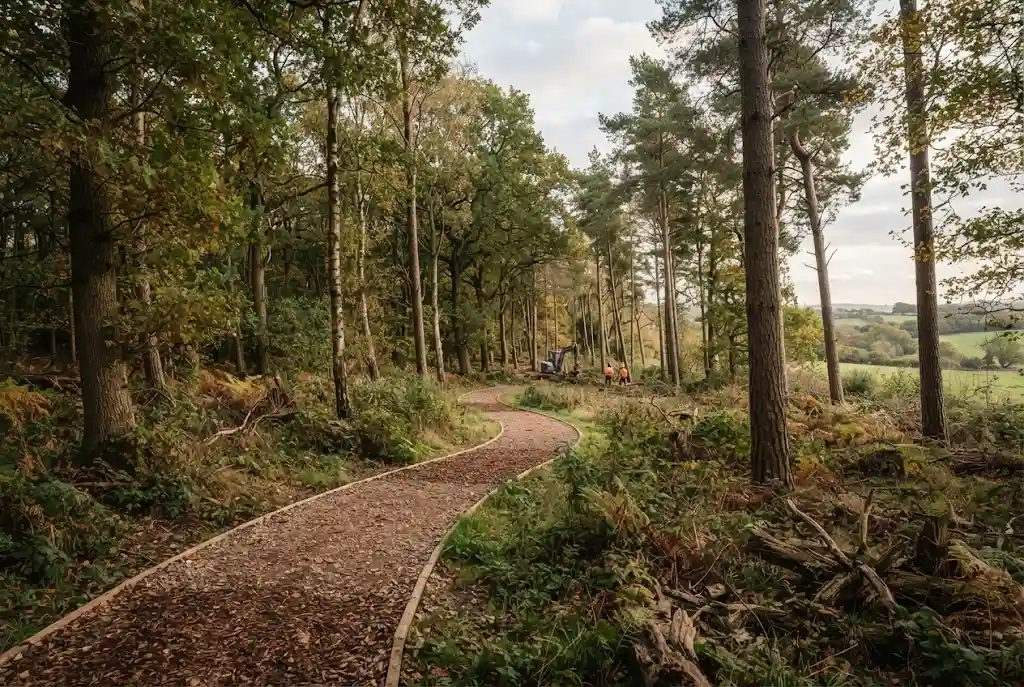
Forestry England plays a central role in managing and protecting the nation’s public forests and woodlands in England. Its work covers much more than maintaining trees. From woodland management and timber production to biodiversity, recreation, climate resilience and major woodland creation projects, Forestry England operates across a broad range of forestry priorities.
For anyone following the UK forestry sector, understanding Forestry England is useful because its work connects environmental objectives with practical forest management and public access. Its forests also provide an important setting for recreation, conservation and sustainable timber production.
What Is Forestry England?
Forestry England is responsible for managing the nation’s forests in England. Its work involves caring for a large public forest estate while balancing different environmental, economic and social objectives.
That balance is important because modern forestry is not simply about planting and harvesting trees. Healthy forests need long-term planning that considers biodiversity, climate resilience, landscape, soil, water, wildlife and the needs of people who use woodland areas.
Forestry England’s responsibilities therefore sit within the wider framework of sustainable forestry in the UK. The UK Forestry Standard provides the technical foundation for sustainable forest management and applies across UK woodland, regardless of ownership or management arrangements.
Forestry England Forests and the Public Forest Estate
The Forestry England forests network gives people access to a wide variety of woodland landscapes. These forests support different purposes, including recreation, wildlife conservation, timber production and landscape management.
Some forests are well known for walking, cycling and outdoor activities, while others have particularly important roles in habitat management or timber production. Managing such a diverse estate requires decisions to be made according to local conditions rather than applying exactly the same approach everywhere.
Public access is also an important part of modern woodland management. Forests can provide opportunities for exercise, relaxation and connection with nature, while carefully planned infrastructure can make woodland visits more accessible to a wider range of people.
Forestry England Services and Forest Management
The work associated with Forestry England services extends across practical forest operations and visitor-focused activities. Forest management can involve planning, planting, maintenance, harvesting, habitat work, access improvements and long-term monitoring.
Effective management starts with understanding what a particular woodland is expected to deliver. A commercial forest may place significant emphasis on timber production, while another site may prioritise biodiversity, landscape or recreation. In many cases, several objectives need to be delivered together.
This is why sustainable forestry management requires long-term decision-making. Forest managers must consider how today’s actions will affect woodland condition and resilience decades into the future.
Timber Production and Responsible Management
Timber production remains an important part of sustainable forestry. Responsibly managed woodland can provide a renewable source of material while supporting employment and rural economies.
Government guidance describes a sustainable forestry cycle in which diverse woodland is established, managed for resilience, responsibly harvested and then regenerated. Timber harvesting is expected to follow the UK Forestry Standard and applicable legislation.
Rather than treating harvesting and conservation as automatically opposing objectives, professional forest management can use harvesting as one part of a wider woodland management strategy. The precise approach depends on species, site conditions, landscape objectives and the long-term management plan.
Forestry England News and Current Developments
Forestry England news provides an important window into changes across the nation’s forests. Recent announcements have covered areas such as wildfire recovery, trail partnerships, visitor access, recreation and new woodland creation.
For example, Forestry England reported in August 2026 that it had assessed the impact of a New Forest wildfire that affected more than 100 hectares of heathland. The organisation also announced a three-year partnership with Muc-Off focused on protecting trails and forests. These developments demonstrate how forestry organisations increasingly have to manage both environmental risks and the growing recreational use of woodland areas.
Earlier in 2026, Forestry England announced plans for a 303-hectare woodland in Staffordshire, described as its largest new woodland planting project in more than 20 years. Projects of this scale illustrate the long-term nature of woodland creation and the importance of planning for future forest resilience.
Following research in forestry is another useful way to understand why management practices and priorities change over time. Scientific evidence can influence approaches to tree health, climate resilience, biodiversity and woodland management.
Forestry England Projects and Woodland Creation
Forestry England projects can range from small improvements to major woodland creation programmes. Large-scale projects require planning around species selection, landscape, biodiversity, access, infrastructure and future management.
Woodland creation is particularly important because newly planted areas need decades of management before they develop into mature forests. Selecting appropriate species and designing diverse woodland structures can help improve resilience to future environmental pressures.
Project planning also needs to consider how a new woodland will interact with surrounding land. Water, soils, existing habitats, archaeological features, public access and neighbouring communities can all influence the final design.
Why Woodland Resilience Matters
Climate change, pests and diseases create additional challenges for forest managers. A resilient woodland needs to be capable of continuing to provide environmental, economic and social benefits as conditions change.
The fifth edition of the UK Forestry Standard specifically strengthens the emphasis on resilience to a changing climate and increased risks from pests and diseases. This makes long-term planning an increasingly important part of professional forestry.
How Forestry England Fits Into the Wider UK Forestry Sector
Forestry England is one important organisation within a much wider forestry landscape. Forestry policy and regulation involve different bodies across the four nations of the UK, while researchers, professional organisations, landowners, contractors, educational institutions and businesses all contribute to the sector.
This wider structure matters when interpreting forestry news. A development involving Forestry England may have implications for woodland management, training, research or timber production more broadly, but responsibilities can differ between England, Scotland, Wales and Northern Ireland.
The UK forestry sector also depends on professional expertise. Forest managers and other specialists need appropriate knowledge of silviculture, environmental management, health and safety, planning and regulatory requirements.
Forestry England, Skills and Future Careers
The future of forestry depends on developing people as well as planting trees. Modern forestry requires workers with practical woodland skills alongside professionals capable of managing complex environmental, commercial and operational challenges.
For people considering a career in the sector, Forestry Commission apprenticeships provide an important route into forestry-related roles. Current government guidance covers Level 3 Forest Craftsperson, Level 4 Forestry Works Manager and Level 6 Professional Forester apprenticeship pathways, although individual opportunities and application status can change.
Forestry careers can extend beyond traditional forest operations. The wider industry includes forest management, timber production, environmental science, research, data, communications and other professional roles.
The Role of Research and Innovation in Forestry England
Research is increasingly important to the future of forest management. Forestry science can help organisations understand tree health, pests, diseases, climate impacts, biodiversity and the effectiveness of different management techniques.
Forest Research provides scientific and technical knowledge that supports forestry policy and practice in Great Britain. Its work also contributes to guidance associated with the UK Forestry Standard.
Innovation can therefore influence practical decisions in the forest. Better data, monitoring techniques, species selection methods and approaches to climate resilience can all help forest managers make more informed long-term decisions.
Why Forestry England Matters to the UK Forestry Industry
Forestry England matters because its responsibilities connect several priorities that are often discussed separately: woodland creation, timber production, biodiversity, recreation, climate resilience and public access.
Its work also provides useful insight into how large-scale forest management operates in practice. Decisions made today can influence woodland condition, timber availability, habitats and recreational opportunities for many years.
For professionals, landowners and people interested in the forestry sector, following Forestry England developments can therefore provide valuable context for broader industry trends. It can also help readers understand why sustainable forest management requires a balance between environmental, economic and social objectives.
What to Watch in Forestry England News
Future Forestry England news is likely to remain relevant across several areas of the forestry sector. Woodland creation, climate resilience, tree health, wildfire management, biodiversity, public access and sustainable timber production are all important long-term issues.
Major projects are particularly useful to watch because they can show how forestry policy translates into practical woodland management. At the same time, research developments and professional training will continue to shape the skills and techniques needed to manage forests effectively.
For readers building a broader understanding of the industry, following developments across forestry membership and professional forestry organisations can provide another perspective. Industry bodies and professional associations often connect practitioners, businesses, researchers and policymakers across different areas of the sector.
Conclusion
Forestry England has a significant role in the management of England’s public forests, combining woodland stewardship with timber production, biodiversity, recreation and long-term environmental resilience.
Its forests, services, projects and news provide a practical view of how modern forestry is evolving. As climate pressures, public expectations and demand for sustainable resources continue to influence the sector, professional forest management will remain essential.
Understanding Forestry England is therefore not only useful for people who visit the nation’s forests. It also provides valuable context for anyone following the wider UK forestry industry, forestry careers, research and the organisations shaping the future of sustainable woodland management.
