

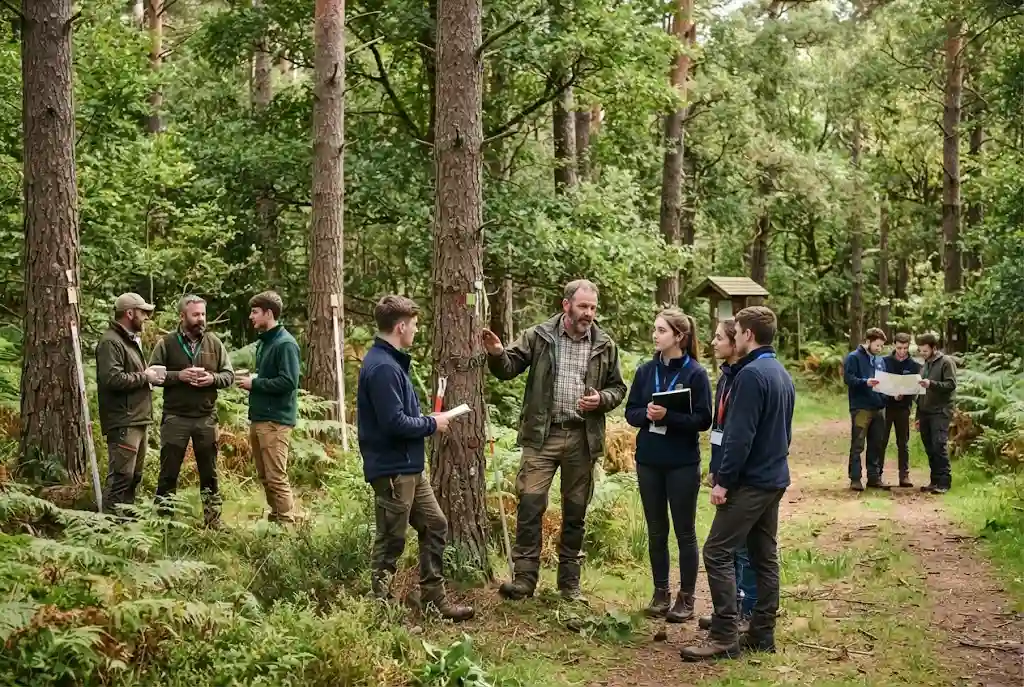
Forestry membership can provide valuable professional, educational and networking opportunities for people working in or around the UK’s forestry sector. Membership of a professional body can help individuals keep up with industry developments, access learning opportunities, build professional networks and demonstrate a commitment to professional standards.
The UK’s forestry landscape includes professional organisations, industry associations, research bodies, government organisations, charities and specialist groups. Each has a different role, so choosing the right membership depends on a person’s career stage, professional interests and objectives.
What Is Forestry Membership?
Forestry membership generally means joining an organisation that supports people working in forestry, arboriculture or related fields. Depending on the organisation, membership may be available to students, graduates, experienced professionals, businesses, academics or people with a general interest in woodland management.
Professional membership can provide access to industry information, events, publications, training and networking. Some organisations also offer formal professional recognition or chartered status for members who meet specific requirements.
Membership is therefore more than simply receiving industry updates. For professionals, it can become part of a longer-term career development strategy.
Why Join a Forestry Organisation?
Forestry is a specialist sector that combines practical woodland management with environmental science, timber production, policy, conservation and land management. Staying connected to other professionals can help people understand how these areas are developing.
Joining a forestry organisation can offer several potential benefits:
- Professional networking with people working across forestry and related disciplines.
- Access to continuing professional development opportunities.
- Industry news, publications and technical information.
- Events where practitioners can exchange knowledge and experience.
- Career information and professional development resources.
- Opportunities to contribute to discussions about the future of forestry.
- In some organisations, routes towards formal professional recognition.
The value of membership depends on how actively a member uses these opportunities. Someone who regularly attends events, completes relevant training and engages with professional networks may gain substantially more than someone who only receives membership communications.
Professional Forestry and Chartered Status
Professional forestry increasingly emphasises competence, ethical practice and continuing development. In the UK, the Institute of Chartered Foresters is the Royal Chartered body for foresters and arboriculturists and is the only UK body that awards the titles Chartered Forester and Chartered Arboriculturist.
The Institute states that professional membership demonstrates a commitment to professional development, sector integrity and professional standards. Its membership structure includes different entry points for students, associates, supporters and professionals.
Chartered status is a further professional milestone rather than an automatic consequence of joining an organisation. Candidates need to meet the relevant requirements and complete the applicable assessment route.
Forestry Associations in the UK
Forestry associations can play different roles within the industry. Some focus on professional standards and individual careers, while others represent businesses, landowners, contractors or particular interests within forestry.
This distinction is important when deciding which organisation to join. A student looking for career development may have different priorities from a forestry contractor seeking industry representation or a consultant looking for professional recognition.
Some organisations also work across related sectors, including arboriculture, environmental management and land use. These connections can be useful because forestry frequently overlaps with other environmental and land-management professions.
Institute of Chartered Foresters Membership
The Institute of Chartered Foresters offers several membership categories designed for different stages of a professional journey. Student membership is available to people studying an appropriate course in the UK, while Associate membership provides a route for qualified individuals working towards professional membership.
Supporter membership is available to people who have an interest in forestry and arboriculture but are not pursuing chartered status. This can include academics, journalists, environmental professionals and other interested individuals.
Professional membership can lead to Chartered Forester or Chartered Arboriculturist status, subject to meeting the Institute’s requirements.
The Institute also supports members through events, learning opportunities, publications, career information and continuing professional development resources. Its current membership information describes these services as part of the wider professional development journey.
Student Forestry Membership
Student membership can be useful for people studying forestry, arboriculture or a related subject. Becoming involved with a professional organisation while studying can provide an early introduction to the industry and help students understand the range of careers available.
Networking at this stage can also help students learn about employers, professional expectations and developments affecting the sector.
Associate Forestry Membership
Associate membership can suit people who have completed an appropriate course and are developing the professional experience needed for chartered status.
This stage can be particularly useful for graduates entering the workforce. It creates a bridge between academic study and professional practice while providing access to resources and development opportunities.
Forestry Membership and Continuing Professional Development
Continuing professional development, commonly known as CPD, is an important part of modern professional forestry. Forestry practices, environmental requirements, technology and research continue to evolve, so professionals need opportunities to maintain and expand their knowledge.
Membership organisations can support CPD through conferences, seminars, online learning, technical publications and regional events.
For example, the Institute of Chartered Foresters operates member networks across the UK. These networks organise events and meetings that provide opportunities for networking and CPD at regional level.
CPD is particularly relevant to professionals working in areas where technical knowledge changes over time. Tree health, climate resilience, biodiversity, digital mapping and sustainable forest management all require practitioners to keep their knowledge current.
Forestry Organisations UK: Understanding the Wider Structure
The phrase forestry organisations UK covers a broad collection of bodies rather than one single organisation. Government organisations, professional bodies, research organisations and industry groups all contribute to the sector.
The Forestry Commission is the government department responsible for protecting, expanding and promoting the sustainable management of woodlands in England. Within the wider Forestry Commission family, Forestry England manages the nation’s forests in England, while Forest Research provides forestry and tree-related research.
This structure helps explain why people working in forestry may interact with several different organisations during their careers.
Our earlier article on Forestry England forests, services and projects provides more detail about the organisation responsible for managing England’s public forest estate.
Forestry Industry Bodies and Professional Representation
Forestry industry bodies can provide a voice for particular groups within the sector. Depending on their remit, they may represent businesses, professionals, landowners, contractors or other stakeholders.
Representation can be particularly important when changes to forestry policy, regulation or industry practice affect businesses and professionals. Industry organisations can help communicate member concerns and provide information about consultations and policy developments.
Professional bodies have a somewhat different role. Their emphasis may be on standards, competence, professional ethics and career development rather than commercial representation.
Understanding this difference can make it easier to decide whether professional membership, industry association membership or both would be useful.
How Forestry Membership Supports Career Development
Membership can support a forestry career at several stages. Students can use professional networks to learn about the industry, while early-career professionals can use events and CPD to build experience and connections.
Experienced professionals may use membership to maintain professional recognition, contribute to industry discussions, mentor others or develop specialist knowledge.
Career development is particularly important in forestry because the sector contains roles ranging from practical forest operations to highly specialised professional positions.
People entering the sector can also explore Forestry Commission apprenticeships and forestry training as another route into practical and professional forestry careers.
Forestry Membership and Professional Standards
Professional standards help establish expectations around competence and conduct. This matters in forestry because decisions made by professionals can affect woodland ecosystems, timber resources, public safety, landscapes and long-term environmental outcomes.
The Institute of Chartered Foresters maintains professional standards and a Code of Conduct for its members. Its chartered route is designed to provide formal recognition of professional competence.
Professional standards can therefore complement technical frameworks such as the UK Forestry Standard. The UKFS provides the framework for sustainable forest management, while professional development helps practitioners build the knowledge and competence needed to apply forestry principles responsibly.
Networking Through Forestry Organisations
Forestry is a relatively specialised profession, making networking particularly valuable. Regional events can connect professionals working in different parts of the industry, from forest managers and consultants to researchers, contractors and environmental specialists.
Networking does not have to mean formal business development. It can also involve sharing practical experiences, discussing research, learning about new technology and understanding how colleagues approach common challenges.
Regional networks can be especially useful for people who work primarily in the field or within smaller organisations. They provide opportunities to connect with professionals who understand local forestry conditions and issues.
Forestry Membership for Students and New Entrants
People entering forestry do not necessarily need years of professional experience before joining an industry organisation. Some membership schemes are specifically designed for students and people at the beginning of their careers.
Early involvement can help new entrants understand professional terminology, identify career pathways and develop a network before taking on more senior responsibilities.
Students researching the sector can also combine professional membership with formal research in forestry and training opportunities. This broader approach can help connect academic knowledge with practical industry developments.
How to Choose the Right Forestry Membership
There is no single membership option that suits every forestry professional. Before joining an organisation, consider what you actually want to gain from membership.
Consider Your Career Stage
Students and graduates may benefit most from career information, mentoring, events and introductory networking. Experienced professionals may place greater value on chartered status, CPD and specialist professional resources.
Look at the Organisation’s Purpose
Read the organisation’s stated objectives and determine whether they align with your work. A professional body, trade association and research organisation may all cover forestry but provide very different services.
Review the Benefits
Consider whether the membership includes useful publications, events, CPD, technical resources, professional recognition or networking opportunities. The most valuable membership is one that supports your actual career objectives.
Check Professional Requirements
If your objective is chartered status, check the organisation’s entry requirements and assessment process before joining. Professional membership pathways can involve qualifications, experience, CPD records and formal assessments.
The Future of Forestry Membership
Forestry is changing as the sector responds to climate change, tree health threats, biodiversity priorities, technology and evolving approaches to sustainable woodland management.
These changes make professional learning and collaboration increasingly important. Forestry organisations can help practitioners keep up with new research, policy developments and management techniques.
They can also provide a platform for younger professionals entering the industry. Current professional forestry initiatives include programmes designed to help experienced workers gain formal recognition of their existing skills, demonstrating the continuing importance of professional development and qualifications.
Why Professional Forestry Networks Matter
Strong professional networks can benefit both individuals and the wider forestry sector. Individuals gain access to knowledge, contacts and development opportunities, while the industry benefits when professionals share experience and maintain high standards.
Professional organisations also help communicate the importance of forestry to the wider public. Their work can connect technical forestry issues with broader discussions around climate, biodiversity, sustainable resources and the value of trees and woodlands.
For an industry operating on long timescales, this continuity of professional knowledge is particularly valuable.
Conclusion
Forestry membership can provide much more than access to industry news. For students, graduates and experienced professionals, membership can support networking, continuing professional development, career progression and professional recognition.
The UK’s forestry landscape includes government bodies, research organisations, professional associations and industry groups, each with different responsibilities. Understanding these roles can help individuals choose memberships that genuinely support their objectives.
As forestry continues to evolve through climate change, new research, technology and changing environmental priorities, professional development will remain important. Strong forestry organisations and well-connected professionals can help maintain high standards while supporting a resilient and forward-looking UK forestry sector.
