

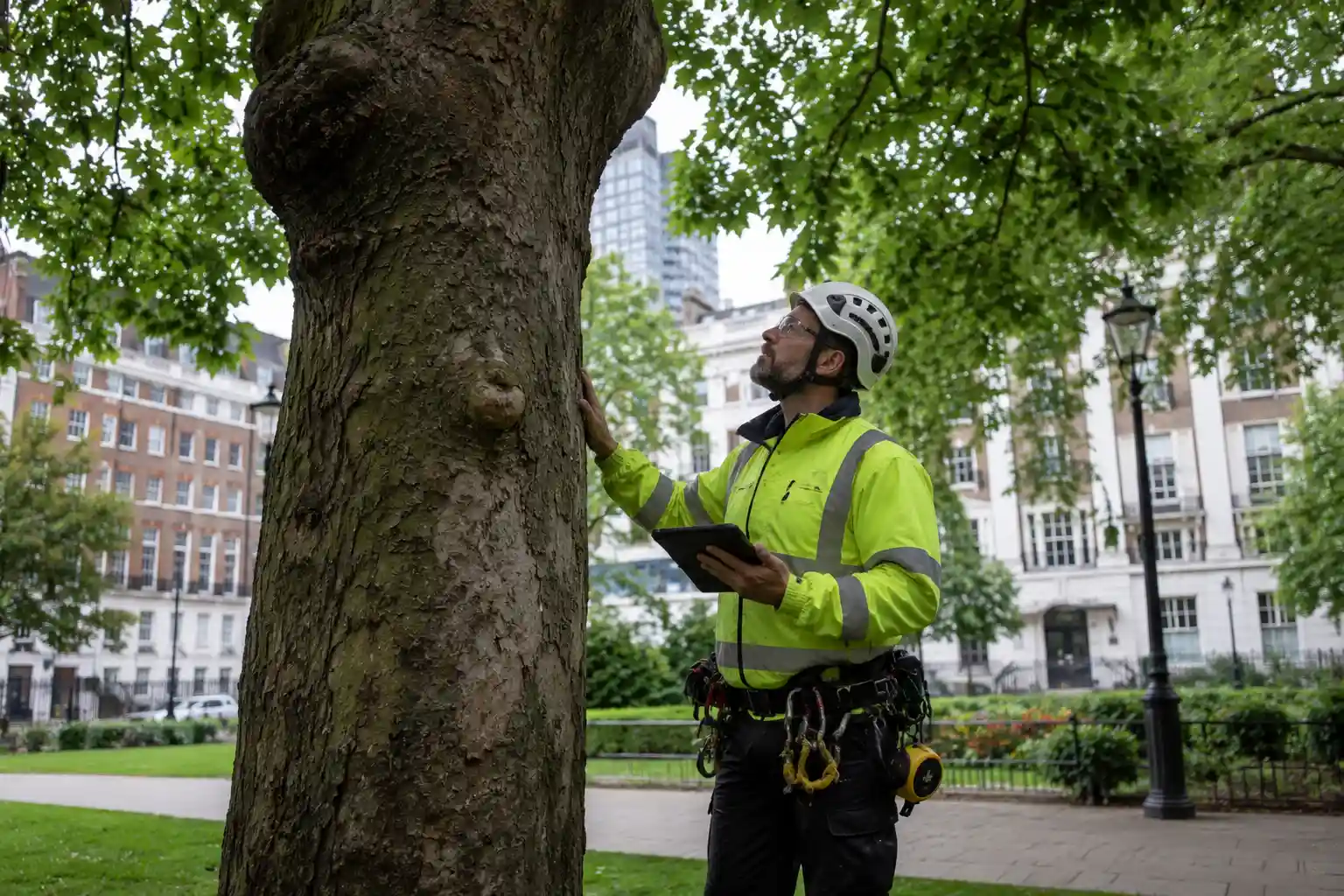
Trees are one of the most valuable assets in urban and residential environments, but they can also become serious safety hazards when structural problems go unnoticed. Storm damage, disease, root instability, decay, and environmental stress can weaken trees over time, increasing the risk of branch failure or collapse. This is why professional tree risk assessment has become an essential part of modern arboriculture.
Across the UK, professional arborists use advanced inspection methods and diagnostic techniques to identify potential risks before they become dangerous. These assessments help property owners, local authorities, developers, and land managers protect public safety while preserving healthy trees whenever possible.
Modern tree risk assessment is no longer limited to visual observation alone. Today’s arborists combine experience, scientific analysis, and digital technology to evaluate tree condition, structural stability, and long-term environmental impact.
Why Tree Risk Assessment Matters
Urban trees are exposed to conditions that can significantly affect their health and structural integrity. Construction work, compacted soil, pollution, restricted root growth, storms, drought, and pests all contribute to tree stress in modern cities.
Without regular inspections, hidden structural weaknesses may remain undetected until serious damage occurs. Falling branches or tree failure can result in property damage, traffic disruption, legal claims, or personal injury.
Professional arborists use risk assessment techniques to:
- Identify hazardous trees or branches
- Detect early signs of disease or decay
- Evaluate structural stability
- Support long-term tree preservation
- Reduce liability risks for property owners
- Improve public safety in urban spaces
- Assist with planning and development projects
Many local authorities and commercial property managers now include routine inspections as part of wider professional arboriculture services to ensure urban tree populations remain safe and sustainable.
Visual Tree Assessment (VTA)
One of the most widely used techniques in arboriculture is Visual Tree Assessment (VTA). This method involves a detailed inspection of the tree’s visible structure to identify signs of weakness, stress, or decline.
Professional arborists examine:
- Cracks or splits in the trunk
- Deadwood and hanging branches
- Fungal growth around the base
- Cavities and decay pockets
- Root plate movement
- Leaning patterns
- Canopy density and leaf condition
- Signs of pest infestation
Visual assessments often provide the first indication that further investigation may be necessary. Experienced arborists can identify subtle structural problems that may not be obvious to untrained property owners.
Decay Detection Technology
Internal decay is one of the most dangerous tree defects because it may not always be visible externally. Modern arborists now use specialised equipment to detect hidden structural weakness inside trunks and branches.
Resistograph Testing
A resistograph measures the resistance encountered by a small drill as it passes through wood tissue. Areas affected by decay or cavities show lower resistance levels, helping arborists determine the extent of internal damage without causing significant harm to the tree.
Sonic Tomography
Sonic tomography uses sound waves to map internal wood density. Sensors placed around the trunk measure how quickly sound travels through different sections of the tree. Decayed or hollow areas disrupt sound transmission, allowing arborists to generate detailed structural images.
These technologies are especially valuable when assessing mature trees in public areas where preservation is preferred over unnecessary removal.
Root System Evaluation
Healthy roots are essential for tree stability, yet root damage often goes unnoticed until major structural failure occurs. Urban development frequently disrupts underground root systems through excavation, paving, utility installation, or soil compaction.
Professional arborists evaluate root health by inspecting:
- Soil condition and drainage
- Root plate stability
- Surface root damage
- Construction-related disturbance
- Fungal activity near the base
- Signs of root decay
Root assessments are particularly important during construction planning and protecting mature trees projects where excavation work may affect long-established trees.
Tree Risk Classification Systems
Modern arborists often use structured risk classification frameworks to evaluate hazard levels consistently and professionally. These systems help prioritise maintenance work and determine whether monitoring, pruning, or removal is necessary.
Assessment criteria commonly include:
- Likelihood of tree failure
- Probability of target impact
- Severity of potential consequences
- Overall site usage and occupancy levels
Public parks, highways, schools, and commercial properties often require formal risk documentation as part of routine tree management programmes.
Drone Surveys and Digital Mapping
Technology is rapidly transforming modern arboriculture. Drone inspections and GIS-based tree mapping systems now allow arborists to assess large tree populations more efficiently and safely.
Drones help inspect difficult-to-access canopies, storm-damaged trees, and large woodland areas without requiring extensive climbing operations.
Digital mapping tools also support long-term urban tree management by tracking tree condition, maintenance history, species data, and inspection schedules.
Many organisations now integrate digital tools for arborists into their operational workflows to improve efficiency and data accuracy.
Environmental and Climate-Related Risk Factors
Climate change is creating new challenges for arborists across the UK. Increased storm intensity, prolonged drought periods, and shifting pest populations are placing additional stress on urban trees.
Modern risk assessments increasingly consider environmental resilience alongside structural condition. Arborists may evaluate:
- Drought tolerance
- Wind resistance
- Species suitability for urban conditions
- Pest vulnerability
- Long-term climate adaptability
These considerations are becoming more important as the UK arboriculture industry adapts to evolving environmental pressures.
When Property Owners Should Arrange an Assessment
Many property owners only seek professional advice after visible damage appears, but preventative inspections are far more effective and cost-efficient.
A professional tree risk assessment is recommended when:
- A tree shows signs of decline or disease
- Branches begin falling unexpectedly
- Construction work is planned nearby
- Trees lean significantly after storms
- Fungal growth appears around the base
- Large trees are located near buildings or public pathways
- Insurance or legal compliance requires documentation
Routine inspections are also essential for maintaining healthy trees as part of broader professional tree care strategies.
The Importance of Qualified Arborists
Tree risk assessment requires technical expertise, industry knowledge, and practical experience. Misdiagnosis can result in unnecessary tree removal or dangerous hazards being overlooked.
Qualified arborists understand tree biology, structural mechanics, environmental stress factors, and modern inspection technology. Their assessments help balance public safety with sustainable tree preservation.
As urban areas continue expanding across the UK, professional tree risk assessment will remain a critical part of responsible environmental management, public safety planning, and long-term urban sustainability.
