

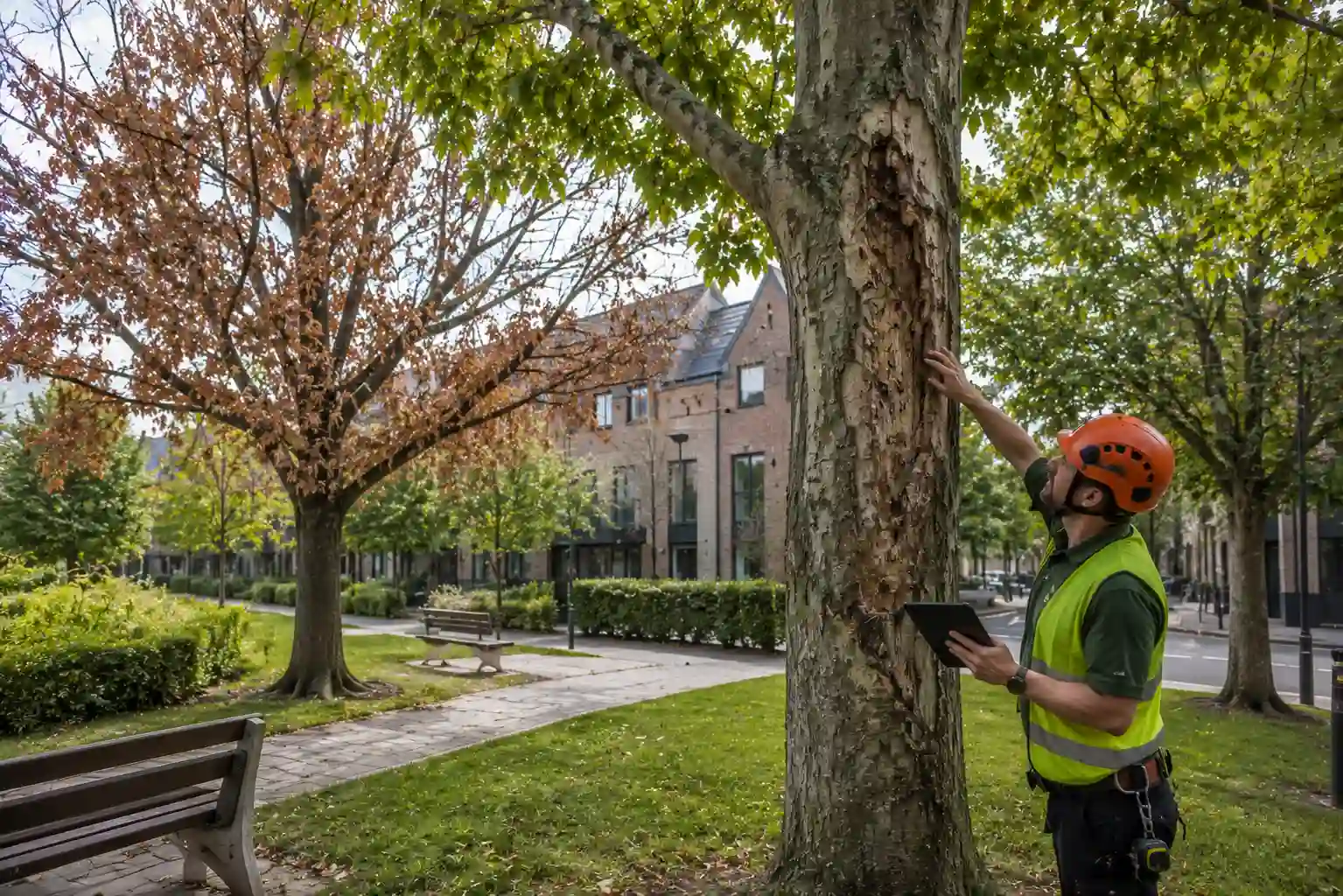
Trees are long-term environmental assets that improve outdoor spaces, support biodiversity, and enhance property value. However, trees can also develop serious health and structural problems that may go unnoticed until significant damage has already occurred.
Urban trees in particular are exposed to constant stress from pollution, compacted soil, changing weather conditions, pests, disease, and nearby construction activity. Without regular monitoring and maintenance, these issues can weaken trees over time and increase the risk of structural failure or permanent decline.
A professional tree health inspection helps identify problems early, allowing arborists to recommend preventative care before conditions become dangerous or irreversible.
Understanding the warning signs of poor tree health can help property owners know when immediate professional attention is necessary.
Why Early Tree Inspections Matter
Many tree problems develop gradually and may not appear serious during the early stages. By the time visible symptoms become severe, internal decay or root damage may already be extensive.
Routine inspections help:
- Detect disease early
- Identify structural weaknesses
- Reduce public safety risks
- Prevent costly emergency removals
- Protect nearby property and infrastructure
- Improve long-term tree health
- Support sustainable urban tree management
Professional arborists often integrate inspections into wider professional tree care programmes designed to protect urban tree populations throughout the year.
Dead or Falling Branches
One of the clearest warning signs of tree health problems is the presence of dead, brittle, or falling branches. Deadwood may indicate disease, decay, root stress, or structural decline.
Large dead branches pose serious risks in public areas, residential gardens, commercial properties, and near roads or pathways.
Common signs include:
- Branches without leaves during growing season
- Cracking or splitting limbs
- Falling branches after minor wind
- Brittle or hollow wood
- Visible fungal growth on branches
Professional arborists can assess whether pruning, structural support, or further investigation is necessary.
Fungal Growth Around the Base
Fungi growing near the trunk or root zone can be a major warning sign of internal decay. While not all fungal growth is dangerous, some species indicate serious structural problems affecting roots or lower trunk stability.
Common concerns include:
- Bracket fungi
- Mushroom clusters near roots
- Soft or decaying bark
- Cavities around the trunk base
Decay affecting root systems may significantly increase the risk of tree failure, especially during storms or heavy rainfall.
Professional arborists often use advanced diagnostic methods during tree risk assessment inspections to evaluate the extent of internal damage.
Leaning or Sudden Structural Changes
While some trees naturally develop slight leaning growth patterns, sudden changes in posture can indicate serious structural instability.
A tree that begins leaning unexpectedly may have:
- Root damage
- Soil instability
- Storm-related structural weakness
- Root plate movement
- Underground decay
Cracked soil around the base or exposed roots can also indicate root system failure.
Trees showing rapid structural changes should be inspected immediately by qualified arborists.
Unusual Leaf Discolouration or Early Leaf Drop
Leaves often provide some of the earliest indicators of tree stress or disease. Discoloured foliage, patchy canopy thinning, or premature leaf drop can all signal underlying health problems.
Possible causes may include:
- Drought stress
- Nutrient deficiencies
- Pest infestations
- Root damage
- Fungal infections
- Environmental stress
Climate-related environmental pressures are also becoming more common across the UK arboriculture industry, increasing the importance of routine monitoring.
Cracks, Cavities, and Bark Damage
Visible cracks or cavities in trunks and major limbs can indicate structural weakness or internal decay.
Warning signs include:
- Deep vertical trunk cracks
- Hollow cavities
- Peeling or missing bark
- Large wounds from storm damage
- Areas of soft or decaying wood
Structural defects do not always mean a tree requires removal, but they should always be professionally assessed to determine risk levels and treatment options.
Root Damage and Soil Problems
Healthy roots are essential for tree stability and nutrient absorption. Unfortunately, root damage is one of the most overlooked causes of declining tree health.
Common causes of root stress include:
- Construction work
- Soil compaction
- Poor drainage
- Excavation near trees
- Restricted growing space
Professional arborists often assist with protecting mature trees during development projects to reduce long-term root damage.
Symptoms of root problems may include canopy decline, reduced leaf growth, dieback, or leaning.
Pest Infestations
Insects and pests can quickly weaken trees if infestations are left untreated. Some pests directly damage bark, leaves, or root systems, while others spread disease between tree populations.
Common warning signs include:
- Holes in bark or leaves
- Sawdust-like material around the trunk
- Sticky residue on leaves
- Visible insect colonies
- Progressive canopy thinning
Climate change is also increasing the spread of invasive pests and disease throughout UK urban environments.
Storm Damage and Weather Stress
Strong winds, flooding, and prolonged drought periods can all affect tree stability and health.
After severe weather events, property owners should inspect trees for:
- Broken branches
- Trunk splitting
- Leaning
- Root plate movement
- Canopy imbalance
Storm-damaged trees may remain unstable even if external damage appears minor.
Professional inspections are especially important for mature trees located near buildings, roads, public spaces, or utility lines.
How Technology Is Improving Tree Inspections
Modern arborists increasingly use advanced technology to diagnose tree health problems more accurately.
Inspection methods may involve:
- Drone canopy surveys
- Decay detection equipment
- GIS tree mapping
- Digital monitoring systems
- Sonic tomography
Many firms now rely on digital tools for arborists to improve inspection accuracy and long-term maintenance planning.
Why Professional Arborists Are Essential
Tree health problems are often more complex than they first appear. Misdiagnosis or delayed treatment can increase risks and reduce the chances of recovery.
Qualified arborists providing professional arboriculture services understand how to assess structural stability, disease progression, environmental stress, and long-term management options safely and effectively.
According to the Arboricultural Association, routine inspections and preventative maintenance are essential for maintaining healthy and safe urban tree populations.
Recognising early warning signs and seeking professional advice quickly can help protect both valuable trees and surrounding property for many years to come.
