

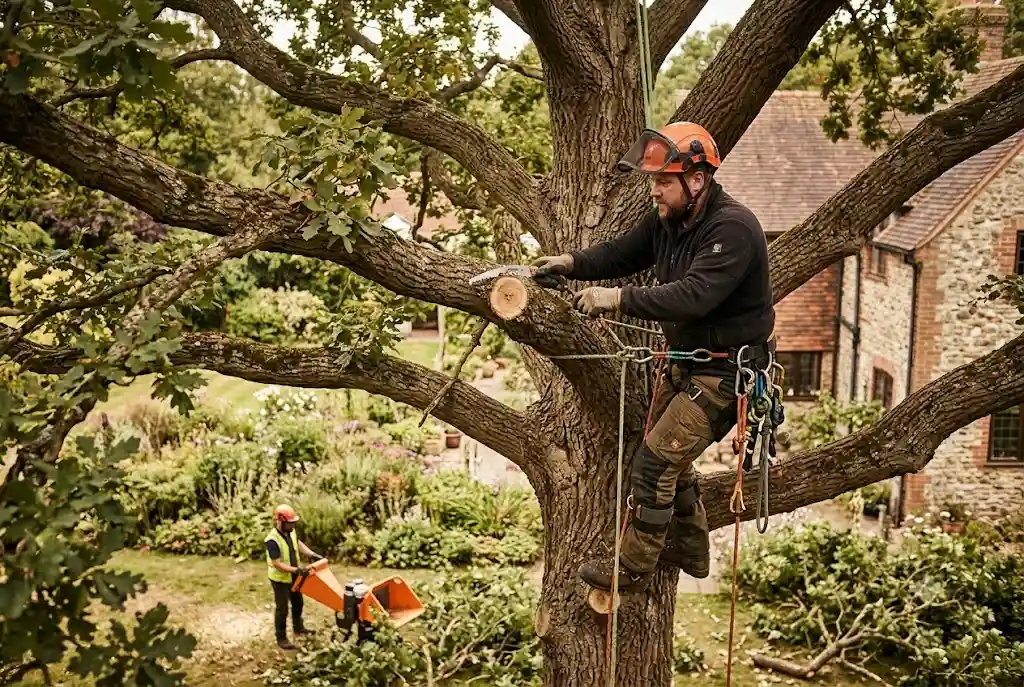
Trees branches play a vital role in the overall health, structure, and appearance of a tree. Understanding how branches grow and when they should be maintained is essential for keeping trees safe and thriving.
Branch care is a fundamental part of arboriculture, ensuring trees develop strong, stable structures over time.
What Are Tree Branches?
Branches are extensions of the trunk that support leaves, flowers, and fruit. They transport nutrients and water throughout the tree while also providing structural balance.
Healthy branches contribute to:
- Efficient photosynthesis
- Proper tree shape and balance
- Resistance to wind and environmental stress
Main Types of Tree Branches
Understanding different types of branches helps determine how and when to maintain them.
- Primary branches: Main limbs growing from the trunk
- Secondary branches: Smaller branches growing from primary limbs
- Dead branches: Non-living limbs that should be removed
- Crossing branches: Branches that rub together and cause damage
Why Tree Branch Maintenance Is Important
Proper maintenance prevents structural problems and improves tree health. Overgrown or damaged branches can pose safety risks.
Regular care helps:
- Reduce risk of falling branches
- Improve sunlight penetration
- Encourage healthy growth
- Maintain aesthetic appearance
This is why many property owners look for tree maintenance services for professional care.
When Should You Trim Tree Branches?
The timing of branch trimming depends on the tree species and condition.
- Winter: Ideal for structural pruning
- Spring/Summer: Light maintenance and shaping
- Any time: Removal of dead or dangerous branches
Correct timing helps minimise stress and supports faster recovery.
How to Identify Problem Branches
Not all branches need to be removed. Focus on identifying those that may cause issues.
- Dead or dying branches
- Cracked or weak limbs
- Branches growing too close to buildings
- Overlapping or crossing branches
For large trees or complex cases, a tree surveyor can provide a professional assessment.
Safe Branch Trimming Techniques
Using proper techniques is essential to avoid damaging the tree.
- Cut just outside the branch collar
- Avoid leaving stubs
- Do not remove too many branches at once
- Use clean, sharp tools
Poor pruning can lead to disease and structural weakness.
Legal Considerations in the UK
Before trimming branches, it is important to check if the tree is protected by law.
Some trees are covered by preservation orders or located in conservation areas. You can review official guidance through the
UK government tree protection regulations.
Professional vs DIY Tree Branch Care
Small branches can often be managed safely by homeowners, but larger trees require professional expertise.
Professional services offer:
- Specialist equipment
- Safety training
- Knowledge of tree biology
- Efficient and safe work practices
If you are unsure, hiring qualified professionals is always the safest option.
Conclusion
Trees branches are essential to a tree’s health and structure. Proper care and maintenance ensure trees remain safe, strong, and visually appealing.
Whether you manage small garden trees or large landscapes, understanding branch care is key to long-term tree health.
