

When a tree outgrows its corner of the garden, starts leaning towards the roof, or simply becomes unsafe, the first question most homeowners ask is about the cost to cut down a tree. It is a fair question, but there is no single fixed price. Tree removal is priced job by job, because no two trees, gardens or access routes are exactly the same.
So, how much does it cost to cut a tree down? For most UK households, quotes for removing one tree commonly land anywhere between a few hundred pounds and a few thousand. This guide explains the typical price ranges by tree size, the factors that push a quote up or down, the extra costs people often forget to budget for, and how to get an accurate written quote you can trust.
What Is the Average Cost to Cut Down a Tree?
As a rough guide, the cost of cutting down a tree in the UK usually falls into the bands below. Treat them as typical ranges rather than fixed prices, because your own quote will depend on the details covered in the next section.
- Small tree (up to around 20 ft / 6 m, such as a young fruit tree or small ornamental): typically £150 to £450.
- Medium tree (around 20 to 40 ft / 6 to 12 m): typically £400 to £1,000.
- Large tree (around 40 to 60 ft / 12 to 18 m): typically £900 to £2,000.
- Very large or mature tree (over 60 ft / 18 m, or with a wide, heavy canopy): often £1,800 to £4,000 or more, especially where a crane, a platform or traffic management is needed.
If you have been looking into how much to cut down a tree and found wildly different figures, this spread is the reason. A small tree in an open garden with clear access might be removed in a couple of hours, while a mature oak overhanging a conservatory could keep a full team busy for two days. Both jobs are described as tree removal, but they are completely different pieces of work.
What Affects the Price of Tree Removal?
A tree surgeon pricing a job is really pricing time, labour, equipment and risk. These are the main factors that shape the final figure.
- Tree size and height. The bigger the tree, the more sections it must be cut into, the more timber and brash there is to process, and the longer the job takes.
- Species and timber type. Dense hardwoods such as oak and beech are heavy and slow to cut, carry and chip. Lighter softwoods are usually quicker to deal with, although tall conifers bring their own challenges.
- Condition of the tree. Dead, decaying or storm-damaged trees can be dangerous to climb and dismantle, which adds time and care. A dying tree can cost more to remove safely than a healthy one.
- Access. Narrow side gates, steps, steep slopes and long carries from the tree to the chipper all add labour. A tree at the far end of a long garden with no vehicle access will cost more than the same tree standing next to a driveway.
- Location and surroundings. Trees overhanging houses, greenhouses, fences, roads or power lines need rigging and controlled lowering. Labour rates also vary by region, and quotes in London and the South East are usually higher than in much of the North, Wales and Scotland.
- Number of trees. Removing two or three trees in a single visit is normally cheaper per tree than booking separate visits, because the team and equipment are already on site.
This is also why a reputable firm will rarely commit to a firm price from a photograph alone. A short site visit lets them measure the tree, check the access and spot hidden hazards before giving you a number.
Sectional Dismantling vs Straight Felling
The method used to take the tree down has a big influence on the price. Straight felling means cutting the tree at the base so that it falls in one piece. It is the cheapest method, but it needs a large, clear drop zone that most UK gardens simply do not have.
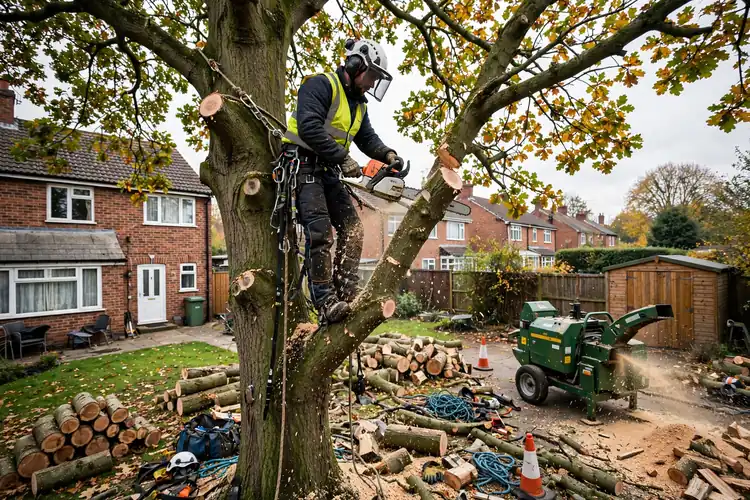
In built-up areas, trees are normally removed by sectional dismantling. A climber works through the crown, cutting manageable sections and lowering them on ropes, while the ground team feeds the brash through a chipper and stacks or removes the timber. It is slower, more skilled work, which is why it costs more, but it protects your fences, planting, buildings and neighbours. Whatever wording appears on your quotes, whether felling, dismantling or simply the cost to chop down a tree piece by piece, ask the firm to explain which method they intend to use and why.
Extra Costs to Budget For
The headline figure does not always cover everything. Check whether these common extras are included in the quote or itemised separately.
- Stump grinding or removal. Felling normally leaves a stump behind. Grinding it below ground level typically adds around £60 to £350, depending on the stump’s diameter and how easy it is to reach. Our guide to stump removal explains the options and what to expect.
- Waste removal. Most firms chip the brash on site and include taking the arisings away, but confirm this in writing. Keeping the logs for your own use can sometimes trim the bill slightly, while leaving the site perfectly tidy takes extra time.
- Timber processing. Cutting the trunk into log lengths for a wood burner is often available on request. Removing very large timber, or milling it, can add to the cost.
- Protected-tree checks and permissions. Before any work starts, the tree must be checked for a Tree Preservation Order (TPO) or conservation area protection. Carrying out work on a protected tree without consent is an offence, and an application can add weeks to the timeline, even though there is usually no fee to apply. Our guide to Tree Preservation Orders and owner responsibilities explains how the rules work.
- Specialist equipment and traffic management. Cherry pickers, cranes or temporary traffic controls for trees beside a road all add hire costs to the job.
How to Get an Accurate Quote
Type “how much to cut tree down uk” or “how much to cut a tree down uk” into a search engine and you will find dozens of different figures, because there is no standard tariff. The only figure that matters is the one for your tree, in your garden, and that takes a site visit.
The honest answer to how much to have a tree cut down is that it depends on the tree in front of you. So gather at least two or three quotes, always in writing, and make sure each one is itemised: the removal method, stump grinding, waste disposal, what happens to the timber, and whether VAT is included. Comparing like with like is the only fair way to judge them. Be wary of a quote that is dramatically cheaper than the rest, because the saving usually comes from somewhere, often insurance, qualifications or waste disposal.
Timing matters too. How much to get a tree cut down can rise sharply for emergency call-outs after a storm, while planned work booked ahead on a normal weekday is usually keener priced. If you are still deciding whether the tree should come out at all, our overview of professional tree removal services explains what a full service should include, and our guide to tree removal and stump removal shows how the two jobs are handled together.
Questions to Ask a Tree Surgeon Before You Book
- Are you insured, and what level of public liability cover do you carry?
- What qualifications do your climbers hold, for example NPTC or LANTRA certificates?
- Will you check for a Tree Preservation Order or conservation area restrictions before work starts?
- Is stump grinding included in the price, and to what depth?
- What happens to the timber and chippings — are they taken away or left for me?
- Is the quote fixed, itemised and in writing, and does it include VAT?
- Can you share references or recent local work I can check?
- When could you do the work, and how long will it take?
Ways to Keep Costs Down Safely
- Bundle the work. Having several trees removed, or combining removal with major pruning, in one visit spreads the cost of getting the team and equipment to you.
- Keep the timber. If you have a log burner or stove, agreeing to keep the logs can reduce the waste-removal element of the quote, as long as it is agreed in writing first.
- Clear the access. Moving cars, pots and garden furniture before the team arrives means they can start straight away and finish sooner.
- Book ahead. Planned work outside the busy post-storm period is easier to schedule and can be keener priced.
- Never cut corners on the essentials. Insurance, qualifications and legal waste disposal are what you are really paying for. The cheapest quote can become the most expensive if something goes wrong.
Why DIY Tree Removal Is Risky
It can be tempting to hire a chainsaw and tackle the job yourself, but tree work is one of the most dangerous jobs in the garden. Trees are far heavier than they look, cut limbs under tension can spring back without warning, and a surprising number of serious injuries involve ladders and saws used together. If a section falls the wrong way, you could be liable for damage to a neighbour’s roof, fence or car, and your home insurance may not cover damage caused by DIY tree work. Removing a protected tree without consent can also lead to prosecution and a substantial fine. Pruning a small, low branch is one thing; felling or dismantling anything sizeable belongs with trained, insured professionals.
The cost to cut down a tree in the UK is never one single number, but it becomes predictable once a surgeon has seen the tree: size, condition, access and method decide most of it, with the stump and waste handling making up the rest. Get two or three itemised written quotes, check the insurance and protection status, and you will know exactly what you are paying for, and why.
