

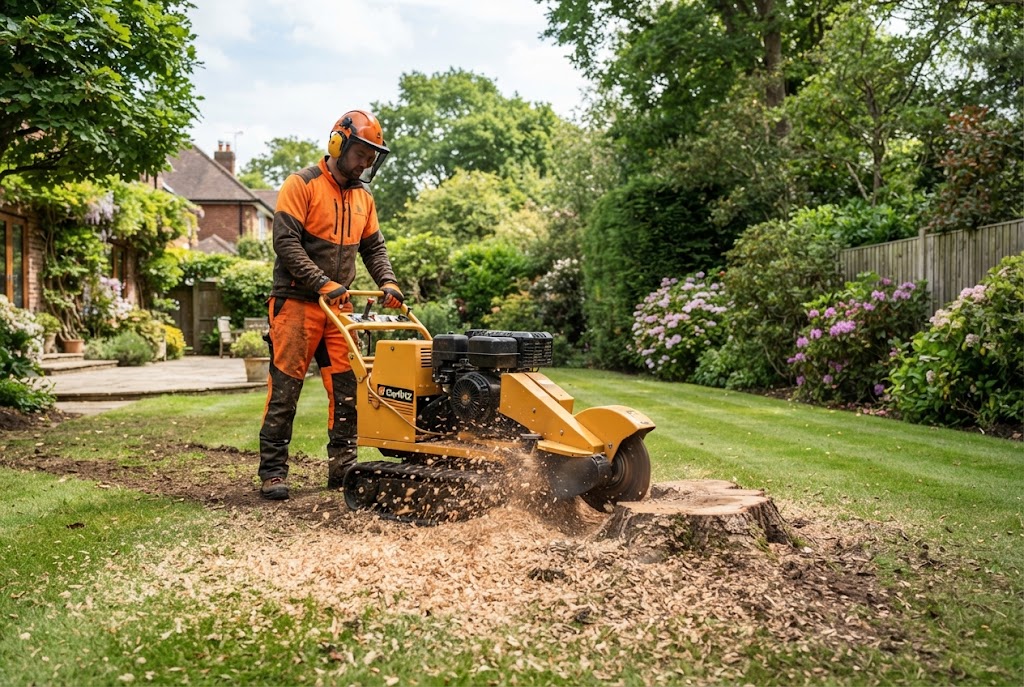
Stump removal is an important step after a tree has been felled. While the visible tree may be gone, the remaining stump can continue to cause practical, aesthetic, and even safety issues for homeowners and property managers. Left untreated, old stumps may encourage fungal growth, attract pests, interfere with landscaping projects, and create trip hazards. Removing the stump properly restores usable outdoor space while preparing the area for future planting or garden improvements.
Whether you’re redesigning your landscape or simply want a cleaner and safer garden, professional stump removal offers an efficient and long-lasting solution.
Why Is Stump Removal Important?
Many people assume that once a tree has been cut down, the job is complete. However, the remaining stump continues to occupy valuable space and may deteriorate over time.
Professional stump removal provides several benefits:
- Improves garden appearance
- Eliminates trip hazards
- Prevents pest infestations
- Reduces fungal growth
- Creates space for landscaping projects
- Prevents unwanted tree regrowth
- Makes lawn maintenance easier
Removing the stump allows the area to be used safely and effectively while improving the overall appearance of the property.
Tree Stump Removal Methods
Tree stump removal can be carried out using different techniques depending on the stump’s size, location, age, and surrounding environment.
The most common methods include:
- Mechanical stump grinding
- Complete stump excavation
- Manual removal for smaller stumps
- Root system management where required
Professional arborists will recommend the most suitable option after assessing the site and future plans for the area.
What Is Stump Grinding?
Stump grinding is the most widely used method for removing tree stumps in residential and commercial landscapes. A specialist grinding machine gradually reduces the stump into small wood chips below ground level.
Advantages of stump grinding include:
- Fast completion
- Minimal disruption to surrounding areas
- Reduced excavation
- Suitable for most garden settings
- Allows replanting or turf installation
- Environmentally responsible disposal of wood material
Because the surrounding soil is disturbed far less than full excavation, stump grinding is often the preferred choice for established gardens.
When Should You Remove a Tree Stump?
It is generally advisable to arrange remove tree stump services soon after a tree has been felled. Delaying removal can allow decay to develop, increasing the likelihood of fungal infections or insect activity.
You should consider removal if:
- The stump creates a trip hazard
- You plan to install new landscaping
- New turf or paving is being installed
- The stump is producing new shoots
- Pests or fungi are present
- Roots are interfering with garden projects
Early removal helps maintain a safer and healthier outdoor environment.
Professional Stump Removal Services
Reliable stump removal services use specialist equipment that allows stumps to be removed efficiently while protecting nearby buildings, fences, pathways, and planting beds.
Typical professional services include:
- Site assessment
- Stump grinding
- Complete stump removal where appropriate
- Root management
- Site clean-up
- Advice on replanting
Professional equipment makes the process faster, safer, and more effective than attempting removal using domestic tools.
Can Tree Stumps Cause Problems?
Old stumps can create a variety of long-term issues if left untreated.
Potential problems include:
- Wood-decaying fungi
- Insect infestations
- Trip hazards
- Obstacles for lawn mowing
- Root suckers producing unwanted growth
- Reduced garden usability
Removing the stump eliminates these issues while allowing the landscape to develop naturally.
Preparing Your Garden After Stump Removal
Once the stump has been removed, the area can be restored for a variety of purposes.
Many homeowners choose to:
- Reseed the lawn
- Plant replacement trees
- Create flower beds
- Install patios or pathways
- Expand garden borders
- Improve drainage
Professional advice helps ensure the soil is properly prepared before new planting begins.
Why DIY Stump Removal Is Often Difficult
Removing a large stump without specialist machinery is physically demanding and can damage underground utilities, irrigation systems, or surrounding landscaping.
Professional arborists have the equipment and expertise to complete the work safely while minimising disruption to neighbouring plants and structures.
Supporting Long-Term Garden Health
Removing unwanted stumps is often part of a broader landscape management plan. Regular tree maintenance helps reduce the need for future removals by identifying health issues early and preserving valuable trees wherever possible.
If a tree must eventually be removed, combining stump removal with ongoing residential tree care ensures the surrounding landscape remains healthy, attractive, and well managed.
Environmental Considerations
Professional arborists aim to minimise environmental impact by recycling wood chips generated during stump grinding and protecting surrounding vegetation throughout the removal process.
The Arboricultural Association provides guidance on professional tree care standards and responsible arboricultural practices within the UK.
Conclusion
Stump removal is an effective way to improve the safety, appearance, and functionality of your outdoor space. Whether through stump grinding or complete tree stump removal, professional services help eliminate hazards, prevent future problems, and prepare your garden for new landscaping projects.
Working with experienced arborists ensures every stump is removed safely using the most appropriate techniques, leaving your property ready for healthy future growth and long-term landscape improvements.
