

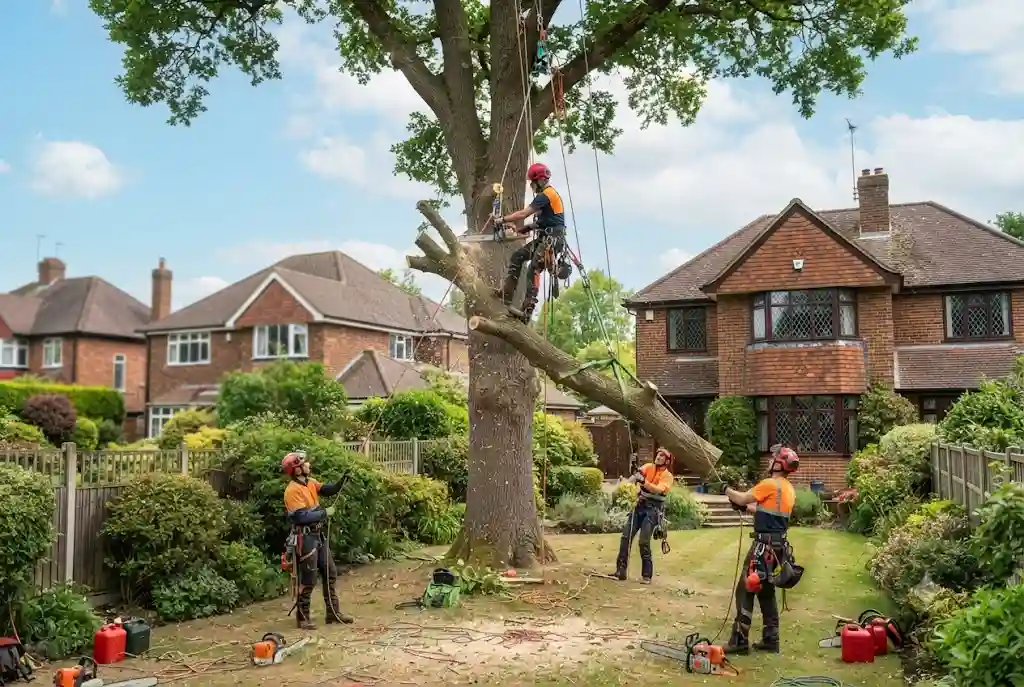
Tree felling is a specialist arboricultural service used to safely remove trees that have become hazardous, diseased, storm-damaged, or unsuitable for their location. While many trees can be maintained through pruning or crown management, some eventually require complete removal to protect people, buildings, gardens, and surrounding infrastructure.
Whether you are planning landscaping improvements, managing an unsafe tree, or dealing with storm damage, professional arborists use proven techniques and specialist equipment to carry out tree felling safely and efficiently. Understanding the process helps property owners make informed decisions while protecting both their property and the environment.
What Is Tree Felling?
Tree felling refers to the controlled process of bringing down a tree safely. Contrary to popular belief, professional arborists rarely simply cut a tree at its base. Instead, they carefully assess the site and select the safest removal method based on the tree’s size, condition, and surroundings.
Depending on the available space, a tree may be felled in one controlled direction or dismantled gradually into smaller sections.
When Is Tree Felling Necessary?
Removing a tree is usually considered only after other management options have been assessed. Qualified arborists always aim to preserve healthy trees whenever possible.
Dead or Dangerous Trees
Dead trees become increasingly unstable over time, creating a significant risk of falling branches or complete structural failure.
Disease or Decay
Serious fungal infections, internal decay, or pest infestations can weaken the structural integrity of a tree beyond recovery.
Storm Damage
High winds and severe weather may split trunks, uproot trees, or leave them leaning dangerously. In these situations, safe tree felling is often the best solution.
Construction Projects
Property extensions, driveway installations, and landscaping projects occasionally require trees to be removed where they interfere with development plans.
Safe Tree Felling Techniques
Professional arborists use different methods depending on the location and condition of the tree.
Directional Felling
Where there is sufficient open space, the arborist carefully controls the direction in which the tree falls using precision cuts and safety techniques.
Sectional Tree Dismantling
In residential areas, large trees are usually dismantled one section at a time using climbing equipment, lowering ropes, and rigging systems. This approach protects nearby homes, fences, conservatories, roads, and gardens.
Mechanical Assistance
Some large or hazardous trees require cranes, elevated work platforms, or specialist machinery to ensure the safest possible removal.
Tree Cutting vs Tree Felling
Although the terms are often used interchangeably, tree cutting covers a wider range of services than complete removal.
Tree cutting may include:
- Removing individual branches
- Reducing canopy size
- Removing deadwood
- Improving tree structure
- Preparing a tree for dismantling
Tree felling specifically refers to removing the entire tree.
In many cases, professional tree pruning services provide a practical alternative when the tree remains healthy and structurally sound.
Planning a Tree Felling Project
Every successful tree removal begins with a detailed site inspection. Professional arborists assess:
- Tree height and diameter
- Tree species
- Structural condition
- Nearby buildings
- Utility lines
- Ground conditions
- Access for equipment
- Wildlife considerations
This assessment allows the safest removal strategy to be developed before any cutting begins.
Legal Considerations in the UK
Some trees are protected by Tree Preservation Orders (TPOs) or located within conservation areas. Before carrying out tree felling, homeowners should ensure the necessary permissions have been obtained where applicable.
Professional arborists can advise on local authority requirements and help ensure all work complies with current regulations.
Domestic and Residential Tree Felling
Residential properties present unique challenges because trees often stand close to homes, garages, sheds, greenhouses, fences, and neighbouring gardens.
Professional arborists use controlled dismantling techniques that minimise disruption while protecting surrounding structures. Homeowners searching for reliable tree removal services often require this specialist approach when dealing with mature garden trees.
Equipment Used for Safe Tree Felling
Modern arboriculture relies on specialist equipment to improve safety and efficiency.
- Professional chainsaws
- Climbing harnesses
- Rigging ropes
- Lowering devices
- Wood chippers
- Protective helmets and PPE
- Mechanical lifting equipment where required
Using the correct equipment significantly reduces risks during complex tree removal projects.
Why DIY Tree Felling Is Dangerous
Attempting to cut down trees without appropriate training can result in serious injuries, property damage, or uncontrolled tree falls.
Professional arborists understand tree weight distribution, cutting angles, tension forces, and emergency procedures. Their training enables them to complete even difficult removals safely and efficiently.
Environmental Responsibility
Responsible tree management extends beyond simply removing trees. Whenever practical, arborists recommend preserving healthy trees through maintenance rather than unnecessary removal.
When removal becomes unavoidable, timber and green waste are commonly recycled into wood chips, biomass fuel, mulch, or other sustainable products that minimise waste.
After Tree Felling
Following removal, property owners may wish to remove the remaining stump, prepare the area for landscaping, install replacement planting, or improve the garden layout.
Regular inspections of remaining trees also help identify future issues before they become significant safety concerns.
Conclusion
Tree felling is a highly specialised service that requires expert planning, technical skill, and strict safety procedures. Whether you’re removing a dangerous tree, making space for development, or responding to storm damage, qualified arborists ensure every stage of the process is completed safely and professionally.
Choosing experienced tree specialists protects your property, complies with UK regulations, and helps preserve the long-term health of your landscape through responsible tree management.
For further guidance on professional arboriculture and industry standards, visit the Arboricultural Association.
