

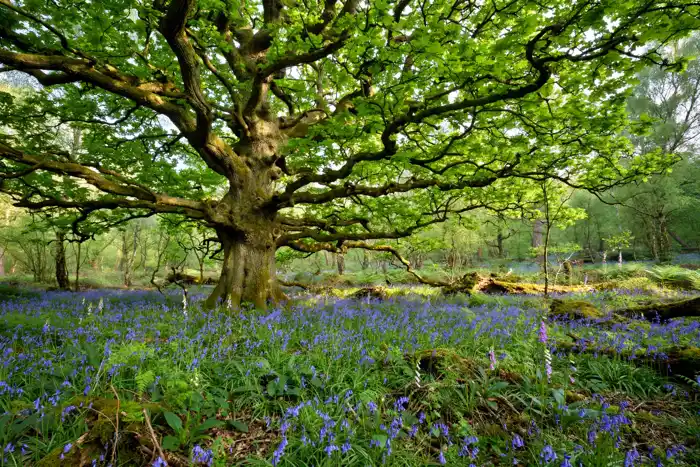
The UK is home to a rich mix of native and well-established trees, from mighty oaks in ancient woodlands to rowans lining city streets. Common UK trees are the species you are most likely to meet on walks, in parks, and in gardens, and learning to recognise them makes every outing more interesting. This guide introduces the most familiar UK trees, how to identify them, and where you are likely to find them.
Oak: The King of British Trees
No list of common UK trees is complete without the oak. English oak and sessile oak are both native, long-lived, and rich in wildlife value, supporting more insect species than almost any other British tree. Oaks are recognised by their lobed leaves and acorns, and by their broad, spreading crowns in maturity. They grow in woodlands, parks, and hedgerows across the country, and ancient oaks are among the oldest living things in Britain. If you plant an oak, give it space: it needs room to spread and decades to reach its full glory, but few trees repay patience so generously.
Ash, Beech, and Birch: Woodland Favourites
Ash, beech, and birch are among the most widespread woodland trees in the UK. Ash has distinctive black buds in winter and compound leaves that turn golden in autumn, and it has long been valued for tool handles and sports equipment. Beech creates the deep shade of southern woodlands, with smooth grey bark and delicate spring leaves, and its nuts feed wildlife in autumn. Silver birch is easy to spot by its white peeling bark and light, airy canopy, and it is often one of the first trees to colonise open ground. Together, these three species shape the character of much of Britain’s woodland. For more on how native species support nature, our guide to native tree species explains their role in local ecosystems.
Rowan, Hawthorn, and Holly: Hedgerow Heroes
Smaller trees deserve just as much attention. Rowan brightens autumn with clusters of red berries that birds love, and its delicate leaves turn rich colours before falling. Hawthorn is the backbone of many old hedgerows, flowering white in spring and fruiting red in autumn, and it provides food and shelter for wildlife all year. Holly keeps its glossy evergreen leaves and red berries through winter, making it a familiar sight in gardens and churchyards. These species are excellent choices for smaller gardens and wildlife-friendly hedges, since they stay manageable while offering year-round interest.
Conifers in the UK Landscape
Although broadleaf trees dominate native woodland, conifers are a familiar part of the UK landscape too. Scots pine is the only pine truly native to Britain, forming the ancient Caledonian forests of Scotland, while Norway spruce, Douglas fir, and larches were introduced for forestry and now shape many upland plantations. Yew is another native conifer, famous for its longevity in churchyards and its dark, dense foliage. Conifers bring year-round structure to gardens and landscapes, and their evergreen presence contrasts beautifully with bare winter branches. If you are considering planting, our complete tree planting guide covers site selection and aftercare step by step.
Street and Garden Trees
Urban trees face tougher conditions than woodland ones, yet many species thrive in towns and cities. London plane, lime, and cherry are common street trees, chosen for their tolerance of pollution, pruning, and restricted root space. In gardens, ornamental cherries, crab apples, and smaller maples offer spring blossom, autumn colour, and manageable size. When choosing a garden tree, think about its mature size, not its size in the pot, and check how far its roots may spread. A tree that fits its space needs less pruning and causes fewer problems for buildings and pavements. Our guide to trees and urban wildlife shows how city trees support birds, insects, and other wildlife.
Identifying Trees Through the Seasons
Tree identification changes with the seasons, and each season offers different clues. In spring and summer, leaves, flowers, and fruit are the easiest guides: leaf shape, arrangement, and bark texture together usually narrow a tree down quickly. In autumn, colour and falling fruit help, while winter identification relies on buds, bark, and overall shape, which takes more practice but is very rewarding. A simple field guide or identification app helps beginners, and keeping notes on trees you meet regularly builds skill fast. Start with the most common species in your area and expand from there.
Why Common Trees Matter
Common trees do extraordinary work quietly. They clean the air, store carbon, cool streets in summer, reduce flooding by slowing rainfall, and provide homes and food for wildlife. They also shape our sense of place: the oak on the village green, the cherry-lined street, and the beech wood above the town are landmarks as much as buildings. Protecting common trees matters as much as protecting rare ones, since their sheer numbers deliver most of the benefits. If a tree on your land looks unwell, our guide to common signs your trees need attention explains what to look for and when to call a professional.
Enjoying and Protecting UK Trees
The best way to enjoy common UK trees is to get out and look at them. Visit a local woodland in different seasons, join a guided tree walk, or simply learn the trees on your own street. If you own land, protect the trees you have before planting new ones: avoid damaging roots during building work, and understand the rules that may apply, like those in our guides to tree law in the UK and BS5837 tree surveys for development sites. Common UK trees are all around us, and once you start noticing them, you will see your surroundings in a completely new way.
