

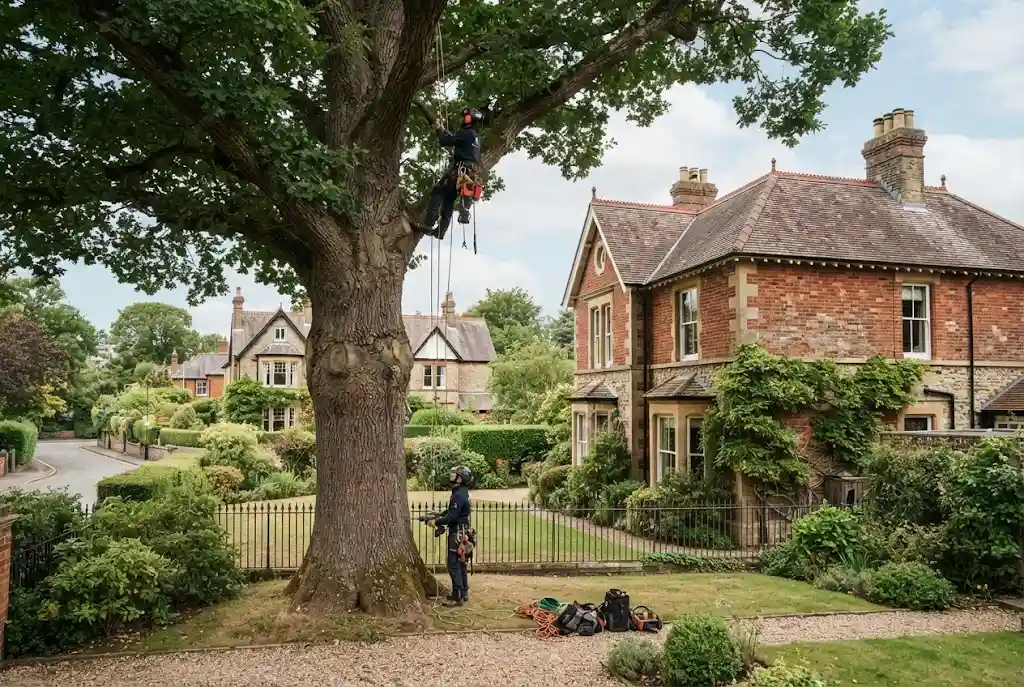
Understanding tree law UK rules can be important for homeowners, landlords, developers, neighbours and anyone responsible for land containing trees. Trees can affect property boundaries, development plans, maintenance duties and disputes between neighbouring landowners. However, the legal position is not always straightforward because different rules can apply depending on where the tree is located, whether it is protected and what work is proposed.
For property owners, knowing the basics of tree legislation can help prevent avoidable disputes and potentially serious legal problems. Issues can include protected trees, conservation areas, ownership questions, boundary disputes, damage, safety concerns and planning restrictions. This guide explains the main principles behind trees and the law in the UK, with particular attention to the rules that apply in England.
What Does Tree Law UK Cover?
Tree law is not one single area of legislation. Instead, several legal and planning rules can affect trees and the people who own, occupy or manage land where trees grow.
Depending on the circumstances, tree legislation can cover protection orders, conservation areas, planning applications, property boundaries, nuisance, safety and responsibilities to prevent foreseeable harm. Some matters are also governed by local authority decisions and planning policies.
This means that a tree being located on private property does not necessarily mean the owner can remove, cut back or otherwise alter it without considering the legal position first.
It is also important to distinguish between UK-wide principles and rules that apply specifically to England. Tree protection and planning legislation can differ between England, Wales, Scotland and Northern Ireland. Anyone dealing with a specific legal dispute should therefore check the rules applicable to the relevant part of the UK.
Tree Preservation Orders and Tree Legislation
One of the most important aspects of tree law in England is the Tree Preservation Order, commonly known as a TPO. A local planning authority can make a TPO to protect individual trees, groups of trees, areas of trees or woodlands where protection is considered necessary in the interests of amenity.
Government guidance explains that a TPO generally prevents certain works, including cutting down, topping, lopping, uprooting, wilfully damaging or destroying a protected tree, unless the necessary consent or an applicable exemption exists.
Consequently, a property owner should not assume that ownership automatically gives them unrestricted rights over a protected tree. Before arranging significant tree work, it is sensible to establish whether a TPO applies and whether the proposed work requires local authority consent.
The GOV.UK guidance on Tree Preservation Orders and trees in conservation areas provides further information about the relevant procedures and restrictions.
Can a Protected Tree Ever Be Worked On?
Yes. A TPO does not necessarily mean that a tree can never be pruned, reduced or removed. Instead, the rules regulate when and how certain works can be carried out.
In many circumstances, an application must be submitted to the local planning authority before work begins. The application should clearly identify the tree, explain the proposed work and provide appropriate reasons and supporting information.
There are also statutory exceptions in certain circumstances, including some situations involving dangerous trees, dead trees and work necessary to comply with legal obligations. However, the precise requirements can be important, so relying on an assumed exemption can create unnecessary risk.
Trees in Conservation Areas
Conservation areas create another important layer of protection. Trees in a conservation area may be protected even when there is no individual Tree Preservation Order covering them.
In England, certain work to trees in a conservation area that are not already subject to a TPO can require a section 211 notice to be given to the local planning authority. The notice generally needs to be provided before qualifying work is carried out, giving the authority an opportunity to consider whether a Tree Preservation Order should be made.
This is one reason why checking the planning status of a tree before arranging substantial work is so important. A homeowner may own the tree but still have to comply with statutory requirements before altering it.
Tree Ownership Rights and Property Boundaries
Tree ownership rights can become complicated where a tree is close to, on or across a property boundary. The first question is normally who owns the land on which the tree’s trunk is growing. However, boundary arrangements and property documents may need to be examined where ownership is disputed.
Branches and roots can also extend beyond the owner’s land. This can create practical problems between neighbours, particularly when growth interferes with gardens, buildings, access or other property.
Ownership should therefore not be confused with unlimited control. A tree owner may have responsibilities relating to the condition of a tree, while a neighbour may have certain rights concerning encroaching branches or roots. The legal position depends on the circumstances and the nature of the interference.
Where a dispute concerns a boundary tree, it can be useful to establish the boundary position and obtain appropriate professional evidence before taking action. Cutting or removing a tree without checking whether it is protected can create a separate issue even where the underlying ownership dispute appears straightforward.
Legal Responsibilities for Trees
One of the most important questions for tree owners is whether they have legal responsibilities for trees on their land. In general terms, property owners and occupiers should take reasonable care where there is a foreseeable risk that a tree could cause harm or damage.
The level of attention required can depend on factors such as the tree’s condition, location, size, surrounding environment and the potential consequences of failure. A tree standing beside a frequently used road, public footpath or neighbouring building may present different risks from a tree in an isolated part of private land.
Regular observation and appropriate maintenance can therefore be important parts of responsible tree ownership. Where there are visible signs of deterioration, significant structural defects or concerns about stability, professional assessment may be appropriate.
For more serious situations involving potentially hazardous trees, see our related guide to dangerous tree liability and tree owner responsibility.
When Can Tree Disputes Become Legal Disputes?
Not every disagreement about a tree requires legal action. Many disputes begin as practical disagreements between neighbours about shade, overhanging branches, roots, fallen leaves, damage or the appearance of a tree.
However, a dispute can become more serious when one party believes that another has breached a legal duty, damaged property, interfered with their use of land or carried out unauthorised work on a protected tree.
Before escalating a disagreement, it is often sensible to establish the facts. This may include identifying the tree owner, checking whether the tree is protected, understanding the boundary position and obtaining suitable arboricultural evidence where the tree’s condition is disputed.
Keeping photographs, correspondence, professional reports and relevant planning documents can also help establish what happened if the disagreement later requires formal legal consideration.
Tree Law UK and Development Projects
Tree legislation can also affect people who want to build an extension, alter a property or undertake a larger development project. Trees can influence the planning process, particularly where protected trees or conservation areas are involved.
A development proposal may need to consider existing trees, potential root protection areas and the impact of construction work. Planning authorities can also impose conditions relating to tree protection and planting in appropriate circumstances.
This means trees should be considered early rather than treated as an issue after a planning application has already been designed. Early assessment can help identify potential restrictions and reduce the risk of redesigning a proposal later.
If your issue relates specifically to development or proposed building work, our guide to planning permission for trees and tree-related planning requirements provides a useful related starting point.
What Should You Check Before Carrying Out Tree Work?
Before arranging significant tree work, a property owner should establish the legal position rather than relying solely on the tree contractor’s assumption.
- Check whether the tree is subject to a Tree Preservation Order.
- Check whether the property is located within a conservation area.
- Establish whether the proposed work requires local authority consent or notification.
- Consider whether planning permission or planning conditions affect the tree.
- Confirm who owns the tree and whether boundary issues exist.
- Consider whether protected wildlife or other legal restrictions may be relevant.
- Keep copies of applications, notices, permissions and professional reports.
These checks are particularly important before felling, major pruning, root removal or other substantial work. A mistake can sometimes lead to enforcement action, replacement obligations or other legal consequences.
When Is Tree Legal Advice Appropriate?
Tree legal advice can be particularly useful when the situation involves a formal dispute, potential liability, enforcement action or uncertainty about rights and responsibilities.
Examples can include disputes between neighbours, allegations of damage, questions about tree ownership, disagreement over responsibility for a dangerous tree, objections to tree protection measures or problems involving planning and development.
Professional arboricultural evidence can also be valuable because legal questions may depend on technical facts about the tree’s condition, structural stability, location and likely risks. In more complex matters, legal and arboricultural expertise may need to work together.
Why Understanding Trees and the Law Matters
Trees can add considerable value to residential areas, gardens and landscapes, but they can also create legal and practical responsibilities. The key point is that tree ownership, planning controls and responsibility for risk are separate questions that may need to be considered together.
Understanding the relevant rules before acting can help property owners make informed decisions and reduce the likelihood of unnecessary disputes. It can also help neighbours understand when a disagreement is primarily a practical issue and when professional advice may be warranted.
For anyone dealing with a specific tree dispute or proposed tree work, the safest approach is to establish the facts first, check the applicable local planning controls and obtain appropriate professional advice where the legal position is unclear.
Final Thoughts on Tree Law UK
Tree law UK covers a broad range of issues, from Tree Preservation Orders and conservation areas to ownership, neighbour disputes, safety responsibilities and planning requirements. The rules can vary depending on the location and circumstances, so a general assumption about what a tree owner can or cannot do may be unreliable.
Whether you are dealing with a protected tree, a boundary disagreement, a potentially dangerous tree or a development proposal, understanding the applicable legislation before taking action can help protect your property interests and avoid preventable legal complications.
