

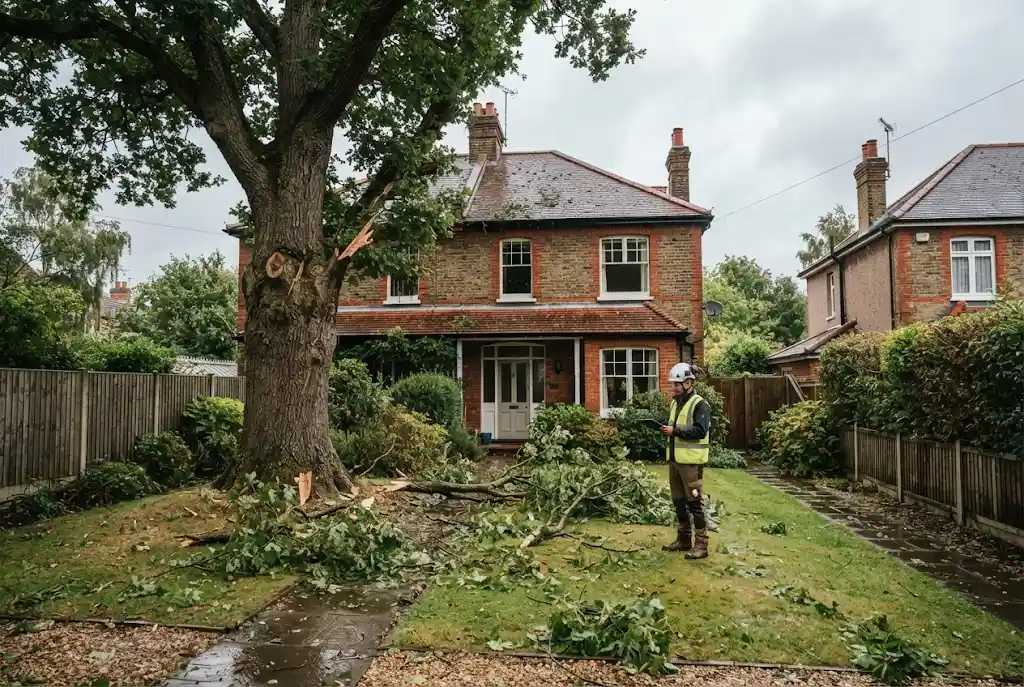
Understanding dangerous tree liability is important for anyone who owns or occupies land containing trees. Trees are valuable features of gardens, parks and properties, but a tree that is diseased, damaged, unstable or structurally compromised can create a risk to people and property. Where a foreseeable danger is not addressed, questions can arise about the responsibility of the tree owner or occupier.
Tree-related incidents can involve falling branches, uprooted trees, damage to buildings, vehicles or neighbouring land, and injuries to people. The legal position depends on the circumstances, including what the owner knew or reasonably should have known about the condition of the tree and what reasonable steps were taken to manage the risk.
This guide explains the main principles behind tree owner responsibility, liability for falling trees, duty of care for trees and the practical steps property owners can take when a potentially hazardous tree is identified.
What Is Dangerous Tree Liability?
Dangerous tree liability refers to the potential legal responsibility that can arise when a tree or part of a tree causes injury or damage and the person responsible for the land may have failed to take reasonable care.
There is no simple rule stating that a tree owner is automatically liable whenever a tree falls. Trees can fail unexpectedly, even when they have been maintained responsibly. Liability generally depends on the facts and whether the risk was reasonably foreseeable.
This distinction is important. A tree owner is not expected to guarantee that every tree will remain standing in every weather condition. Instead, reasonable care should be taken to identify significant risks and respond appropriately when concerns arise.
Who Has Responsibility for a Dangerous Tree?
Responsibility will usually begin with the person who owns or occupies the land where the tree is growing, although the precise legal position can depend on the circumstances.
A homeowner, landlord, business or other land occupier may therefore need to consider the condition of trees within the land they control. Where land is managed by another party, such as a property management company or contractor, the allocation of responsibilities should also be considered.
For property owners, the safest approach is to understand which trees they are responsible for and take proportionate steps to manage obvious or reported risks.
Tree Owner Responsibility Is Not Absolute
Owning a tree does not mean that an owner is automatically responsible for every incident involving it. A tree can fail because of severe weather, hidden defects, disease or other factors that were not reasonably apparent.
The circumstances surrounding the failure therefore matter. Evidence about the tree’s condition before the incident, previous warnings, inspection records, photographs and professional reports may all become relevant if a dispute arises.
Duty of Care for Trees
The concept of a duty of care for trees is particularly relevant where a tree stands close to people, buildings, roads, paths or neighbouring property. Landowners and occupiers should take reasonable care to avoid foreseeable risks arising from the condition of trees on their land.
The level of care required is not necessarily identical for every property. A mature tree beside a busy public footpath presents a different risk profile from an isolated tree in a remote section of private woodland.
Factors that may be relevant include the size and condition of the tree, its location, the frequency with which people pass nearby and whether there are visible signs of decay, structural weakness or instability.
Where a significant defect is identified, ignoring it may increase the risk of a future dispute if the tree subsequently fails.
Signs That a Tree May Be Hazardous
Property owners should remain alert to visible changes in the trees they are responsible for. Warning signs do not automatically mean that a tree is dangerous, but they may justify closer inspection by a suitably qualified professional.
- Large dead or broken branches.
- Visible cracks or splits in the trunk or major limbs.
- Significant decay or cavities.
- Fungal growth associated with possible decay.
- Major changes in the tree’s lean or stability.
- Root damage or significant ground disturbance around the tree.
- Branches that have become damaged following severe weather.
- Unusual movement or structural changes.
- Evidence that the tree’s condition has deteriorated significantly.
Not every sign indicates an immediate danger. Trees are complex living structures, and diagnosis should not be based solely on a photograph or an assumption. Where a substantial risk is suspected, an appropriate arboricultural assessment can help establish the condition of the tree and identify proportionate management options.
Liability for Falling Trees
Liability for falling trees can become an issue when a tree or branch causes injury or damage to another person or their property. The outcome will depend heavily on the circumstances leading up to the incident.
For example, evidence that an owner knew a tree had serious structural defects but failed to take reasonable action could be relevant to a claim. By contrast, where a healthy-looking tree unexpectedly fails during exceptional weather and there was no reasonable indication of a problem, the legal position may be very different.
The fact that a tree was located on someone’s land is therefore only one part of the overall picture.
What Evidence Can Matter After a Tree Falls?
After an incident, photographs can be particularly useful. They can record the tree, broken branches, root plate, surrounding area and damage before the scene changes.
Other potentially relevant evidence can include arboricultural reports, previous inspection records, maintenance invoices, emails or letters reporting concerns, weather information and records of previous tree work.
If an injury or substantial property damage has occurred, it is sensible to preserve relevant evidence and obtain appropriate professional advice before making assumptions about liability.
What Happens If a Tree Damages a Neighbour’s Property?
A tree that crosses or affects a neighbouring property can create difficult questions about responsibility. Branches may overhang a boundary, roots may extend into neighbouring land, or a tree may eventually fall onto a neighbouring building, fence or garden.
These situations should be distinguished from ordinary encroachment issues. A neighbour may have certain rights concerning branches or roots crossing the boundary, but those rights do not necessarily determine liability for damage caused by the tree.
Where the condition of the tree is disputed, arboricultural evidence may help establish whether there was a recognisable risk before the incident occurred.
For a broader explanation of ownership, protected trees and responsibilities between neighbouring properties, see our guide to tree law UK and tree ownership rights.
Can a Landowner Be Liable for a Tree Falling During a Storm?
Severe weather does not automatically remove the possibility of liability, but it can be highly relevant to whether an incident was reasonably foreseeable.
Storm conditions can cause healthy trees to fail. High winds, saturated ground and extreme weather can place substantial forces on trees that may otherwise appear stable. However, a storm may not be the only factor involved if a tree already had significant defects or had previously been identified as hazardous.
The question in any particular case is therefore likely to involve the condition of the tree, the surrounding circumstances and what reasonable precautions could have been expected before the event.
How Should Tree Owners Manage Risk?
There is no universal inspection timetable that applies to every tree on every property. Responsible management should be proportionate to the circumstances and the potential consequences of failure.
Owners can begin by keeping an eye on the condition of trees on their land and responding appropriately when changes or concerns are identified. Where a tree is particularly large, mature, prominent or located near people or property, professional inspection may provide additional reassurance and evidence of responsible management.
After severe weather, it is also sensible to check for obvious damage such as broken limbs, newly exposed roots or changes in stability.
Keep Useful Records
Records can be valuable where a tree later becomes the subject of a dispute. Property owners may wish to retain reports, photographs, invoices and correspondence relating to significant tree inspections and works.
Good records do not guarantee that an owner will avoid liability. However, they can help establish what was known about the tree and what steps were taken to manage identified risks.
Dangerous Trees on Rented or Managed Property
Responsibility can become more complicated where a property is rented or professionally managed. Landlords, tenants, managing agents and contractors may each have different obligations depending on the agreement and circumstances.
A tenant who notices that a large tree appears unstable should report the concern to the appropriate property owner or manager rather than assuming they have authority to arrange major tree work themselves.
Similarly, landlords and property managers should have appropriate systems for responding to reports of potentially hazardous trees. Delays may become more difficult to justify where a serious and credible risk has been brought to their attention.
What If a Neighbour Says Your Tree Is Dangerous?
Receiving a complaint about a tree does not automatically mean that the tree owner is legally liable. However, a credible warning should not simply be ignored.
Ask the neighbour to explain their concern and, where appropriate, inspect the tree. If there are signs of structural problems or deterioration, consider obtaining an assessment from a competent arboricultural professional.
Keeping a written record of the complaint and the steps taken afterwards can also be useful. If the dispute later becomes formal, evidence showing how the concern was addressed may help establish the sequence of events.
Where a neighbour dispute also involves protected trees or questions about ownership, the wider rules explained in our guide to trees and the law may also be relevant.
Dangerous Trees and Legal Advice
Dangerous trees legal advice may become appropriate when a tree has caused injury or significant damage, when a formal claim has been threatened, or when there is disagreement about who is responsible for taking action.
Legal advice can help identify the relevant issues, while arboricultural evidence can address the technical condition of the tree. These are different questions, and complex disputes may require both forms of expertise.
For example, an arborist may be able to assess whether a tree had identifiable defects, while a legal professional can consider how those facts relate to duties, liability and potential claims.
What Should You Do After a Tree Causes Damage?
If a tree or branch has fallen and caused significant damage, first consider immediate safety. Keep people away from unstable trees or damaged structures and contact appropriate emergency or professional services where necessary.
Once the immediate danger has been addressed, document the condition of the scene. Take photographs from different angles and record visible damage to buildings, vehicles, fences and other property.
Avoid destroying potentially important evidence unnecessarily. If an insurance claim or legal dispute may arise, retaining relevant reports and records can be helpful.
Where the damage is substantial or liability is disputed, professional advice should be considered before making definitive admissions about responsibility.
Preventing Dangerous Tree Liability Problems
The best way to reduce the risk of a tree-related dispute is to manage foreseeable risks before an incident occurs. Property owners should know which trees they are responsible for, pay attention to changes in their condition and act appropriately when genuine concerns arise.
It is equally important not to carry out unnecessary or unauthorised work. Protected trees may be subject to additional legal controls, so safety concerns should be addressed within the applicable planning and tree protection framework.
Where a tree is protected by a Tree Preservation Order or is situated in a conservation area, check the relevant restrictions before arranging significant work. Our guide to tree legislation and tree ownership rights provides further background on these issues.
Final Thoughts on Dangerous Tree Liability
Dangerous tree liability is ultimately a matter of circumstances rather than automatic responsibility. A tree owner is not necessarily liable simply because a tree falls or causes damage. What matters can include the condition of the tree, the foreseeability of the risk, relevant warnings and the reasonable steps taken to manage that risk.
Responsible tree ownership involves paying attention to potentially hazardous conditions and responding appropriately when concerns arise. Where a serious defect is suspected, professional arboricultural assessment can help establish the facts.
If an injury, significant property damage or formal dispute has occurred, legal advice may also be appropriate. Addressing the technical and legal aspects separately can provide a clearer basis for deciding what should happen next.
