

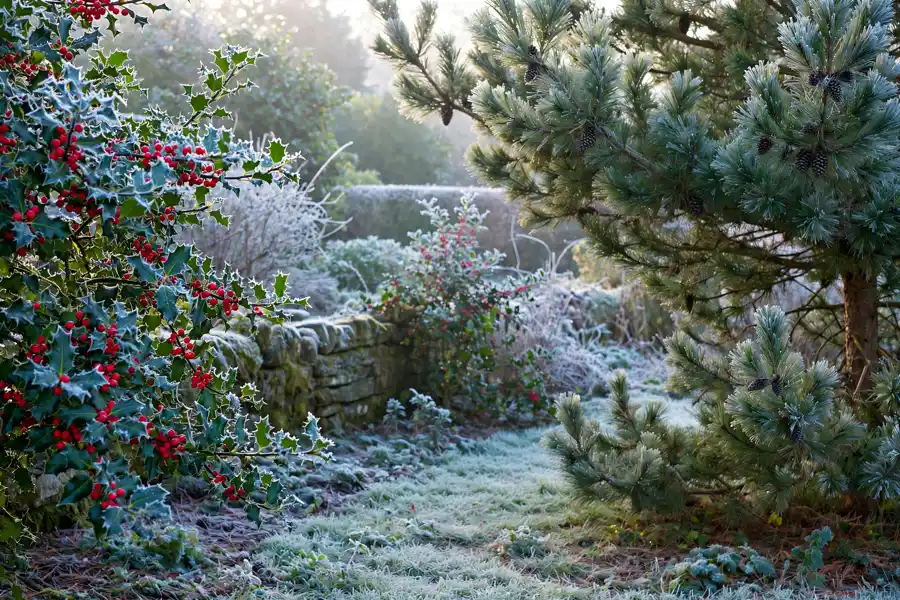
While most trees lose their leaves in autumn, evergreen trees keep their foliage all year, bringing colour and structure to gardens and landscapes through the darkest months. Evergreen trees include pines, spruces, firs, yews, and broadleaf evergreens like holly and laurel, and each group has its own character and needs. This guide explains the main types of evergreen trees, their benefits, and how to choose and care for them in the UK.
What Makes a Tree Evergreen?
Evergreen trees keep most of their leaves throughout the year, replacing them gradually rather than dropping them all at once. Conifers like pine, spruce, and fir carry needle-like or scale-like leaves that resist cold and drying winds, while broadleaf evergreens like holly, bay, and laurel keep flat leaves year-round. This strategy lets evergreens photosynthesise whenever conditions allow, even in mild winter spells. The trade-off is that evergreen foliage must survive frost, wind, and snow, so evergreen species tend to have tough, waxy, or needle-like leaves that lose less water than the broad, soft leaves of deciduous trees.
Popular Evergreen Trees for UK Gardens
For gardens, the most popular evergreens balance size, appearance, and manageability. Yew is a classic choice for hedging and topiary, with dense dark foliage that clips beautifully, though all parts of yew are toxic, so it needs care around children and livestock. Holly offers glossy leaves and winter berries and suits both hedges and specimen planting. Scots pine brings a woodland feel to larger gardens, while smaller conifers like dwarf spruces suit compact spaces. Laurel grows fast and makes an effective screen, but it needs regular pruning to stay tidy. Always check a tree’s mature size before planting, since a fast-growing evergreen that outgrows its space becomes a problem rather than a pleasure.
Evergreens for Privacy and Shelter
One of the main reasons people plant evergreens is privacy. A well-planned evergreen hedge or screen blocks views and reduces noise all year, unlike a deciduous hedge that thins in winter. For shelter, evergreen belts slow wind and protect more delicate plants behind them, which is valuable in exposed gardens. Mix species for a more natural look and better wildlife value: a hedge of mixed evergreen and deciduous natives supports more birds and insects than a single-species screen. If you are planning new planting, our complete tree planting guide covers spacing, soil preparation, and watering for successful establishment.
Wildlife Value of Evergreen Trees
Evergreens are vital for wildlife in winter. Their dense foliage shelters birds from cold winds and predators when deciduous trees stand bare, and species like holly and yew provide berries that feed birds through the hardest months. Conifer seeds feed crossbills and squirrels, while the sheltered, humid conditions under evergreen canopies suit fungi and invertebrates. A garden with at least one evergreen offers wildlife a year-round refuge that purely deciduous planting cannot match. For more on how trees support nature, our guide to trees and urban wildlife and our native tree species guide explain which species help local ecosystems most.
Caring for Evergreen Trees
Evergreens are generally low-maintenance, but they still need care. Water newly planted evergreens well in their first two years, especially in dry spells, since their foliage keeps losing water through winter. Mulch around the base to retain moisture and suppress weeds, keeping mulch away from the trunk itself. Prune hedges and topiary in late spring or summer, and avoid heavy pruning in very cold weather. Watch for browning foliage, which can signal drought, waterlogging, or disease, and act early: our guide to common signs your trees need attention helps you spot problems before they become serious.
Common Problems With Evergreens
Evergreens face a few characteristic problems. Browning in patches often follows drought or cold winds, particularly for newly planted specimens and container-grown trees. Some species suffer from specific pests or diseases, like cypress aphid on leylandii or phytophthora root rot in wet soils, so choose species suited to your soil and drainage. Overgrown leylandii hedges are a frequent source of neighbour disputes, since they grow fast and cast deep shade, so keep fast-growing hedges trimmed and within bounds. If a large evergreen becomes a legal or safety concern, our guides to tree law and planning permission for trees explain the rules that may apply.
Evergreens Through the Seasons
Evergreens earn their keep in every season. In spring, fresh growth brightens their foliage and many species flower or produce cones. In summer, they provide deep shade and a cool backdrop for flowers. In autumn, while other trees turn and fall, evergreens hold the garden together structurally. In winter, they are the stars: frost on pine needles, holly berries against dark leaves, and the scent of conifers on a cold day are among the garden’s great pleasures. Choosing a mix of evergreen forms, from tall pines to low spreading junipers, gives year-round interest without extra work.
Choosing the Right Evergreen for Your Space
Choosing well means matching the tree to the space. For small gardens, pick compact varieties and check mature heights carefully. For hedges, choose species you are willing to prune at least once a year. For wildlife, favour natives like yew, holly, and Scots pine alongside ornamental species. And for large spaces, a specimen pine or fir can become a landmark tree for generations. Evergreen trees are a long-term investment in your garden’s structure, privacy, and wildlife value, and the right choice repays itself every day of the year. If you ever need to remove a tree, our cost guide for cutting down a tree explains what affects the price and why professional help matters.
