

Mature trees are among the most valuable environmental assets in urban environments. They improve air quality, provide shade, support biodiversity, reduce flood risks, and contribute significantly to the visual appeal of towns and cities across the UK. However, construction and development projects can place these trees under severe stress if proper protection measures are not implemented.
Many trees damaged during construction do not fail immediately. Root disturbance, soil compaction, excavation, and changes to drainage systems can weaken trees gradually over several years. By the time visible decline appears, the damage is often irreversible.
This is why protecting mature trees has become a critical part of modern urban planning and sustainable development. Professional arborists help developers, contractors, and property owners minimise environmental damage while preserving valuable urban canopy cover.
Why Mature Trees Are Worth Protecting
Mature trees provide environmental benefits that young replacement trees cannot immediately replicate. Large established trees contribute far more to climate resilience, biodiversity, and urban sustainability than newly planted saplings.
Mature trees help:
- Improve air quality
- Reduce urban heat
- Store larger amounts of carbon
- Support wildlife habitats
- Improve stormwater management
- Enhance public wellbeing
- Increase property value
Protecting established trees is now considered an important part of urban environmental sustainability strategies throughout the UK.
Construction Work Can Cause Hidden Tree Damage
Many construction-related tree problems occur underground where damage is not immediately visible. Root systems are especially vulnerable during excavation and site preparation work.
Common causes of construction-related tree decline include:
- Soil compaction from heavy machinery
- Excavation within root zones
- Root severance
- Storage of materials near trees
- Changes to drainage patterns
- Contaminated runoff
- Physical trunk or branch damage
Even small disturbances to root systems can reduce stability, restrict nutrient uptake, and weaken long-term tree health.
Professional arborists providing tree preservation services help reduce these risks through early planning and specialist protection strategies.
Start Arboricultural Planning Early
One of the most important best practices for protecting mature trees is involving arborists during the earliest stages of project planning.
Early arboricultural input allows developers to:
- Identify valuable trees worth retaining
- Adjust site layouts around root systems
- Reduce planning conflicts
- Minimise environmental damage
- Improve long-term sustainability outcomes
Waiting until construction begins often limits available protection options and increases the likelihood of avoidable tree damage.
Conduct Professional Tree Surveys
Comprehensive tree surveys are essential before any construction or excavation work begins.
Professional arborists assess:
- Tree species and condition
- Structural health
- Expected lifespan
- Environmental value
- Root protection requirements
- Potential safety concerns
Surveys also help planning authorities evaluate whether proposed development plans meet environmental and sustainability requirements.
Many projects combine tree surveys with broader environmental impact assessment processes to evaluate ecological impact more effectively.
Establish Root Protection Areas (RPAs)
Root Protection Areas are one of the most important components of tree preservation during construction work.
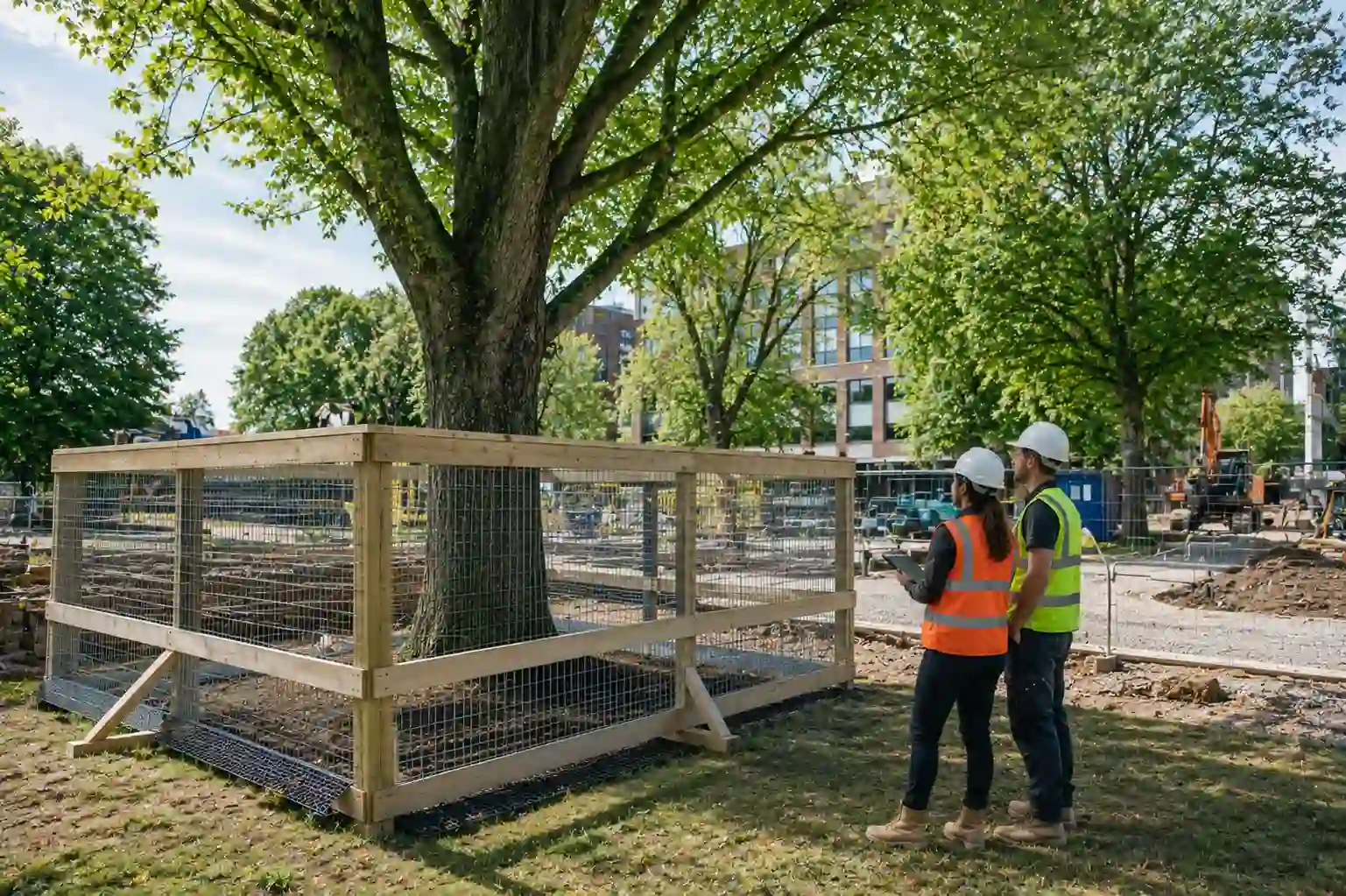
An RPA defines the protected area surrounding a tree where construction activity should be restricted to prevent root damage.
Protected zones typically prevent:
- Excavation
- Heavy vehicle movement
- Material storage
- Concrete mixing
- Fuel or chemical spills
- Ground level changes
Protective fencing should be installed before site work begins and maintained throughout the construction process.
Prevent Soil Compaction
Compacted soil can significantly reduce root oxygen availability and water infiltration, leading to long-term decline.
Heavy machinery and repeated foot traffic are among the most common causes of soil compaction on development sites.
Arborists often recommend:
- Temporary ground protection systems
- Restricted machinery access
- Alternative access routes
- Low-impact construction methods
Maintaining healthy soil conditions is essential for long-term tree survival after construction work is completed.
Protect Trees From Physical Damage
Construction activity can easily damage trunks, branches, and bark through accidental impacts from machinery, scaffolding, or stored materials.
Protective barriers and exclusion zones help minimise:
- Trunk wounds
- Bark stripping
- Branch breakage
- Canopy damage
Even relatively minor trunk injuries can create entry points for disease and decay organisms.
Monitor Trees Throughout Construction
Tree protection should not end once fencing is installed. Ongoing monitoring is essential throughout all stages of construction.
Professional arborists often carry out regular inspections to ensure:
- Protection measures remain intact
- Root zones are not disturbed
- Drainage changes are managed safely
- Trees remain structurally stable
- Signs of stress are identified early
Regular monitoring also helps contractors remain compliant with planning conditions and environmental regulations.
Climate Change Makes Tree Preservation More Important
Climate change is increasing environmental pressures on urban trees throughout the UK. Drought, storms, flooding, and rising temperatures all place additional stress on already vulnerable urban tree populations.
The evolving UK arboriculture industry increasingly prioritises mature tree preservation as part of climate resilience planning.
Protecting established canopy cover is now considered a key strategy for reducing urban heat and improving environmental sustainability.
Technology Is Improving Tree Protection Planning
Modern arboriculture increasingly relies on digital tools to improve planning accuracy and long-term tree management.
Professional arborists may use:
- GIS mapping systems
- Drone surveys
- Root mapping technology
- Digital tree inventories
- Structural monitoring systems
Advanced digital tools for arborists help improve assessment accuracy while supporting sustainable development planning.
Legal and Planning Responsibilities
Many mature trees are protected by planning regulations, Tree Preservation Orders (TPOs), or conservation area restrictions.
Unauthorised damage or removal can lead to:
- Financial penalties
- Project delays
- Enforcement notices
- Legal disputes
- Planning complications
Professional arborists frequently assist developers with tree preservation orders UK compliance and arboricultural planning documentation.
The Long-Term Value of Responsible Development
Protecting mature trees during development projects benefits both the environment and the long-term quality of urban spaces. Healthy established trees improve visual appeal, strengthen biodiversity, and create more sustainable communities.
According to the Forest Research organisation, urban trees provide major environmental and economic benefits when properly protected and maintained.
As sustainable construction practices continue evolving across the UK, protecting mature trees will remain an essential part of responsible urban development and environmental planning.
