

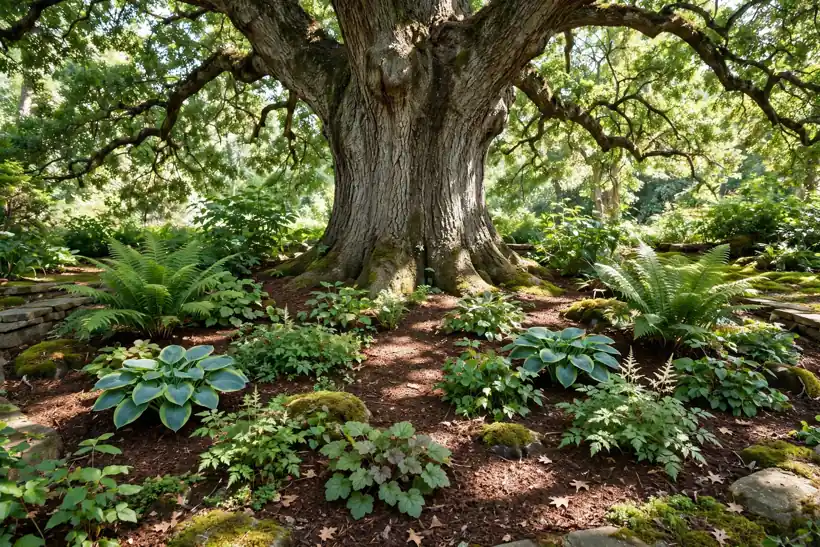
A mature tree is the making of a garden, but it can also feel like a full stop for planting ideas. The ground beneath it is shaded, dry and full of roots, and many gardeners assume nothing will grow there. In fact, planting near mature trees can create some of the most beautiful areas of a garden — cool, layered, woodland-style beds — as long as you work with the tree rather than against it. This guide explains how to add plants under and around established trees without damaging the roots the tree depends on.
Understand the Root Protection Area First
Almost everything that matters happens underground. A tree’s roots spread far wider than most people expect — commonly as far as the canopy and well beyond — and the fine feeding roots sit in the top layer of soil, exactly where you want to dig. Arborists refer to the Root Protection Area as the zone that should be treated with care during any ground work, and the same thinking applies to garden planting. Before you start, read our guide to protected trees law if your tree is covered by a Tree Preservation Order, because damaging a protected tree’s roots can have legal consequences as well as horticultural ones.
Choose Plants That Suit Dry Shade
The conditions under a mature tree are demanding: shade for much of the day, soil kept dry by the tree’s own roots drinking first, and competition for nutrients. Plants that thrive there are the woodland specialists — hardy geraniums, epimediums, ferns, hellebores, snowdrops and other spring bulbs, hostas in moister spots, and ground-cover plants that spread gently without needing deep soil. Spring-flowering bulbs are a particularly good choice because they do their growing before the canopy leafs out and takes the light. Avoid anything that needs rich, moist, sunny ground, and be realistic: even the right plants will grow more slowly here than in an open border, at least until they establish. The species of tree makes a difference, too. Beech and yew cast some of the deepest shade and have dense surface roots, so beds beneath them need the toughest woodland plants and the most patience. Oak and birch, by contrast, give a lighter, dappled canopy and are far more forgiving — many standard shade perennials will settle happily under them. Evergreens give year-round shade but steady conditions, while deciduous trees give you a bright spring window before leaf-out, which is exactly when bulbs and early perennials do their work. Match the planting to the tree you actually have, not the one in the photograph, and the bed will reward you far sooner.
Plant Small, Dig Carefully
Technique matters more under a tree than anywhere else in the garden. Buy young plants in small pots rather than large specimens: a small plant needs a small hole, and a small hole means fewer roots cut. Use a hand trowel or fork rather than a spade, and work by feel — when you meet a root of any thickness, stop, move a few centimetres and try again rather than cutting through it. Never cut roots thicker than your thumb if you can possibly avoid it. It also helps to plant in autumn or early spring, when the soil is workable and new plants can settle in while the tree is less thirsty than in high summer. Regular tree pruning that lifts a low canopy slightly can also let in more light and rain, making the whole bed easier to plant.
Mulch, Water and Feed the Bed
Because the tree takes first share of everything, new planting under it needs deliberate aftercare. A generous layer of organic mulch — composted bark, leaf mould or garden compost — spread over the bed (but kept a few centimetres away from the trunk itself) helps hold moisture, feeds the soil slowly and suppresses weeds without digging. Water new plants through their first dry spells, watering deeply and occasionally rather than little and often, and expect to keep this up for the first full growing season. Once established, woodland plants largely look after themselves, but a fresh mulch each spring keeps the bed improving year after year.
What to Avoid Around a Mature Tree
A few common mistakes do real harm. Raising the soil level over the root area — even by a few centimetres — can suffocate roots and, over time, damage the trunk base; if you need a level bed, build interest with plants, not imported soil. Strimming or mowing right up to the trunk wounds the bark and invites disease, so keep a clear mulched ring around the base instead. Avoid rotavating or deep digging anywhere within the canopy spread, and never attach fixings, seating or lighting into the trunk. If an old stump nearby is in the way of your design, our guide to stump removal explains the safe options for dealing with it.
Build Layers Like a Woodland
The most successful under-tree planting copies the structure of a woodland floor. Start with the earliest layer — snowdrops, wood anemones and primroses that flower before the leaves open — then add ferns and leafy ground cover for the summer, and finish with late interest from autumn bulbs or the seed heads of grasses at the sunnier edge of the canopy. Plant in drifts and odd-numbered groups rather than rings or rows, and repeat the same few plants across the bed so it reads as one natural community instead of a collection of individuals. Over two or three seasons the plants knit together, the mulch breaks down into the soil, and what began as the garden’s most difficult corner becomes its most atmospheric — cool in summer, full of early spring life, and doing all of it without costing the tree anything at all.
When to Ask an Arborist
Most careful underplanting is well within a gardener’s ability, but some situations call for professional advice: planting near a tree that is already stressed or diseased, work close to a veteran or protected tree, or any digging for paths, edging or irrigation within the root zone. An arborist can tell you where the critical roots are likely to be and how much disturbance the tree can comfortably tolerate. With that knowledge — and a little patience — the ground beneath your biggest tree can become one of the most rewarding parts of the garden, rather than the part you apologise for.
