

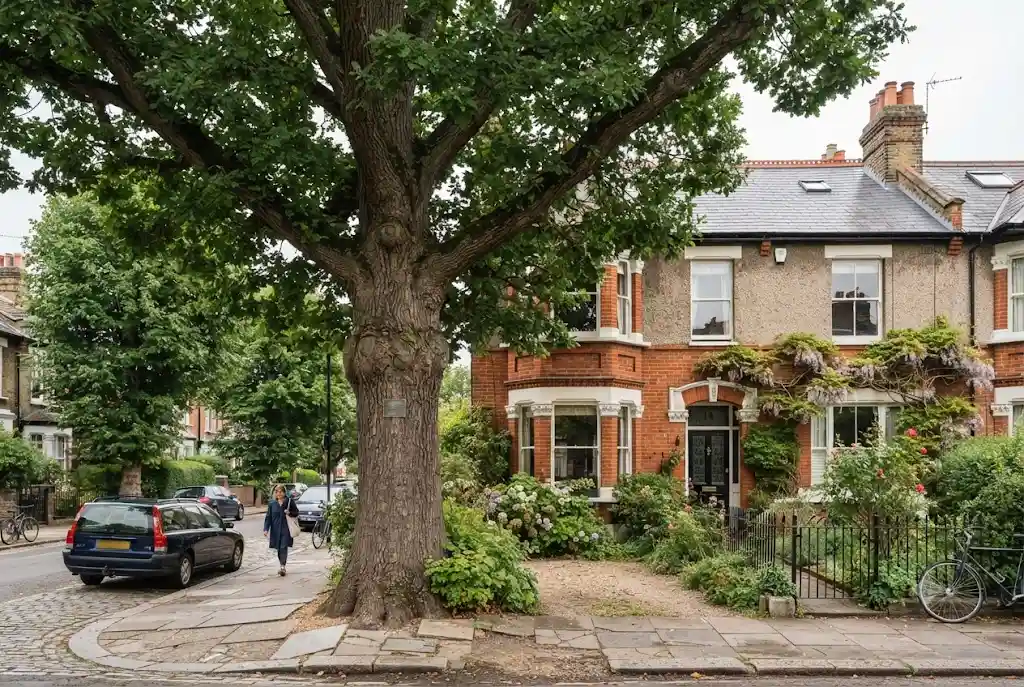
Protected trees law is important for anyone who owns, manages, develops or carries out work near trees in the UK. A tree may have legal protection because it is covered by a Tree Preservation Order (TPO), stands within a conservation area, or falls under another specific environmental or planning control. Understanding the relevant rules before pruning, cutting down or damaging a tree can help property owners avoid costly mistakes.
It is also important to understand that there is no single rule making every large, old or attractive tree automatically protected. In England, protection can arise through specific legal mechanisms, with local planning authorities playing a central role in Tree Preservation Orders and conservation-area controls.
This guide focuses on the legal framework behind protected trees, while more detailed practical guidance on Tree Preservation Orders can be covered separately in the site’s Tree Preservation category.
What Does Protected Trees Law Mean?
Protected trees law refers to the legal rules that restrict certain work to trees because they have been given a particular form of protection.
In England, one of the principal mechanisms is the Tree Preservation Order. A TPO can protect an individual tree, a group of trees, trees within a defined area or an entire woodland. Government guidance states that protected trees can be of any size or species, so protection is not limited to particularly old or rare trees.
A TPO normally prevents activities such as cutting down, topping, lopping, uprooting, wilful damage or wilful destruction without the relevant local planning authority’s written consent. ([GOV.UK](https://www.gov.uk/guidance/tree-preservation-orders-and-trees-in-conservation-areas))
Protected Trees UK: How Legal Protection Works
The phrase protected trees UK is often used broadly, but tree protection is not based on one nationwide list of species that are automatically protected.
Instead, different legal mechanisms can apply depending on the location and circumstances. In England, local planning authorities can make Tree Preservation Orders where they consider protection necessary in the interests of amenity. Trees in conservation areas can also receive statutory protection even when they do not have an individual TPO.
Other environmental and forestry controls may apply in particular circumstances. For example, ancient woodland, veteran trees and certain felling activities can involve separate considerations.
This means that checking the legal status of a tree before arranging work is more reliable than assuming that a tree is either protected or unprotected because of its species, size or age.
What Is a Tree Preservation Order?
A Tree Preservation Order is a legal order made by a local planning authority to protect specific trees or woodland where their preservation is considered important in terms of amenity.
According to current government guidance, a TPO can cover:
- An individual tree
- A group of trees
- Trees within a defined area
- A woodland
The order identifies the trees or woodland covered by the protection and normally includes a map showing their location. The legal effect is to restrict specified work unless the necessary consent or an applicable exception exists. ([GOV.UK](https://www.gov.uk/guidance/tree-preservation-orders-and-trees-in-conservation-areas))
A TPO does not necessarily mean that a tree can never be pruned or removed. It means that proposed work must be considered through the relevant legal process, with the local planning authority deciding whether consent should be granted and whether conditions should apply.
Protected Trees in England and Conservation Areas
Protected trees in England can also be affected by conservation-area legislation.
Where a tree is located in a conservation area and is not already protected by a TPO, certain proposed works generally require advance notification to the local planning authority. Government guidance explains that a section 211 notice is used to notify the authority of proposed work to trees in a conservation area that are not already covered by a TPO. The authority then has an opportunity to consider whether a Tree Preservation Order should be made.
The normal notification period is six weeks, although the precise legal requirements and exceptions depend on the circumstances. ([GOV.UK](https://www.gov.uk/guidance/tree-preservation-orders-and-trees-in-conservation-areas))
This is why a property owner should not assume that a tree is unprotected simply because there is no TPO shown against it.
What Trees Are Protected in UK Law?
One of the most common questions is: what trees are protected in UK law?
For Tree Preservation Orders in England, protection is not restricted to particular species. Government guidance specifically states that protected trees can be of any size or species.
That means there is no simple rule such as “all oak trees are protected” or “only ancient trees have legal protection”. A particular oak, beech, ash, maple or other species may be protected if it falls within a relevant TPO or another legal regime.
The circumstances surrounding the tree matter more than its species name alone.
Are Oak Trees Protected?
Are oak trees protected automatically? Generally, you should not assume that they are.
Oak trees are widely recognised as important landscape and ecological features, but being an oak does not by itself create a universal Tree Preservation Order. A particular oak may, however, be protected by a TPO, conservation-area controls or another applicable legal mechanism.
The same principle applies to other species. A tree’s legal status needs to be checked rather than inferred from its appearance, age or species.
For property owners considering work to an oak tree, checking with the relevant local planning authority is therefore an important first step.
What Work Is Restricted by a TPO?
A Tree Preservation Order can restrict a range of activities. These include cutting down, topping, lopping, uprooting, wilfully damaging or wilfully destroying a protected tree.
Root cutting can also require consent where it falls within the protection of the Order. Government guidance states that cutting roots is considered a prohibited activity requiring the authority’s consent. ([GOV.UK](https://www.gov.uk/guidance/tree-preservation-orders-and-trees-in-conservation-areas))
This matters because tree work is not limited to obvious tree removal. Excavation, construction activity or other work close to protected trees may potentially affect roots or otherwise interact with the protected tree.
Before arranging significant work, owners and contractors should establish exactly what protection applies and what permissions or notifications may be required.
How Do You Check If a Tree Is Protected?
The most reliable approach is to check the relevant local planning authority’s records.
Many councils provide online mapping tools or searchable records for Tree Preservation Orders and conservation areas. However, the availability and format of these records varies between authorities.
When checking a property, it is useful to establish:
- Whether the tree is covered by a Tree Preservation Order
- Whether the property lies within a conservation area
- Which trees or groups are actually identified by the relevant order
- Whether proposed work falls within the restrictions
- Whether another legal control may apply
If there is uncertainty, contacting the local planning authority before work begins is safer than relying on assumptions.
Legal Protection for Trees and Planning Applications
Tree protection can also become relevant when a property owner wants to extend, redevelop or alter land.
Planning permission and tree protection are related but separate considerations. A development proposal may need to account for protected trees during the planning process, while existing tree protection can continue to affect what work is permissible.
Government guidance explains that planning authorities have duties relating to tree preservation when granting planning permission and may use planning conditions where appropriate. In some circumstances, planning permission can affect how tree protection operates, but the exact relationship depends on the permission and the circumstances.
For this reason, developers should assess tree constraints early rather than waiting until construction is about to begin.
Can You Prune a Protected Tree?
Yes, potentially, but a TPO does not give a blanket right to carry out unrestricted pruning.
Some work may require an application for consent from the local planning authority. The authority can grant consent, refuse it or grant consent subject to conditions.
The proposed work should therefore be described accurately. A vague instruction such as “cut the tree back” may not provide enough information for the authority or contractor to understand the intended work.
Professional tree advice can also be valuable when the proposed work involves significant pruning, structural defects, safety concerns or development constraints.
What Happens If Protected Trees Are Damaged?
Carrying out prohibited work on a protected tree without the necessary consent can constitute an offence.
Government guidance states that serious offences involving cutting down, uprooting or wilfully destroying a protected tree, or carrying out topping or lopping likely to destroy it, can result in significant fines. The guidance currently identifies a maximum fine of up to £20,000 on conviction in a magistrates’ court for relevant offences. ([GOV.UK](https://www.gov.uk/guidance/tree-preservation-orders-and-trees-in-conservation-areas))
Other breaches can also constitute offences. In addition, a landowner may have a legal duty to replace a tree that was removed, uprooted or destroyed in circumstances covered by the relevant legislation.
These consequences demonstrate why tree protection should be checked before work begins rather than treated as an administrative issue after the work has been completed.
Can You Appeal a Tree Protection Decision?
There are circumstances in which an applicant can appeal a local planning authority’s decision concerning work on a protected tree.
For example, GOV.UK explains that an applicant can appeal if the council refuses consent for proposed work, imposes conditions that the applicant disputes, or fails to issue a decision within the applicable eight-week period. There is also a route for appealing certain tree replacement notices. ([GOV.UK](https://www.gov.uk/appeal-decision-about-tree-order))
Appeal deadlines can be important. GOV.UK currently states that where a decision notice has been received, an appeal generally needs to be made within 28 days of the date on the notice.
Anyone considering an appeal should check the current official procedure and applicable deadline rather than relying on older information.
Protected Trees Law and Tree Felling
Tree protection legislation should also be considered alongside rules governing tree felling.
A felling licence is a separate legal mechanism from a Tree Preservation Order. Depending on the location, type and quantity of trees involved, felling may require Forestry Commission approval even when a TPO does not apply.
Conversely, a tree may be exempt from the need for a felling licence but still require local planning authority consent because it is protected by a TPO. GOV.UK specifically notes that where a TPO applies, permission from the local planning authority may still be required even when a felling licence is not needed. ([GOV.UK](https://www.gov.uk/government/publications/tree-felling-getting-permission/tree-felling-getting-permission))
Our dedicated guide to a tree felling licence can cover the separate felling-control framework in greater detail.
Protected Trees and Hedgerows
Tree protection law should not be confused with the rules governing countryside hedgerows.
Government guidance explains that Tree Preservation Orders are generally used for things that can ordinarily be described as trees. Countryside hedgerow removal is regulated under different legislation.
If a project involves removing or substantially altering a hedgerow, it is therefore important to consider the separate hedgerow regulations rather than assuming that tree protection rules provide the complete legal framework.
Why Tree Protection Checks Matter Before Tree Work
Checking legal protection before work starts can prevent delays, unexpected costs and potential enforcement action.
A sensible process is to identify the location of the tree, check the local authority’s records, establish whether a TPO or conservation-area protection applies, and determine whether the proposed work requires consent or notification.
Where the situation is complicated, particularly on development sites or where safety concerns are involved, professional advice can help clarify the practical and legal issues before work is commissioned.
Final Thoughts
Protected trees law is designed to preserve trees that have particular value to local environments, landscapes and communities. In England, Tree Preservation Orders and conservation-area controls form important parts of this framework, but they are not the only considerations that may affect tree work.
The key point for property owners is simple: do not assume that a tree is protected or unprotected based solely on its species, age or size. Check the relevant local planning records and understand what legal controls apply before pruning, removing, damaging or carrying out development work near the tree.
For a wider understanding of tree-related responsibilities, it is useful to consider protected-tree rules alongside the separate frameworks covering tree felling licences, hedgerow regulations and detailed Tree Preservation guidance.
