

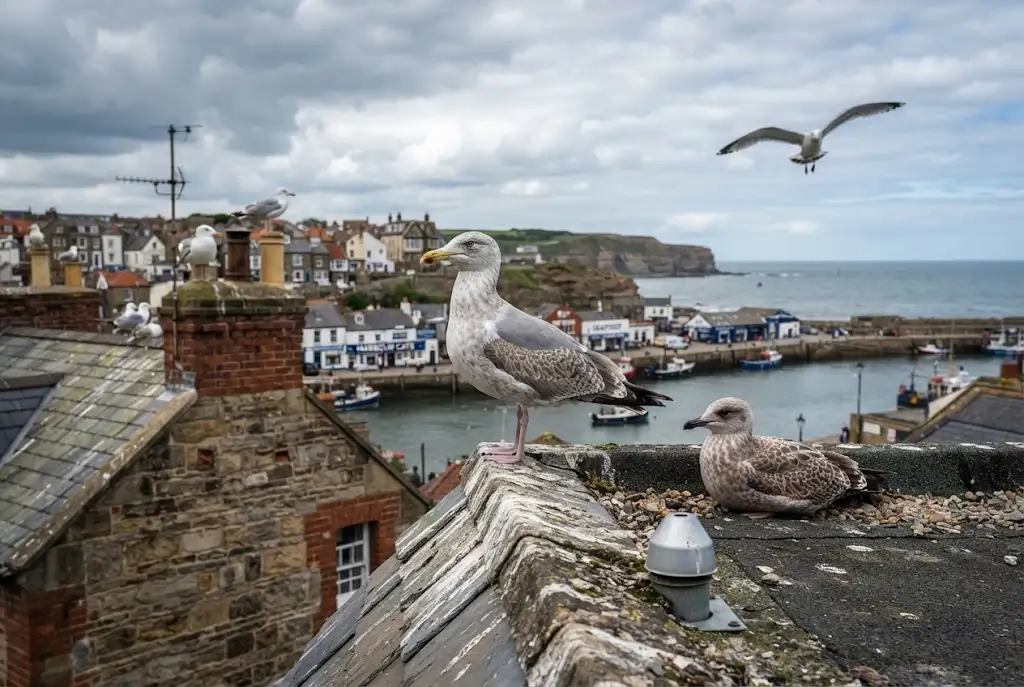
If you are wondering are seagulls protected UK law generally gives wild birds, including gulls, legal protection. However, protection does not mean that every gull, nest or colony can never be disturbed or managed. Different rules can apply depending on the species, location, circumstances and reason for proposed action.
Gulls are a familiar sight across British coastal towns, cities, beaches, harbours and inland areas. Their ability to nest on buildings has also created situations where residents and property owners may become concerned about noise, fouling, nesting material or aggressive behaviour. Understanding the legal position is therefore important before anyone attempts to remove a nest, disturb eggs or take action against a bird.
Are Seagulls Protected UK Wildlife Law?
So, are seagulls protected in UK law? In general, wild birds are protected under the Wildlife and Countryside Act 1981 in Great Britain. The legislation makes it an offence to intentionally kill, injure or take certain wild birds, and it also provides protection for nests, eggs and dependent young in relevant circumstances.
Protection applies to gulls even though they are sometimes regarded as nuisance wildlife. Being common, noisy or troublesome around a property does not by itself remove the legal protections that apply to wild birds.
The legal position can become more complicated when a person believes that gulls are causing a serious problem. In those circumstances, the appropriate approach is to establish what species is involved, what damage or risk is occurring and whether any lawful licence or other legal provision applies.
Are Seagulls Protected in the UK During Nesting Season?
Questions about are seagulls protected in the UK often arise when gulls build nests on roofs, balconies or other buildings. Nesting birds require particular care because the law can protect not only the birds themselves but also their nests, eggs and young.
Removing or damaging an active nest can therefore create legal problems. A property owner should not assume that a nest can simply be taken away because it is located on private property.
Timing is also important. A nest that is being constructed or used may have a different legal significance from an old, inactive nest. If you are unsure whether a nest is active, obtaining advice from an appropriately qualified wildlife professional or relevant authority is safer than taking direct action.
What About Seagulls Young?
Seeing seagulls young on rooftops, pavements or other urban locations can cause concern, particularly when a chick appears to be alone. However, a young gull on the ground is not necessarily abandoned.
Gull chicks can leave a nest before they are fully independent and may spend time moving around nearby areas while their parents continue to feed and protect them. Approaching or attempting to relocate a healthy chick can potentially cause unnecessary stress or separate it from its parents.
If a young bird is visibly injured, trapped or in immediate danger, the appropriate response is to seek advice from a reputable wildlife rescue organisation or relevant animal welfare service. Avoid handling wildlife unless there is a clear reason and you have received appropriate guidance.
Types of Seagulls UK Residents May Encounter
Although people commonly use the word “seagull” for almost any gull, Britain has several gull species. Understanding the types of seagulls UK residents may encounter can make identification easier.
Some of the more familiar species include Herring Gull, Lesser Black-backed Gull, Great Black-backed Gull and Black-headed Gull. Their size, plumage, leg colour, bill markings and seasonal appearance can vary.
Young gulls can be especially difficult to identify because juvenile plumage may look very different from adult plumage. A young gull may have extensive brown or mottled feathers before gradually developing the appearance associated with an adult bird.
Accurate identification can matter when dealing with wildlife management questions because legal provisions and licensing arrangements can depend on the species involved.
Can You Remove a Seagull Nest?
A common misconception is that a nest on a roof can simply be removed whenever it becomes inconvenient. That is not necessarily the case.
Because wild bird nests and eggs can receive legal protection, removing or interfering with an active nest without appropriate authority can be unlawful. The fact that a nest is attached to a building does not automatically make it exempt from wildlife protection.
If gulls repeatedly nest on a property, preventative measures may sometimes be more appropriate than trying to remove an active nest. Physical measures designed to discourage future nesting should be planned carefully so that they do not trap, injure or unlawfully interfere with birds.
Are Seagulls Protected in England?
The question are seagulls protected in England is particularly relevant for residents dealing with urban gull colonies. The Wildlife and Countryside Act 1981 provides the principal framework for wild bird protection in England, although specific licensing arrangements and conservation rules can vary.
Not every bird-related problem can be resolved through the same procedure. For example, a nuisance caused by noise is different from a situation involving an immediate public safety concern or significant property damage.
Where intervention may be necessary, the legal route should be established before any bird, nest or egg is disturbed. Natural England provides information about wildlife licensing and the circumstances in which certain activities may be authorised.
Can Seagulls Ever Be Controlled?
Protection does not necessarily mean that gull management is impossible. In certain circumstances, wildlife legislation provides mechanisms through which specific activities may be authorised.
However, licences are not a general permission to kill, injure or disturb gulls whenever they become inconvenient. There must be an appropriate legal basis, and any conditions attached to an authorisation must be followed.
This distinction is important for property owners and businesses. A professional wildlife management company should be able to explain what work is proposed, why it is necessary and what legal requirements apply before intervention takes place.
Why Gulls Can Become a Problem in Urban Areas
Gulls have adapted successfully to many urban environments. Buildings can provide elevated nesting locations that resemble natural cliffs, while food waste and human activity can create reliable feeding opportunities.
Problems can include noise, fouling, nesting debris and defensive behaviour around nests. In some locations, people may also be concerned about gulls gathering around food sources or waste collection areas.
These issues are better addressed through a combination of habitat management, waste control, building maintenance and lawful deterrence rather than assuming that removing birds is always the appropriate solution.
How to Reduce Gull Problems Without Breaking Wildlife Rules
Property owners can consider several preventative approaches while keeping wildlife protection requirements in mind.
- Manage food waste: Secure waste and avoid leaving accessible food sources where practical.
- Inspect buildings: Identify roof areas that repeatedly attract nesting gulls.
- Use professional advice: Obtain guidance before installing deterrents where birds may already be nesting.
- Consider preventative measures: Where lawful and appropriate, physical deterrents can reduce future nesting opportunities.
- Do not disturb active nests: Establish whether birds, eggs or dependent young are present before intervention.
- Report serious problems: Where public safety or injured wildlife is involved, contact the appropriate authority or qualified wildlife organisation.
Prevention is often easier to manage when considered before the breeding season rather than after birds have already established a nest.
What Should You Do If a Gull Is Causing a Problem?
If a gull is nesting on your property, start by observing the situation rather than immediately taking action. Identify whether a nest is present, whether eggs or young are involved and whether the bird appears healthy.
For routine nuisance problems, seek advice from the relevant local authority or a reputable wildlife management professional. If intervention is proposed, ask what legal authority permits the work and whether a licence is required.
If you find an injured bird or vulnerable young gull, wildlife welfare should take priority. Keep people and pets at a safe distance and seek specialist advice rather than attempting unnecessary handling.
Are Seagulls Protected UK: Key Points to Remember
So, are seagulls protected UK wildlife rules? Yes, gulls are generally covered by the legal protection given to wild birds, but the exact position depends on the circumstances. Their nests, eggs and young can also receive protection, meaning that removing a nest or interfering with breeding birds should not be treated as a routine maintenance task.
At the same time, UK wildlife law contains provisions that can allow certain forms of control in defined circumstances. These provisions do not create a blanket exemption for nuisance gulls. The species, circumstances, purpose of the action and any applicable licence conditions all matter.
For that reason, responsible gull management starts with identification and assessment. Whether you are dealing with a nesting colony, young gulls or a recurring problem around a building, understanding the wildlife rules before acting can help protect both people and birds.
For current information about protected wild birds and licensing in England, consult the UK Government wildlife licensing guidance and relevant guidance from the appropriate nature conservation authority.
