

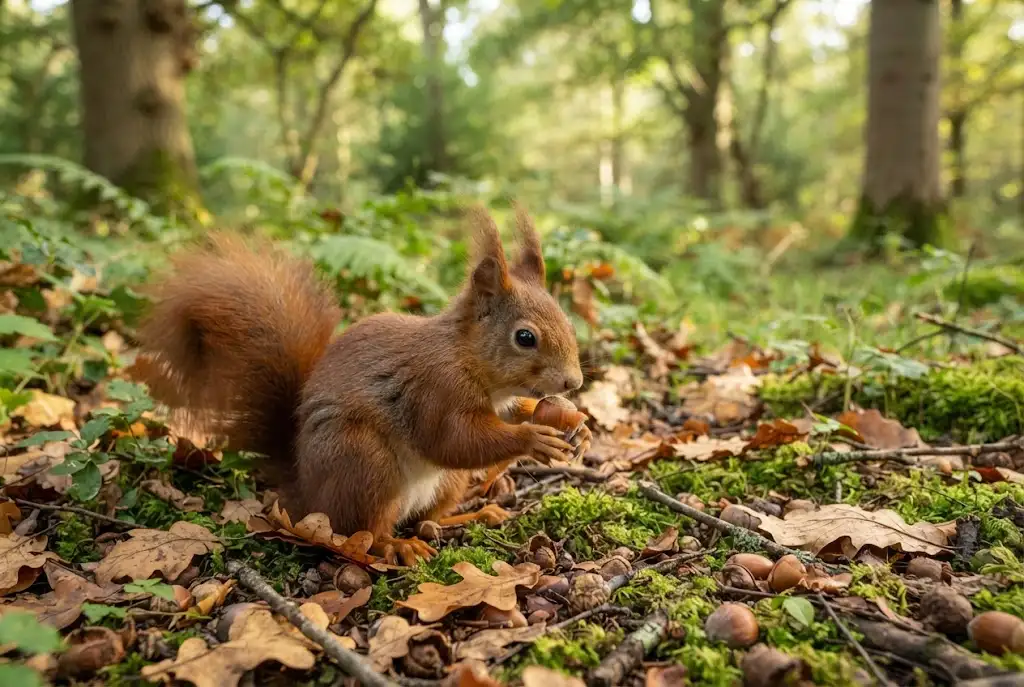
If you have ever watched a squirrel searching through woodland, parks or a garden, you may have wondered, what does squirrel eat in the UK? Squirrels are adaptable mammals with diets that change according to the season and the food available in their surroundings. Nuts and seeds are familiar favourites, but squirrels can also eat buds, flowers, fruits, fungi and other plant material.
Britain is home to both red squirrels and introduced grey squirrels. Although their diets overlap considerably, their habitats, behaviour and conservation circumstances differ. Understanding what squirrels eat can provide useful insight into how these animals interact with woodland ecosystems and why maintaining healthy habitats is important for native wildlife.
What Does Squirrel Eat in the Wild?
The natural diet of a squirrel is varied. Rather than depending on one particular food, squirrels take advantage of seasonal resources available in their habitat.
Common foods can include nuts, seeds, fruits, berries, buds, flowers, tree bark and fungi. Squirrels may also consume other naturally available food when opportunities arise. Their strong front teeth are well suited to opening hard shells and accessing nutritious seeds inside nuts.
Food availability can vary considerably between woodland areas. A mature woodland containing a mixture of tree species can provide a wider range of food throughout the year than a habitat dominated by only one type of tree.
Nuts and Seeds
Nuts and seeds are among the foods most strongly associated with squirrels. Acorns, hazelnuts, beech nuts and other seeds can provide valuable energy, particularly before and during colder periods.
Squirrels do not necessarily eat every nut immediately. They may carry food away from a productive tree and bury individual items in different locations. These hidden food stores can later be recovered when food becomes harder to find.
Fruits and Berries
When seasonal fruits and berries become available, squirrels may feed on them as part of their varied diet. These foods provide energy and can be particularly useful when other resources are less abundant.
Wild fruits can also form part of the wider food web. By moving around woodland and other habitats while feeding, squirrels interact with plants and contribute to the movement of seeds through the environment.
Fungi
Fungi can also be an important seasonal food for squirrels. A squirrel may search through woodland vegetation for mushrooms and other fungi, sometimes carrying pieces away before eating them.
Observing a squirrel feeding on something unfamiliar does not necessarily mean that its diet is limited to nuts. Their opportunistic feeding behaviour allows them to make use of a broad range of natural resources.
What Do Red Squirrels Eat?
Red squirrels are native to Britain and are strongly associated with woodland habitats. Their diet includes seeds from conifer cones as well as nuts, berries, fruits, fungi, flowers and other plant material.
Conifer woodland can be particularly important because red squirrels are well adapted to extracting seeds from cones. They may leave characteristic remains after feeding, which can sometimes help wildlife observers identify signs of squirrel activity.
Red squirrels also use a range of broadleaved trees and can take advantage of seasonal food sources. Their diet therefore reflects the availability and diversity of the woodland in which they live.
Learning about their diet also helps explain why habitat management can influence squirrel populations. Changes in woodland composition can alter the types and quantities of food available throughout the year.
What Do Grey Squirrels Eat?
Grey squirrels are highly adaptable and can use a wide variety of food sources. They commonly feed on nuts and seeds but may also eat fruits, buds, flowers, fungi and other plant material.
Their ability to exploit different food sources helps them thrive in a variety of environments, including urban parks, gardens and mixed woodland. Grey squirrels are also capable of storing food for later use.
Because grey squirrels and red squirrels can use some of the same food resources, food availability forms part of the ecological relationship between the two species. However, the conservation challenges facing red squirrels involve several factors, including habitat changes and squirrelpox virus carried by many grey squirrels.
Squirrel Life Cycle and Seasonal Feeding
The squirrel life cycle is closely connected to the changing availability of food. Throughout the year, squirrels need enough energy for movement, growth, reproduction and maintaining body condition.
During periods when nuts and seeds are plentiful, squirrels can spend considerable time collecting and storing food. In autumn, this behaviour becomes particularly noticeable as woodland trees produce their seasonal crops.
During winter, stored food can become extremely valuable. Squirrels may return to previously hidden food supplies when fresh vegetation and other resources are less abundant.
Spring brings a different range of foods. Buds, flowers and fresh plant growth can become available, while summer provides fruits, berries and other seasonal resources. The exact diet depends on habitat and local conditions.
Do Squirrels Store Their Food?
Yes. Food caching is an important part of squirrel behaviour. A squirrel may collect food and bury individual items in soil, leaf litter or other suitable locations. This behaviour is sometimes called scatter hoarding.
Instead of keeping all its food in one location, a squirrel can create many separate stores. It can later use memory, smell and environmental cues to locate some of these hidden supplies.
Not every buried seed is recovered. Some may remain in the ground and potentially contribute to natural seed dispersal. This is one reason squirrels can have interesting relationships with woodland vegetation.
What Does Squirrel Eat in a Garden?
Garden squirrels can encounter a much wider range of food than squirrels living entirely in natural woodland. Bird feeders, fallen fruit, seeds and planted vegetation can all provide opportunities for feeding.
If you regularly see squirrels visiting a garden, avoid assuming that every food offered to wildlife is automatically suitable. Foods designed for humans can contain salt, sugar, additives or other ingredients that are inappropriate for wild animals.
Natural foods such as suitable unsalted nuts and seeds are closer to the foods squirrels encounter in their natural environment. However, feeding wildlife is not always necessary, particularly where animals already have access to suitable natural habitats.
Should You Feed Squirrels?
Whether to feed squirrels is a separate question from understanding what does squirrel eat. Providing food can make wildlife easier to observe, but it can also change natural feeding behaviour and encourage animals to concentrate around particular locations.
If you choose to provide supplementary food, avoid large quantities and do not use foods that are heavily processed, salted or seasoned. Good garden wildlife management should also consider other animals that may be attracted to the same food source.
Clean feeding areas regularly and avoid creating conditions where food accumulates or becomes contaminated. A garden designed with native plants, trees and natural shelter can provide wildlife with resources without relying entirely on artificial feeding.
Foods Squirrels Should Not Be Given
Wild squirrels are adapted to finding their own food, so there is no need to provide them with human snack foods. Foods high in salt, sugar or artificial additives are poor choices for wildlife.
Chocolate, heavily processed foods, salty snacks and mouldy food should not be deliberately offered to wild squirrels. Leftover food can also attract rats and other animals, creating additional problems around homes and gardens.
A more natural approach is to support habitat that provides food throughout the seasons. Trees that produce seeds, shrubs that produce berries and diverse vegetation can contribute to a healthier wildlife-friendly garden.
Why Squirrel Diet Matters to Woodland Ecology
Squirrels are more than animals that collect nuts. Their feeding and caching behaviour forms part of wider woodland ecology. They interact with trees, fungi, seeds and other components of the ecosystem.
Food availability can influence where squirrels spend their time, while the structure of woodland affects their ability to move, feed and shelter. Mature trees, natural vegetation and connected habitats can therefore be important components of a functioning ecosystem.
This broader ecological perspective is useful when considering British wildlife. The same habitat may support squirrels, woodpeckers, insects, birds and other mammals, with each species using different resources. For example, understanding UK woodpeckers identification can reveal another part of the relationship between mature trees, deadwood and woodland wildlife.
How to Observe Squirrels Responsibly
Squirrels are usually easy to observe because they are active during daylight and can adapt to parks, gardens and woodland. However, watching them from a reasonable distance is preferable to chasing or handling them.
Binoculars can be useful in larger woodland areas, while a quiet position near a tree can allow you to watch natural feeding behaviour. Look for squirrels carrying nuts, stripping bark, searching through leaf litter or moving between branches.
Signs of feeding can also be interesting. Opened nuts, discarded cone remains and disturbed leaf litter can reveal that squirrels have been active even when no animal is visible.
Final Thoughts on What Does Squirrel Eat
So, what does squirrel eat in Britain? The answer is much broader than nuts alone. Squirrels can feed on seeds, acorns, hazelnuts, fruits, berries, buds, flowers, fungi and other natural plant material. Their diet changes with the seasons and depends heavily on the habitat available.
Red and grey squirrels share many food sources, but their ecological circumstances are different. Red squirrels are native to Britain and remain closely associated with particular woodland habitats, while grey squirrels are highly adaptable and widespread.
Understanding squirrel feeding behaviour gives us a better appreciation of woodland ecosystems. Rather than viewing squirrels simply as garden visitors, observing what they eat, where they forage and how they store food can reveal how closely wildlife is connected to the plants and habitats around it.
For broader information about British wildlife and species conservation, the RSPB birds and wildlife resources provide useful information about habitats and wildlife across the UK.
