

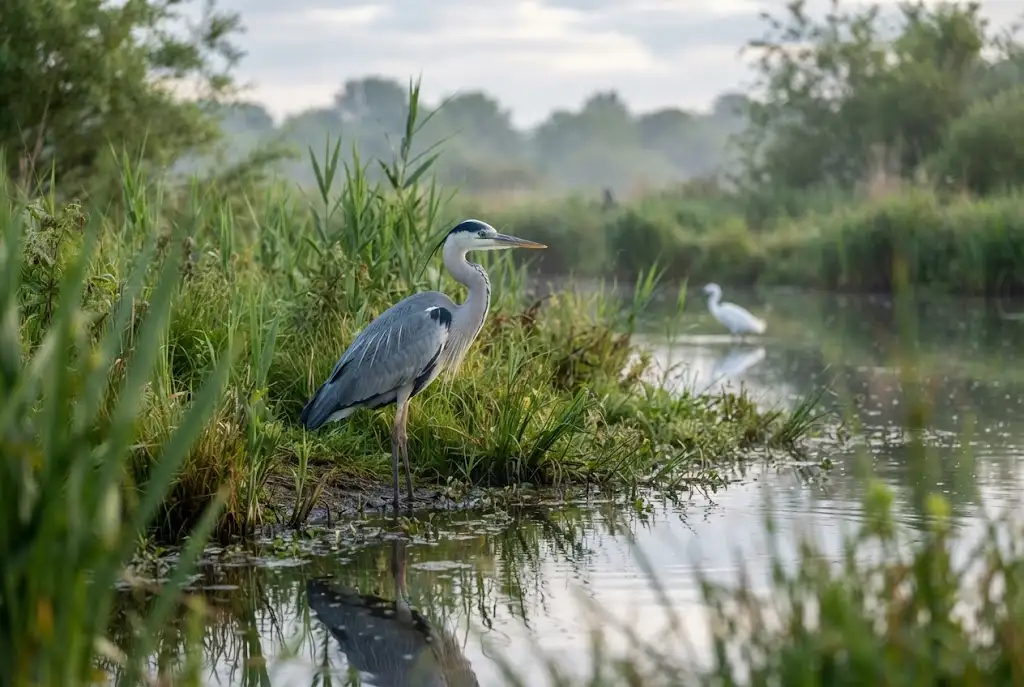
Knowing how to identify marsh birds UK species can turn a walk beside a reedbed, river or wetland into a rewarding wildlife experience. British marshes support a wide range of birds, from tall herons and cranes to smaller waders that feed along muddy edges and shallow water. Many species are closely associated with wetlands because these habitats provide food, shelter and important breeding grounds.
Wetland bird identification can initially seem difficult because many species are seen at a distance or briefly through reeds and vegetation. However, habitat, body shape, leg length, bill shape, flight pattern and calls can all provide useful clues. Once you learn these basic features, it becomes easier to distinguish a crane-like bird from a heron or recognise different wading birds around Britain’s wetlands.
What Are Marsh Birds?
Marsh birds are birds that regularly use marshes, reedbeds, wet grasslands, ponds, lakes, rivers and other water-rich habitats. The term covers several different groups rather than one scientific family.
Some wetland birds spend most of their time walking through shallow water or mud in search of food. Others hunt from the edges of reedbeds, swim across open water or use dense vegetation for nesting. Their feeding strategies are closely connected to the habitats they occupy.
British wetlands can therefore support an impressive mixture of birdlife. A single reserve may contain herons standing motionless at the water’s edge, waders probing mud with their bills, gulls passing overhead and smaller songbirds moving through reeds.
Marsh Birds UK: Common Species to Look For
There is no single definitive list of every bird that could be described as a marsh bird. Instead, it is more useful to learn some of the groups and species commonly associated with British wetlands.
Herons
The Grey Heron is one of Britain’s most recognisable wetland birds. It is a large, long-legged bird with a long pointed bill and a distinctive grey, white and black appearance. Herons often stand extremely still while waiting for an opportunity to catch fish or other prey.
Their patient hunting behaviour is one of their most useful identification clues. If you see a large bird standing motionless in shallow water, particularly with its neck drawn back into an angular shape, a heron may be nearby.
Cranes
The Common Crane is another impressive wetland species. It is tall, long-legged and long-necked, with a more upright appearance than many herons. Cranes can be particularly striking when flying because of their large wingspan and extended neck.
Crane identification can be challenging at a distance because several large wetland birds can appear similar when silhouetted against the sky. Looking carefully at body proportions and flight posture can help.
Wading Birds
Wading birds are especially important in wetland ecosystems. They include birds adapted to walking through shallow water, mud and wet ground while searching for insects, worms, crustaceans and other food.
Different waders have different bill shapes and leg lengths. Some probe deep into soft mud, while others pick food from the surface. Their behaviour can therefore be just as informative as their plumage.
Gulls
Gulls can also appear around wetlands, particularly where marshes connect with rivers, estuaries, lakes or coastal habitats. Identifying them accurately can be more difficult than it first appears because several species can have broadly similar plumage.
Age and season can also affect appearance. Young gulls may look very different from adults, so learning basic gull identification can complement your wider knowledge of types of seagulls in the UK.
Wading Birds UK List: What Features Matter?
When building your own wading birds UK list, it is useful to organise species by their physical characteristics rather than trying to memorise names alone.
- Leg length: Long legs are useful for moving through deeper shallow water.
- Bill shape: Straight, curved, short and long bills reflect different feeding strategies.
- Body size: Compare the bird with familiar species nearby where possible.
- Feeding behaviour: Watch whether it probes, pecks, sweeps or picks food from the surface.
- Habitat: Mudflats, reedbeds, freshwater margins and wet grassland attract different combinations of species.
- Flight pattern: Wing shape, speed and whether the neck is extended can provide useful clues.
Rather than concentrating entirely on colour, try to observe the whole bird. A distant wader may not show enough detail for plumage identification, but its silhouette and behaviour can still narrow down the possibilities.
Wading Birds Names List for British Wetlands
Anyone creating a wading birds names list may encounter familiar species such as Lapwing, Redshank, Curlew, Oystercatcher, Dunlin, Snipe and Black-tailed Godwit. These birds occupy different wetland environments and display different feeding behaviours.
Lapwings are recognisable by their rounded wings and distinctive crest. Redshanks have relatively long legs and a noticeable reddish-orange colour on the legs. Curlews are particularly distinctive because of their long, down-curved bills.
Some waders can be considerably harder to identify, especially when they are in winter plumage or viewed from a long distance. For beginners, it is often better to become familiar with a few common species first and gradually expand the list.
Crane Like Bird: Is It a Crane or Heron?
The question of whether a distant bird is a crane like bird often arises when watching wetlands. Herons and cranes share several obvious characteristics: both can be tall, long-legged and long-necked. However, their proportions and behaviour can help separate them.
When standing, a Grey Heron often holds its neck in an S-shaped posture. A crane generally presents a more upright profile, with a long neck that can appear straighter. Size, body shape and leg position can also provide useful clues.
Flight is particularly valuable. A Grey Heron typically flies with its neck folded back, creating a distinctive shape in the sky. Cranes generally fly with their necks extended. If the bird is too distant to identify from plumage, this difference can be extremely useful.
Crane or Heron: Key Identification Differences
When deciding between crane or heron, look at several features together instead of relying on size alone.
- Neck in flight: Herons usually fly with the neck folded back, while cranes fly with the neck extended.
- Standing posture: Herons often have a more hunched or angular profile, while cranes appear more upright.
- Body proportions: Cranes have a distinctive tall, elegant silhouette.
- Head and bill: A heron’s pointed bill and head shape can look quite different from those of a crane.
- Behaviour: Herons commonly hunt alone from water margins, while cranes can be observed moving across open wetland and grassland habitats.
The same principles apply when someone asks, “heron or crane?” Start with the silhouette and movement, then use plumage and other details if the viewing conditions allow.
Why Wetlands Matter to Birds
Wetlands are among the UK’s important habitats for wildlife because they provide food, water, nesting opportunities and shelter. Reedbeds can offer cover for breeding birds, while shallow margins and muddy areas provide feeding grounds for waders.
Wetlands can also connect different habitats. A marsh may sit alongside woodland, farmland, rivers or coastal areas, allowing birds to move between environments according to seasonal and feeding requirements.
Protecting these habitats therefore benefits more than one bird species. Maintaining healthy wetland ecosystems can support insects, amphibians, mammals, plants and a wide variety of birds at the same time.
How to Watch Marsh Birds Responsibly
Birdwatching is most rewarding when observations are made without disturbing wildlife. Stay on established paths where possible and use binoculars rather than approaching birds closely.
During breeding periods, extra care is important around nests and areas where birds are displaying territorial behaviour. Keep dogs under control where local regulations require it, and follow the rules of nature reserves and protected sites.
Patience is often more productive than getting closer. Find a suitable viewing point, remain quiet and allow the birds to continue behaving naturally. This can also reveal more interesting behaviour, including feeding, courtship, territorial displays and interactions between species.
Marsh Birds UK Identification Tips
If you are new to wetland birdwatching, keep your identification process simple. First, identify the habitat. Then consider the bird’s size and silhouette. After that, examine the bill, legs, neck and behaviour.
For birds in flight, focus on wing shape, neck position and flight pattern. For birds feeding on the ground, observe how they move and what they do with their bill. Listening can also help because many wetland species have distinctive calls.
Taking notes or photographs from a respectful distance can help you compare observations later. Over time, repeated visits to the same wetland can make identification much easier because you become familiar with the species that regularly use the site.
Final Thoughts on Marsh Birds UK
Learning about marsh birds UK species opens the door to a much wider understanding of Britain’s wetland ecosystems. From the familiar Grey Heron to impressive cranes and varied wading birds, each species has physical characteristics and behaviours adapted to its environment.
The most effective approach is to combine several clues. Look at body proportions, bill and leg shape, behaviour, habitat and flight posture rather than relying on colour alone. In particular, understanding the difference between a crane and heron can make identifying large wetland birds much easier.
With regular observation, a simple walk beside a reedbed or marsh can reveal a surprisingly diverse community of wildlife. For further information about identifying British birds, the RSPB bird identification resources provide a useful reference for developing your skills.
