

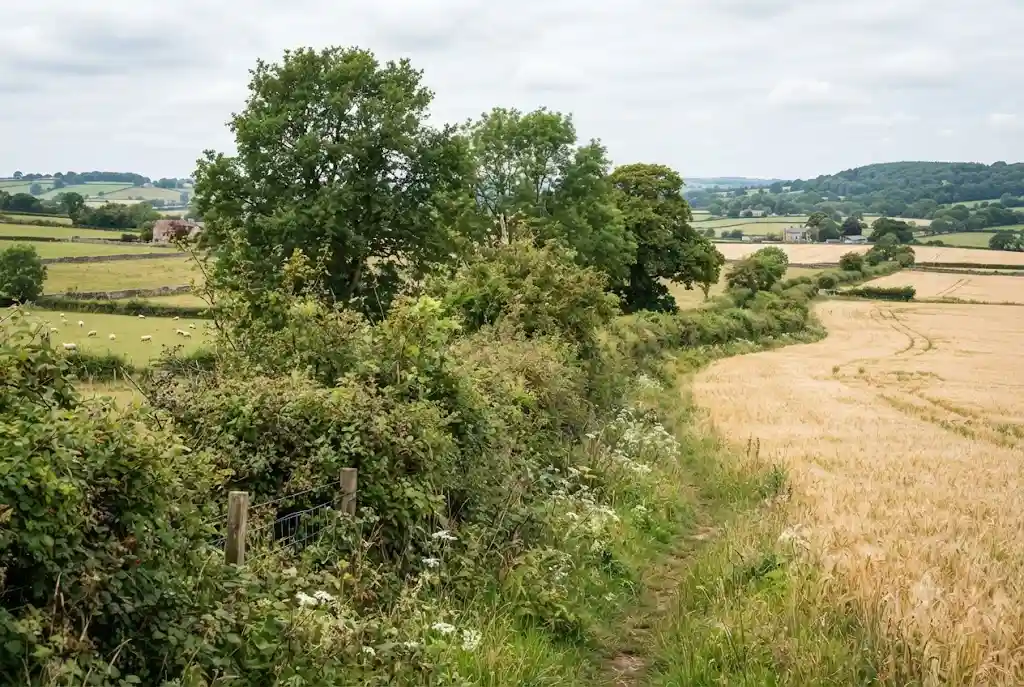
Hedgerow regulations are important for landowners, farmers, developers and anyone planning to remove, cut or substantially alter a countryside hedgerow in England. Hedgerows can provide wildlife habitat, connect fragmented habitats, reduce soil erosion and contribute to the character of the countryside. Because of these benefits, certain hedgerows receive legal protection and additional management rules can apply to agricultural land.
The rules are not identical for every hedge. Whether protection applies depends on factors such as the hedgerow’s length, location and, in some cases, its historical or archaeological importance. Separate rules also now apply to cutting, trimming, buffer strips and certain agricultural management activities.
This guide explains the main legal framework, how hedgerow protection works, when removal may require notification, and why tree protection and wildlife considerations should also be checked before work begins.
What Are Hedgerow Regulations?
Hedgerow regulations are legal controls designed to protect certain countryside hedgerows from inappropriate removal and to regulate aspects of their management. In England, the Hedgerows Regulations 1997 provide an important framework for protecting important countryside hedgerows.
More recent management rules also apply to hedgerows on or next to agricultural land. The Management of Hedgerows (England) Regulations 2024 introduced requirements relating to cutting and trimming and buffer strips. These rules are administered by the Rural Payments Agency.
The two frameworks should not be confused. The countryside hedgerow protection rules focus particularly on whether a hedgerow can be removed, while the newer agricultural management rules regulate activities such as cutting, trimming and cultivation near hedgerows. ([GOV.UK](https://www.gov.uk/guidance/countryside-hedgerows-regulation-and-management))
Which Hedgerows Are Protected?
Not every hedge automatically qualifies for protection under the countryside hedgerow rules.
Government guidance explains that a countryside hedgerow generally needs to meet criteria relating to its length, location and, where applicable, importance. A hedgerow is generally within the relevant protection framework if it is more than 20 metres long with gaps of 20 metres or less, or if it is less than 20 metres long but meets another hedgerow at each end. ([GOV.UK](https://www.gov.uk/guidance/countryside-hedgerows-regulation-and-management))
Location also matters. Protected countryside hedgerows can include those growing on or next to agricultural or forestry land, certain equestrian land, common land, village greens, Sites of Special Scientific Interest and certain nature reserves.
A hedge within a private garden, or marking the boundary of a private garden, is treated differently under these countryside removal rules.
What Makes a Hedgerow Important?
The term “important hedgerow” has a specific meaning within the Hedgerows Regulations framework. Age and certain historical, archaeological, ecological or landscape characteristics can be relevant.
For example, government guidance identifies hedgerows that are at least 30 years old and meet particular criteria relating to parish boundaries or archaeological features as important hedgerows.
This means that simply measuring a hedge is not always enough to determine its legal status. A landowner considering removal may need to establish whether the hedgerow meets the relevant importance criteria as well as the basic length and location requirements.
The legal framework was created specifically to protect important countryside hedgerows from removal, making this assessment particularly relevant before a removal project begins. ([Planning Inspectorate](https://www.gov.uk/government/publications/hedgerows-retention-and-replacement-notices-the-appeal-procedures))
Hedgerow Removal: When Is Permission Needed?
Hedgerow removal is not something that should be undertaken simply because a landowner owns the property where the hedge stands.
Where the Hedgerows Regulations apply, a person intending to remove a qualifying countryside hedgerow generally needs to notify the relevant local planning authority before carrying out the removal. The authority then considers whether the hedgerow should be retained.
GOV.UK advises landowners to discuss a proposed removal with their local planning authority first. The authority may issue a hedgerow retention notice or a written notice allowing removal in the proposed manner. ([GOV.UK](https://www.gov.uk/guidance/countryside-hedgerows-regulation-and-management))
This process gives the local authority an opportunity to assess whether the hedge qualifies for protection and whether it should remain in place.
How Long Does a Hedgerow Removal Decision Take?
After a local planning authority acknowledges a written hedgerow removal notice, it generally has 42 days to respond under the countryside hedgerow protection process.
The authority can issue a retention notice where the hedgerow should be protected or provide written permission for the proposed removal. GOV.UK also states that if the applicant does not receive a response within the 42-day period, the hedgerow may be removed, subject to the applicable legal requirements.
Because other restrictions can still apply, this should not be interpreted as permission to begin work without checking the wider circumstances. Wildlife law, tree protection, felling requirements and agricultural management rules may all need separate consideration.
Removing Hedgerows Legally
Removing hedgerows legally starts with identifying exactly what type of hedge is involved and which rules apply.
A sensible process is to:
- Identify the location and length of the hedgerow.
- Establish whether it is on or next to agricultural, forestry or another relevant type of land.
- Check whether it could qualify as an important hedgerow.
- Contact the local planning authority before removal.
- Submit any required hedgerow removal notification.
- Check for nesting birds and other wildlife constraints.
- Check whether trees within the hedge require separate protection or a felling licence.
- Consider whether agricultural hedgerow management rules apply.
This approach helps prevent a common mistake: treating hedgerow removal as a simple landscaping task when several separate legal controls may apply.
Hedgerow Protection and Agricultural Land
Additional hedgerow management rules apply to hedgerows on or next to agricultural land in England.
The Management of Hedgerows (England) Regulations 2024 introduced rules concerning cutting and trimming and the protection of buffer strips. The Rural Payments Agency states that covered hedgerows generally must not be cut or trimmed between 1 March and 31 August. ([GOV.UK](https://www.gov.uk/guidance/hedgerow-management-rules-cutting-and-trimming))
The purpose is closely connected with the ecological role of hedgerows. They provide habitat and wildlife corridors and can support pollinators, soil protection and water management.
There are exemptions for certain circumstances, including some situations involving serious risks to human, animal or plant health, specific highway or public-right-of-way issues and certain hedge-laying or coppicing activities. The exact conditions should be checked before relying on an exemption.
Hedgerow Buffer Strip Rules
Hedgerow protection is not limited to restrictions on cutting.
Under the agricultural management rules, restrictions also apply to cultivation and the application of fertilisers and pesticides within a buffer area around qualifying hedgerows. GOV.UK states that a two-metre area from the centre of the hedgerow is subject to these restrictions, subject to the relevant exemptions.
The buffer-strip rules are intended to reduce pressure on hedgerows and protect the surrounding environment. They are particularly relevant to agricultural land where cultivation and chemical applications take place close to field boundaries. ([GOV.UK](https://www.gov.uk/guidance/hedgerow-management-rules-buffer-strips))
Land managers should therefore consider the hedge and its surrounding buffer rather than treating the hedge itself as the only protected feature.
Hedgerow Law UK and Nesting Birds
Hedgerow law UK requirements also need to be considered alongside wildlife protection.
Hedgerows are commonly used by nesting birds, particularly during the spring and summer breeding period. GOV.UK warns that people must not carry out work that could harm nesting wild birds or destroy their nests.
This is separate from the agricultural cutting and trimming restrictions. Even where a particular hedgerow management activity might otherwise be permitted, wildlife legislation can still affect whether and how the work can be undertaken.
Before cutting or removing a hedge, it is therefore sensible to inspect the area carefully and obtain appropriate ecological advice if nesting activity is suspected.
Hedgerows and Trees: What You Need to Check
A hedgerow can contain mature or newly established trees, and those trees may create additional legal considerations.
GOV.UK explains that trees growing within a hedgerow are treated as part of the hedgerow for the purposes of the agricultural management rules. However, a hedgerow tree may also have separate protection through a Tree Preservation Order.
Tree felling rules can create another layer of requirements. Removing a tree standing within a hedgerow may require a felling licence unless an applicable exception applies. ([GOV.UK](https://www.gov.uk/government/publications/tree-felling-getting-permission/tree-felling-getting-permission))
This is why a hedgerow removal project should not be assessed solely by looking at the hedge vegetation. Individual trees within the hedge may need their own checks.
Our guide to protected trees law explains the separate framework for Tree Preservation Orders and conservation-area controls, while the tree felling licence guide covers the wider felling-control requirements.
Can You Remove Part of a Hedgerow?
Hedgerow protection is not necessarily limited to complete removal.
The countryside hedgerow framework can apply where someone intends to remove all or part of a qualifying hedgerow. This can matter when creating a new access point, widening an entrance, preparing a development site or removing a section for agricultural purposes.
Before taking out even a relatively short section, it is therefore worth checking whether the proposed work falls within the relevant regulations.
Partial removal can also affect the ecological value and continuity of a hedge. From a practical land-management perspective, retaining as much established vegetation as possible may sometimes provide benefits even where a small intervention is permitted.
Hedgerow Regulations and Property Development
Hedgerows can become an important planning consideration when land is being developed.
A proposed driveway, access road, building extension or new development may require the removal or alteration of an existing boundary hedge. If the hedge falls within the countryside protection framework, the legal process should be considered before plans are finalised.
Developers should also consider trees within hedgerows, wildlife, planning conditions and any other environmental constraints. Early assessment can reduce the risk of redesigning a project after discovering that a boundary cannot legally be removed in the proposed way.
Digital mapping and environmental planning tools can also support this process. The wider topic of smart urban greening shows how technology and environmental data can help planners understand vegetation and green infrastructure in more detail.
Hedgerow Removal Notices and Appeals
If a local planning authority decides that a protected hedgerow should be retained, it can issue a hedgerow retention notice.
There are also circumstances in which a person can appeal a retention notice or a replacement notice. GOV.UK guidance states that an appeal generally needs to be made within 28 days of the date on the local authority’s decision letter. ([GOV.UK](https://www.gov.uk/government/publications/hedgerows-retention-and-replacement-notices-the-appeal-procedures))
Anyone considering an appeal should use the current official procedure and check the applicable deadline rather than relying on general information from older sources.
What Happens If Hedgerow Rules Are Broken?
Breaking the rules can have serious consequences.
GOV.UK states that unlawful removal of a protected countryside hedgerow can result in an unlimited fine. Local planning authorities can also issue replacement notices in circumstances where a protected hedgerow has been removed unlawfully.
Agricultural management breaches are handled under their own enforcement framework through the Rural Payments Agency. The relevant consequences depend on the rule that has been breached and the circumstances of the case.
This makes it important to establish which legal framework applies before beginning work rather than assuming all hedgerow restrictions are administered by the same organisation.
How to Check Hedgerow Protection Before Work
If you are planning to remove, cut or substantially alter a hedgerow, begin with a basic legal and site assessment.
First, identify the hedge and determine its approximate length. Next, establish the type of land beside it and whether it falls within one of the locations covered by the countryside protection rules.
Then consider whether it may qualify as an important hedgerow. If removal is proposed, contact the relevant local planning authority before starting work.
For agricultural hedges, also check the current Rural Payments Agency requirements for cutting, trimming and buffer strips. If trees are present, assess whether protected trees law or a tree felling licence may apply.
Hedgerow Regulations and Sustainable Land Management
Hedgerow protection is not only a legal issue. Well-managed hedges can contribute to wider environmental objectives.
They can provide shelter, habitat and wildlife corridors while helping define field boundaries and rural landscapes. In suitable locations, they can also contribute to soil and water management.
This makes long-term management important. Removing a hedge may solve a short-term access or land-use problem, but retaining and managing established vegetation can provide environmental value over many years.
The same principle applies to wider environmental planning. Technology, mapping and data can support better decisions, but successful land management still depends on understanding the ecological and legal characteristics of each site.
Final Thoughts
Hedgerow regulations provide an important framework for protecting countryside hedges in England, while newer agricultural management rules introduce additional requirements for cutting, trimming and buffer areas.
The most important step before removing or substantially altering a hedge is to establish which rules apply. Length, location, age, historical importance, agricultural use, wildlife and the presence of trees can all affect the situation.
Landowners and developers should therefore contact the relevant authority before beginning work and avoid assuming that ownership automatically gives them unrestricted rights to remove a hedgerow.
Understanding hedgerow regulations alongside protected trees law and tree felling licence requirements provides a more complete picture of the legal considerations that can arise when managing trees and vegetation on UK land.
“`
