

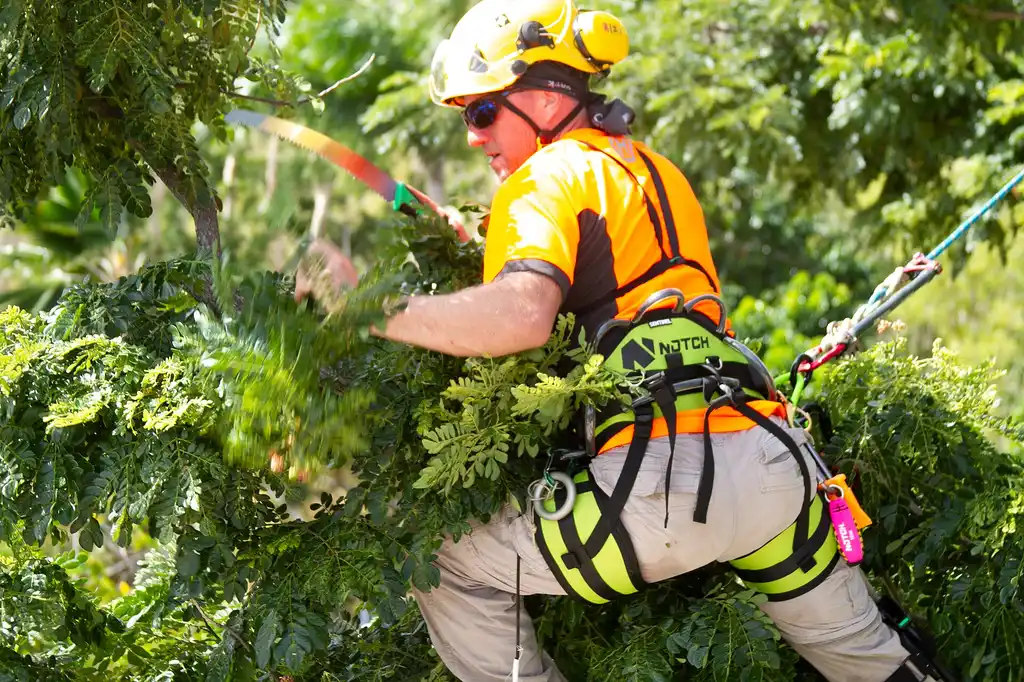
Knowing when to prune trees is the single biggest factor in whether pruning helps or harms them. Cut at the right moment and a tree responds with strong, healthy growth and a safer shape. Cut at the wrong one and you can invite disease, strip next year’s flowers, or leave wounds open exactly when fungal spores are most active. This seasonal guide explains the best time to prune the trees most commonly found in UK gardens, the exceptions that catch people out, and the mistakes worth avoiding.
Why Timing Matters When You Prune Trees
A pruning cut is a wound, and a tree defends itself best when it is actively growing or fully dormant and dry. Timing also affects flowering and fruiting: prune a spring-flowering tree in winter and you remove the very buds you were hoping to enjoy. Disease risk changes with the seasons too. Silver leaf, a fungal disease of plums, cherries and other stone fruit, enters through fresh cuts made in damp winter weather, which is why those trees follow a completely different timetable. Sap flow matters as well — maples, birches and walnuts can bleed heavily if cut in late winter or spring. Getting the season right is therefore not fussiness; it is basic tree care, and it sits alongside the fundamentals in our guide to essential tree care tips for healthy growth.
Winter: The Main Season for Most Deciduous Trees
For most deciduous trees — oak, beech, ash, lime, hornbeam and many others — mid-winter is the ideal pruning window, roughly from November to early March while the tree is dormant. Without leaves you can see the branch structure clearly and judge which limbs cross, rub or grow inward. The tree’s energy is stored in its roots, so removing wood costs it little, and new growth in spring quickly covers the wounds. Winter pruning is also when arborists carry out structural work such as crown lifting and crown reduction, because the tree is not supporting a full canopy. Avoid the very coldest snaps if you can, and never prune in wet, foggy weather when fungal spores spread most easily.
Spring and Summer: Light Work and Important Exceptions
Spring is for restraint. As buds burst and leaves expand, a tree is spending its stored energy, and heavy pruning now weakens it and can stimulate soft, vulnerable growth. Light tasks are fine: removing dead, damaged or diseased wood can be done at any time of year, and it is easier to spot dead branches once the rest of the tree is in leaf. Summer brings the great exception to the winter rule. Stone fruit trees — plums, cherries, damsons and gages — should be pruned in mid-summer, when dry weather and active defences keep silver leaf fungus out. Magnolias and walnuts also prefer summer, and maples and birches are best cut in mid-summer too, once they are in full leaf and sap pressure has settled. If you are unsure whether a tree is struggling rather than simply seasonal, our guide to the signs your trees need immediate professional attention will help you tell the difference.
Autumn: The Season to Go Carefully
Autumn tempts gardeners with a tidy-up mindset, but it is the season to prune least. Decaying fungi are at their most active in damp autumn air, and cuts made now heal slowly because the tree is shutting down rather than growing. Removing dead wood is still fine, and a dangerous branch should never wait for a calendar. Otherwise, note what needs doing and wait for winter. Evergreens are the partial exception: conifers and evergreen shrubs are usually trimmed in late spring or mid-summer, and hedges such as yew and box traditionally get their main cut in summer, with a tidy in early autumn at the latest.
Choosing Your Moment by Tree Type
Bringing it together: prune apples, pears and most ornamental deciduous trees in winter. Prune plums, cherries and other stone fruit in mid-summer. Prune maples, birches, walnuts and magnolias in mid-summer when in full leaf. Trim evergreen hedges in late spring and again lightly in summer if needed. Formative pruning of young trees — building a strong framework of branches in the first few years — is winter work, and a little done annually beats a drastic correction later. Whatever the species, prune on a dry day with clean, sharp tools, and disinfect blades between trees if disease is present. For larger specimens, awkward heights or anything near a building, the techniques in our overview of professional tree pruning services show what trained arborists do differently.
The Right Tools for Clean Cuts
Timing is only half the job; the other half is the cut itself. Bypass secateurs handle stems up to about the thickness of a finger and suit young trees and shrubs. Loppers extend your reach and power for branches up to roughly 4–5 cm across, while a curved pruning saw is the right tool for anything thicker — never force secateurs through wood that is too big, because the torn cut that results heals badly. A pole pruner helps with high, light work from the ground, but anything requiring a ladder and a saw is a job to think twice about. Keep blades sharp, because a clean cut seals faster than a crushed one, and clean blades with disinfectant after working on any tree that shows signs of disease. Store tools dry and oiled, and they will last for decades.
Pruning Mistakes That Harm Trees
The worst mistake is topping — hacking a tree back to stubs. It destroys the tree’s structure, triggers a thicket of weak regrowth and shortens its life. Flush cuts, taken hard against the trunk, remove the branch collar that seals wounds; cuts should sit just outside that collar. Leaving long stubs is equally poor, because the stub dies back and rots into the trunk. Over-pruning is the quiet error: removing more than about a quarter of the live crown in one year starves the tree of the leaves it needs to feed itself. Finally, painting wounds is outdated practice — trees seal themselves better unpainted. If a tree is simply too large or too far gone for pruning to save, our guide to safe, professional tree felling and removal explains the alternatives, and our tree removal cost guide sets out what to budget.
Prune in winter for most trees, in summer for stone fruit and bleeders, and lightly at all other times. Follow that simple rhythm, make clean cuts, and your trees will repay you with decades of healthy growth.

2 Comments
Pingback: Tree Felling in the UK | Safe & Professional Tree Removal
Pingback: Tree Pruning Services in the UK | Healthy & Safe Tree Care