

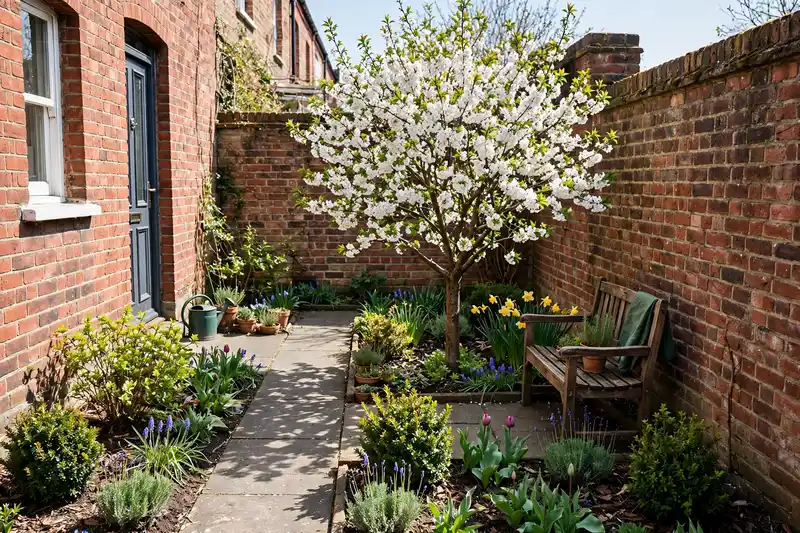
A small garden can still hold a tree or two, and the right choices make the whole plot feel bigger rather than smaller. Small garden landscaping with trees is about scale, light and placement. Pick a tree that stays compact, give it room to grow without crowding the house, and build the rest of the garden around it.
Many UK gardens are short on space but long on potential. A terraced house in Leeds, a new build in Milton Keynes or a flat with a shared courtyard can all carry a well chosen tree. The trick is to plan before you plant, because moving a tree costs far more than choosing the right one in the first place.
Start With the Space You Actually Have
Measure the garden before you fall in love with a tree. Note the width, the depth, the direction the sun comes from and where the shade already falls at midday. A south facing plot gets sun most of the day, while a north facing garden stays shady and suits a different set of trees.
Check what sits underground too. Drains, pipes and the house foundations all limit where a tree can go. As a rule, plant at least three metres from the house for a small tree, and further for anything that grows past six metres. Our guide to planting near mature trees explains how roots behave and why distance matters.
Think about the view from inside as well. A tree placed to frame a window gives you greenery all year, while one planted dead centre can block light from the kitchen. Stand in the rooms you use most and look out before you mark the spot.
Choose Compact Trees That Stay Small
The single most important decision is the mature size of the tree. A tree that reaches 15 metres will outgrow a small garden within a decade, while a compact variety stays in proportion for life. Look for varieties with a mature height of four to seven metres and a narrow crown.
Good compact choices for UK gardens include Amelanchier lamarckii, which gives spring blossom, summer berries and autumn colour in one small package. Crab apple varieties such as Malus Evereste stay neat and feed birds through winter. Rowan, or Sorbus aucuparia, suits a narrow plot and brings bright berries in autumn. For evergreen structure, a slow growing holly or a columnar juniper adds shape without taking over.
Ask the nursery for the mature height and spread in writing, not just the size of the plant in the pot. A two metre tree in a pot may be a young giant. Check the label for the rootstock too, since a dwarfing rootstock keeps a fruit tree small while a vigorous one lets it grow tall.
Use One Tree as the Focal Point
One strong tree beats three crowded ones in a small garden. A single focal tree gives the eye somewhere to rest and makes the space feel designed rather than filled. Place it off centre, about two thirds of the way across the garden, and let paths and planting lead toward it.
Underplant the tree with shade tolerant ground cover once it settles. Hardy geraniums, ferns and spring bulbs cope with dry shade under a canopy and soften the base of the trunk. Avoid digging deep or piling soil against the trunk, since both can damage the roots and the bark.
If the garden is very narrow, a trained tree works well. An espalier apple or pear grows flat against a fence or wall and takes up almost no floor space. A pleached tree, with a clear stem and a flat canopy on top, gives shade and privacy above head height while leaving the ground below free for seating or planting.
Plan Light, Shade and Privacy Together
Trees change how light moves through a garden, so plan for the shade they will cast in five years, not just the shade they cast today. A deciduous tree is often the smart choice for a small plot. It leafs out in summer when you want shade, then drops its leaves in winter when you want every bit of light.
Use the tree to screen an ugly view or a neighbour’s window rather than planting a solid fence of conifers. One well placed tree blocks the sightline without turning the garden into a dark box. Pair it with a climber on the fence, such as a clematis or a jasmine, for soft cover at eye level.
Think about the seasons. A tree with spring blossom lifts a small garden in April, while one with good autumn colour gives a second show in October. Wildlife friendly landscaping shows how to pick plants that support birds and insects through the year, and a small garden tree is often the best wildlife feature in the whole plot.
Keep Paths and Seating Simple
Small gardens work best with one clear path and one seating spot. A winding path eats space and makes the garden feel fussy, while a straight run of paving from the door to the tree keeps things calm. Leave the paving slightly narrow, about 60 centimetres, so planting can spill over the edges.
Put the seat where you can see the tree, not under it. Sitting under a tree sounds pleasant, but falling leaves, sap and bird droppings make it a chore in practice. A bench at the far end of the garden, looking back toward the house with the tree in the middle distance, usually works better.
Use the same material for the path and the patio so the garden reads as one space. Pale paving reflects light into a shady plot, while dark stone can make a small garden feel smaller. Gravel is cheap and drains well, but it wanders onto the lawn and into the house, so edging matters.
Plant It Properly and Water It Well
Dig a hole twice as wide as the root ball but no deeper, so the tree sits at the same level it grew at in the nursery. Loosen the sides of the hole with a fork so roots can push into the surrounding soil. Mix the dug soil with compost and backfill gently, firming as you go.
Stake a young tree low, with the tie about one third of the way up the stem, so the trunk can flex in the wind and grow strong. Remove the stake after two growing seasons. A tree that stays staked for years grows a weak trunk and depends on the support.
Watering matters more than feeding in the first two years. Give a new tree a full can of water twice a week in dry weather, soaking the root zone rather than sprinkling the leaves. Our guide on how to water a newly planted tree sets out a simple schedule that works for most UK gardens.
A Real Example: A Six Metre Garden in Bristol
A homeowner in Bristol had a garden just six metres deep behind a terraced house, with a brick wall at the back and a kitchen that faced north. She wanted a tree but feared it would swallow the garden. The answer was a single Amelanchier lamarckii planted two metres from the back wall and one metre off centre, with a narrow gravel path running past it to a small bench at the far end.
Three years on, the tree stands about four metres tall and gives spring blossom, summer berries for the blackbirds and orange leaves in autumn. The bench sits in sun for most of the afternoon because the tree is deciduous and the canopy is high enough to let light pass underneath. The garden feels bigger than it did when it was bare, because the tree gives it depth and a point to look at.
The total cost was modest: one tree, a bag of compost, a stake and a few bulbs for the base. The lesson is that a small garden does not need a big budget, just one good decision made early.
Common Mistakes to Avoid
The most common mistake is planting too close to the house or the boundary. A tree that looks small in a pot can lift paving, block gutters and strain neighbour relations within a decade. Measure twice and plant once.
Another mistake is choosing a tree for its flowers alone and ignoring its roots, its spread and its mess. A cherry is lovely in blossom but drops fruit and leaves that stain paving. A birch is graceful but sheds twigs all year. Ask what the tree does in every season, not just in spring.
Finally, do not cram the garden with features. A tree, a path, a seat and a few good plants are enough. A small garden with room to breathe always feels larger than one packed with ornaments, pots and water features. If you are starting from scratch, our complete tree planting guide walks through the whole job step by step.
What to Do This Weekend
Start by measuring the garden and noting where the sun falls at noon. Then visit a nursery with your measurements and ask for three compact trees that suit your soil and aspect. Compare their mature height, their spread and their seasonal interest before you choose.
Order the tree bare root in winter if you can, since it is cheaper and establishes well, or buy container grown in spring for instant effect. Dig the hole on a dry day, plant at the same depth as the nursery, water well and stake low. Then leave it alone and let it grow.
Small garden landscaping with trees rewards patience. In the first year the tree looks small and the garden looks bare. By year three the shape is there, the birds have found it and the garden has a centre. That is the point when a small plot stops feeling small. For ideas on species that suit tight urban plots, see our guide to the best trees for sustainable landscaping, and for the wider cooling effect of city trees, read our guide to street trees and urban cooling.
