

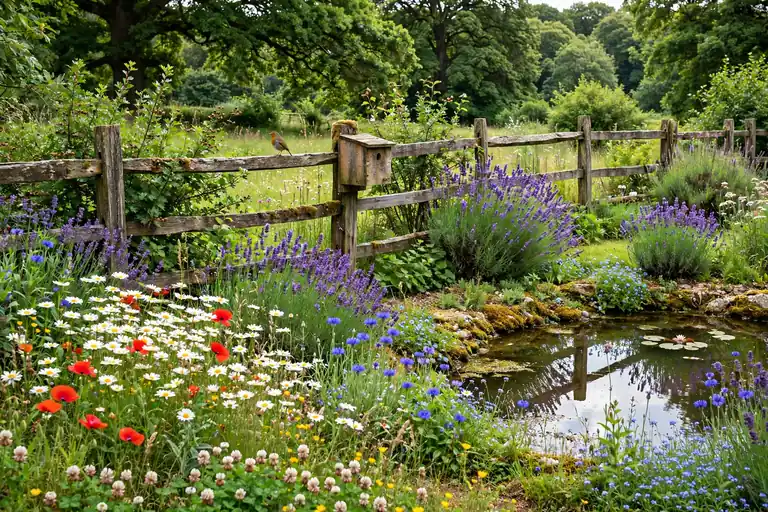
A garden can be beautiful and full of life at the same time. Wildlife-friendly landscaping is the practice of designing and planting outdoor spaces so that birds, bees, butterflies, hedgehogs and other creatures can feed, shelter and breed in them — without giving up structure, colour or kerb appeal. Whether you are redesigning a whole plot or refreshing a single border, a few deliberate choices can turn an ordinary garden into a small nature reserve.
This guide explains the principles behind wildlife-friendly landscaping, the features that make the biggest difference, and how trees and shrubs form the backbone of a garden that works for wildlife all year round.
Start with Structure: Trees and Shrubs First
Every wildlife garden needs a framework, and trees provide it better than anything else. A single native tree offers food, nesting sites and shelter to hundreds of species, and its canopy creates the sheltered microclimate that smaller plants and insects need. If space allows only one tree, choose a native species such as hawthorn, rowan or crab apple, which support far more wildlife than most ornamental exotics. Our guide to how native tree species help support local ecosystems explains the difference they make.
Shrubs fill the layer beneath the canopy. Mixed native hedging — hawthorn, hazel, dog rose, guelder rose — gives birds nesting cover and autumn berries, while evergreen shrubs provide winter shelter. When you are planting near mature trees, choose shade-tolerant shrubs and perennials that will not compete aggressively with established roots.
Plant for Pollinators, Season by Season
Bees and butterflies need nectar and pollen from early spring to late autumn, so plan for a relay of flowers rather than a single summer peak. Crocuses, lungwort and flowering currant start the year; lavender, catmint and scabious carry the summer; ivy flowers and sedum feed insects well into autumn. Single flowers are far better than double blooms, whose petals often block access to nectar entirely.
Leave seed heads standing over winter where you can. They feed finches and other seed-eating birds, shelter overwintering insects, and look striking in frost. Cutting everything back in autumn is tidier, but a wildlife-friendly garden accepts a little beautiful untidiness in the quieter corners.
Add Water — Even a Little Helps
Water is the single fastest way to attract wildlife. A pond is ideal: even a small one will draw frogs, newts, dragonflies and bathing birds within a season. Give it shallow, gently sloping edges so creatures can climb out, plant native marginal plants around the rim, and avoid fish if you want amphibians to thrive.
No room for a pond? A bird bath, a shallow dish refreshed daily, or a buried bucket with a ramp still helps. Birds need water for drinking and bathing in every month of the year, and a frozen dish thawed on a winter morning is a small kindness that gets noticed quickly.
Create Shelter and Safe Passages
Wildlife needs places to hide, hibernate and travel safely. Log piles in a shady corner shelter beetles, fungi and sometimes hedgehogs; a compost heap warms slow-worms and feeds the soil; long grass left uncut at the edges gives small mammals cover. These features cost nothing and can be tucked behind planting so the garden still looks cared for.
If your garden is fenced, cut a small hedgehog hole — about 13cm square — at ground level in each boundary, and encourage neighbours to do the same. Hedgehogs roam over a kilometre a night and cannot thrive in sealed gardens. Safe passage is a core principle of tree conservation thinking applied at garden scale: habitats work when they connect.
Choose the Right Trees for the Space
Tree choice decides how much wildlife value a garden delivers over decades. Small gardens suit rowan, crab apple, amelanchier or a multi-stem birch — all manageable in size and generous with blossom and fruit. Larger plots can take oak or wild cherry, the two heavyweight champions for associated species. Our round-up of the best trees for sustainable landscaping compares strong candidates for urban and suburban properties.
Whatever you plant, look after it properly in its first years: water through dry spells, mulch generously, and protect the trunk from strimmers and mowers. Established trees also need respect — problems such as honey fungus can spread through stressed roots, so keep mature trees healthy rather than battling decline later.
Let the Lawn Work Harder
A bowling-green lawn is a wildlife desert, but small changes transform it. Raise the mower blades, mow less often, and leave a patch of longer grass through summer for butterflies and grasshoppers. Clover and selfheal in the sward feed bees for months and stay green in drought. Many gardeners now try a “no-mow May” and find they prefer the softer look all season.
Where lawn meets border, curve the edges and plant them generously. Deep, layered borders — trees behind, shrubs in the middle, perennials and ground cover in front — offer more food and shelter per square metre than any other planting style, and they are the hallmark of professional wildlife-friendly landscaping.
Go Easy on Chemicals and Peat
Wildlife-friendly landscaping works best when the garden is not working against itself. Slug pellets, broad-spectrum insecticides and weedkillers strip out the bottom of the food chain — the very insects that birds and hedgehogs depend on — so switch to targeted, manual methods wherever you can: beer traps and wool pellets for slugs, hand-weeding, and tolerance of a few chewed leaves. Healthy trees and shrubs shrug off most pests, and recognising real threats early, such as the dieback described in our guide to ash dieback, matters far more than routine spraying. Choose peat-free compost, too: lowland bogs are among the UK’s most precious wildlife habitats, and digging them up to fill plant pots undoes the good a wildlife garden tries to do.
A Garden That Gives Back
The real pleasure of a wildlife-friendly garden is how alive it feels: blackbirds at dawn, bees working the lavender, a hedgehog snuffling past at dusk. The design principles are simple — native structure, flowers in every season, water, shelter and connection — and they scale from a courtyard to a country acre. Woodland edges show the same pattern at a bigger scale, which is why ancient woodland supports such rich wildlife: layers, deadwood, water and time.
Start with one change this season — a tree, a pond, a patch of long grass — and build from there. Wildlife-friendly landscaping is not a finished state but a direction of travel, and every garden that moves in that direction makes the whole neighbourhood richer.
