

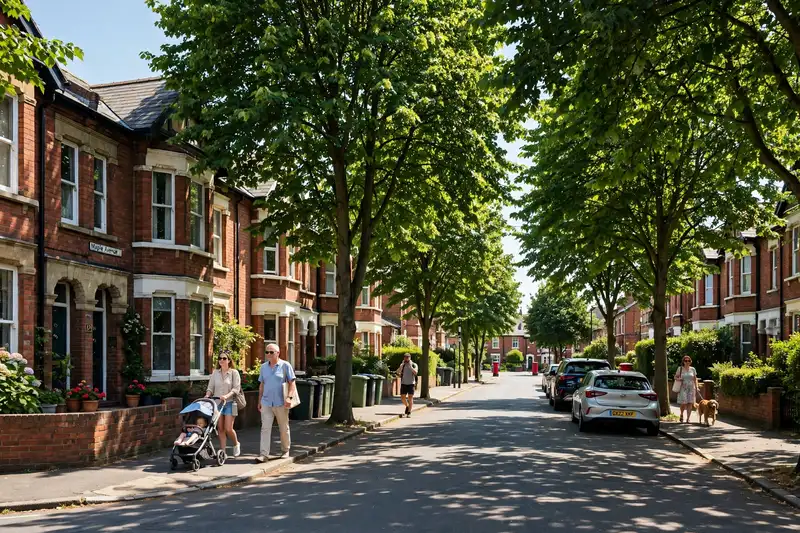
Street trees and urban cooling go together in a way that surprises most people. A single mature street tree can make the pavement beneath it feel several degrees cooler on a hot afternoon, and a whole tree-lined street can stay noticeably cooler than a bare one a few roads away. For towns and cities across the UK, that cooling effect is becoming one of the most practical reasons to plant and protect street trees.
This guide explains how street trees cool our towns, which trees do the job best on UK streets, and what good planting looks like. It also covers what councils and residents can do to keep those trees alive long enough to do their work.
Why Cities Get So Hot
Built-up areas hold heat. Tarmac, brick, concrete and roof tiles absorb warmth during the day and release it slowly at night. This is often called the urban heat island effect, and it means city centres can stay several degrees warmer than the countryside around them, even after sunset.
The effect gets worse where there is little shade and little greenery. Wide roads, car parks and paved front gardens all add to the problem. Without trees, the sun hits hard surfaces directly, and there is nothing to break up the heat or to add moisture to the air.
Hot streets are not just uncomfortable. They make walking and cycling less pleasant, they push up the need for fans and air conditioning, and they can be a real health concern for older people and young children during heatwaves. Cooling a street down is therefore a practical public health measure, not a cosmetic one.
How Street Trees Cool a Street
Street trees cool their surroundings in two main ways. The first is shade. A healthy canopy blocks direct sunlight from reaching roads, pavements and walls, so those surfaces stay cooler and release less heat at night. The difference between a shaded pavement and one in full sun is easy to feel on a summer afternoon.
The second way is less visible but just as important. Trees release water vapour through their leaves, a process called transpiration. As that water evaporates, it takes heat from the surrounding air. A mature tree can release hundreds of litres of water on a hot day, which works a little like natural air conditioning for the street.
Trees also slow the wind and filter dust from the air, which makes a street feel more comfortable to walk along. Together, shade and transpiration can cut peak afternoon temperatures on a tree-lined street by several degrees compared with a similar street that has no trees at all.
For a real-world example, think of two parallel residential streets in the same town. One has a mature lime tree outside almost every house. The other was paved over years ago and has no trees at all. On a July afternoon, residents on the tree-lined street sit out in their front gardens. On the bare street, the pavement is too hot to stand on comfortably. The trees are the only difference.
Which Trees Work Best on UK Streets
Not every tree suits a street. The best street trees tolerate compacted soil, road salt, drought and occasional damage, and they grow to a size that fits the space without lifting pavements or tangling with overhead cables.
Lime, London plane, hornbeam, field maple and ornamental pear are all common choices on UK streets, and each has its strengths. London plane copes well with pollution and drought. Hornbeam stays narrow enough for tighter streets. Field maple brings good autumn colour and stays a manageable size.
Size matters more than most people realise. A small ornamental tree may look tidy, but it will never develop the canopy that delivers real cooling. Where space allows, councils should choose species that can grow into a large canopy over 20 to 30 years, because that is when the cooling benefit becomes substantial.
Root space matters too. A tree planted in a tiny pit with compacted soil will struggle, grow slowly and may die young. Good planting gives roots room to spread, with structural soil or a proper tree pit that lets water in and roots out. This is one of the reasons planting near mature trees needs care, and the same principles apply when a new street tree goes in.
What Good Street Tree Planting Looks Like
Good street tree planting starts before the tree arrives. The pit should be wide enough, the soil should be loose and fertile, and there should be a plan for watering during the first two or three summers. Young trees need regular water while their roots establish, and a dry first summer is the most common reason new street trees fail.
Protection matters as well. A simple guard keeps the young trunk safe from strimmers, parked cars and accidental knocks. Mulch around the base holds moisture in the soil and stops grass from competing with the tree for water and nutrients.
After planting, the tree needs a care schedule. That means watering in dry spells, checking the guard and ties, and pruning only when needed to keep a clear shape and to lift the canopy above pavements and roads. A tree that is looked after in its first five years will usually look after itself after that.
Councils that get this right see their street trees live for decades. Those that plant and forget often lose half their new trees within a few years, which wastes money and leaves streets bare just when summers are getting hotter.
The Payoff for a Town
Street trees repay their cost many times over. Cooler streets mean lower cooling bills for nearby homes and shops, less strain on the grid during heatwaves, and streets that people actually want to walk along. Shaded pavements encourage walking and cycling, which brings its own health benefits.
There are wider benefits too. Street trees support birds and insects, they help manage rainwater by slowing runoff, and they make neighbourhoods more attractive places to live. Research on how trees capture and store carbon shows the climate value of woodland, and street trees add a local, visible part of that same story.
Property values often rise on tree-lined streets as well. Buyers notice greenery, and estate agents know it. The link between professional landscaping and property value applies just as much to the street outside a house as it does to the garden behind it.
What Councils and Residents Can Do
If your street has few trees, the first step is to ask your council about its tree planting programme. Many councils have a street tree strategy and a waiting list for new planting, and resident requests do get heard, especially when several neighbours ask together.
Residents can help new trees survive. Watering a young street tree during a dry spell, even with a bucket from the kitchen, can make the difference between a tree that thrives and one that dies. Reporting a damaged guard or a tree that looks stressed will also help the council act before the problem becomes serious.
Homeowners should also think about their own front gardens. Replacing a paved front garden with planting, or simply watering a newly planted tree properly, adds to the cooling effect of the street. Small changes across many gardens add up to a real difference.
For anyone planning work near a street tree, it is worth remembering that roots are protected. Guidance on tree root protection areas explains how to work safely around trees, and the same care applies when digging near a street tree for a driveway or a wall.
Planning New Streets With Trees in Mind
The best time to plan for street trees is before a road is built or rebuilt. When trees are included in the design, there is room for proper pits, for species that suit the space, and for a watering and care plan from day one. Retrofitting trees into an existing street is always harder and more expensive.
This is where the wider picture matters. The role of urban trees in modern city planning is now well understood, and new developments that include street trees from the start tend to age better, sell better and feel better to live in than those that treat trees as an afterthought.
Existing streets can still be improved. Verges can be widened, parking bays can be redesigned to fit a tree pit, and dead trees can be replaced with species that will cope with the conditions. The work is gradual, but a street gains a tree at a time.
A Cooler Street Starts With One Tree
Street trees and urban cooling are linked in a way that is simple to understand and hard to argue with. Shade and transpiration cut temperatures, make streets more comfortable, and help towns cope with hotter summers. The trees we plant today will do their best work in 20 years, so the time to plant them is now.
If your street is bare, start the conversation. Ask the council, water the young trees that do appear, and look after the mature ones that are already there. A cooler street starts with one tree, and one tree is always worth planting.
