

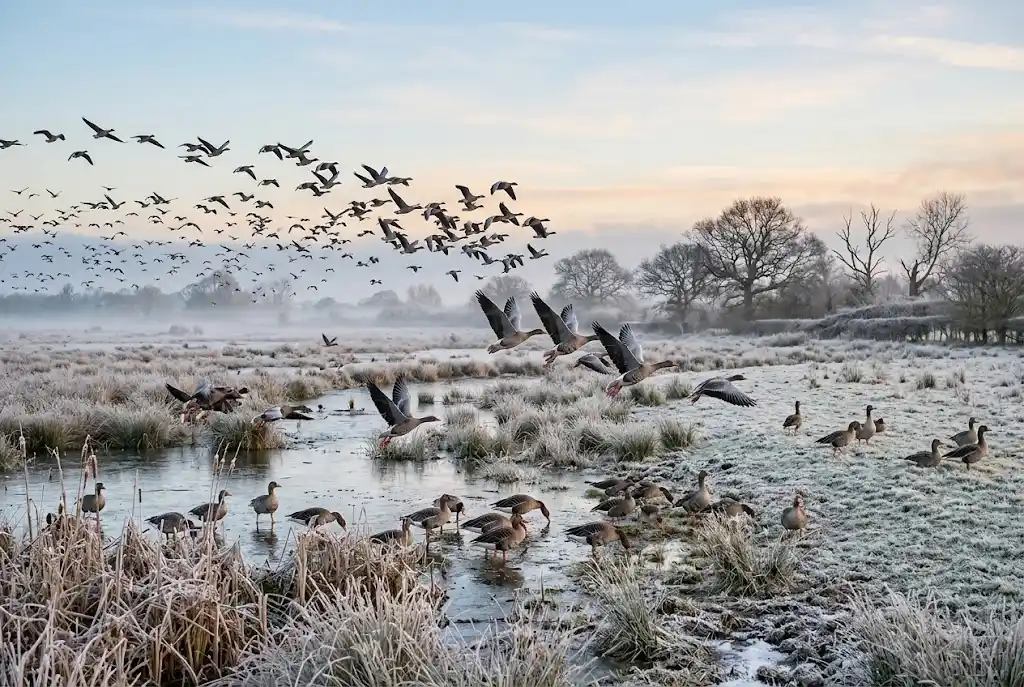
Winter with animals can reveal some of the most fascinating behaviour in British wildlife. As temperatures fall and daylight hours become shorter, animals must adapt to changing food supplies, colder conditions and more challenging habitats. Some migrate, some hibernate, while others remain active throughout the season and rely on stored energy, shelter or behavioural changes to survive.
For wildlife watchers, winter can therefore be an excellent time to observe species that may be less obvious during the warmer months. From visiting waterbirds and migrating geese to familiar garden birds searching for food, seasonal changes can completely alter what you see outdoors.
Winter With Animals: What Changes in the UK?
Winter creates several challenges for wildlife. Plants may stop growing, insects become less active and some food sources become difficult to find. At the same time, cold temperatures increase the amount of energy many animals need simply to maintain their body temperature.
Wild animals respond in different ways. Some species move to areas where food is more readily available. Others change their diet, reduce unnecessary activity or seek sheltered places to conserve energy.
Birds are particularly interesting because the UK’s winter wildlife can include both resident species and seasonal visitors. A species that breeds elsewhere may arrive in Britain during the colder months, while birds that remain here throughout the year may become more visible as vegetation dies back.
Geese Migration and Seasonal Movement
Geese migration is one of the most impressive examples of seasonal wildlife movement in Britain. Several goose species arrive in the UK during autumn after travelling from northern breeding grounds, particularly areas of Iceland, Greenland and northern Europe.
Large flocks can gather on wetlands, estuaries, farmland and coastal habitats. Their numbers and distribution can change throughout the winter as birds move between feeding and roosting sites.
Species such as Pink-footed Geese are particularly associated with winter movements into Britain. Large gatherings can provide spectacular wildlife-watching opportunities, especially when thousands of birds are feeding or flying together.
Migration allows these birds to take advantage of seasonal differences in food availability. Instead of remaining in areas where winter conditions may make survival difficult, they travel to regions that provide more suitable feeding opportunities.
British Geese Migration: Why Do Geese Travel?
British geese migration is closely connected to food, weather and breeding conditions. Many geese spend the summer in northern regions where long daylight hours provide excellent conditions for breeding and raising young.
As winter approaches, temperatures fall and food becomes harder to obtain in those northern habitats. Moving south allows the birds to exploit areas where suitable food remains available during the colder months.
The journey can be energetically demanding, so geese need to build up energy reserves before and during migration. Once they reach Britain, rich agricultural fields and wetlands can provide valuable feeding areas.
Weather can influence migration timing and movement. Strong winds, temperature changes and other conditions may affect when birds travel and where they stop.
Migration of Geese UK: Where Can You See Them?
The migration of geese UK wildlife watchers observe can be particularly impressive around wetlands, estuaries and coastal areas. However, geese may also gather on agricultural land where suitable feeding opportunities are available.
Some locations become important wintering areas because they offer a combination of food, water and safe roosting sites. Protected wetlands can therefore play an important role in supporting migratory populations.
When watching geese, distance is important. Large flocks can be sensitive to disturbance, particularly around feeding and roosting areas. Binoculars or a spotting scope allow you to observe birds without approaching too closely.
Why Do Some Birds Stay in Britain?
Not every bird migrates away from or into Britain during winter. Many familiar species remain resident throughout the year because they can find sufficient food and shelter in the UK’s changing landscape.
Woodpigeons, Blackbirds, Robins and several species of tits are examples of birds that can remain active through winter. Their behaviour may change, however, as they respond to shorter days and reduced food availability.
Some birds become easier to notice because deciduous trees lose their leaves. A species that spends summer hidden among dense foliage may become much more visible during the winter months.
Understanding this difference between resident and migratory birds can make seasonal birdwatching much more rewarding. Our guide to common birds in the UK provides a useful starting point for identifying familiar species.
Birds in the Garden During Winter
Birds in the garden can become especially interesting during winter. Natural food sources may be less abundant, encouraging birds to spend more time searching for accessible food in gardens and parks.
Robins, Blackbirds, Blue Tits, Great Tits, finches and other garden visitors may be seen feeding throughout the day. Different species use different parts of the garden, so observing where birds feed can provide clues about their behaviour.
Ground-feeding species may search beneath shrubs or on lawns, while tits often investigate trees and bushes for insects, seeds and other food. Woodpigeons can feed openly on lawns and other areas with accessible vegetation.
If you choose to feed garden birds, consistency and hygiene are important. Food should be provided responsibly, feeding areas should be cleaned regularly and fresh water should be available where possible.
How Birds Stay Warm in Winter
Birds have several natural adaptations that help them cope with cold weather. Their feathers provide insulation by trapping layers of air close to the body. Birds can also fluff their feathers, increasing the insulating layer around them.
Many species spend more time feeding during daylight hours because maintaining body temperature requires energy. At night, birds may seek sheltered roosting places that reduce exposure to wind and cold.
Small birds face particular challenges because they have relatively high energy requirements compared with their body size. Access to reliable food can therefore be especially important during prolonged cold weather.
What Happens to Insects and Other Small Animals?
Winter does not affect every animal in the same way. Many insects become inactive or spend the colder months in protected stages of their life cycle. Others may shelter beneath leaves, inside vegetation or in soil.
Some mammals also reduce activity during periods of cold weather. Hibernation is one strategy, although true hibernation is different from simply sleeping for long periods or remaining inactive.
Amphibians and reptiles can become much less active as temperatures fall because their body temperature is strongly influenced by their surroundings. This means that wildlife encounters can look very different from those experienced during spring and summer.
How Mammals Cope With Cold Weather
Mammals use a range of strategies to survive winter. Some grow thicker coats, while others rely on food stores accumulated earlier in the year. Changes in activity patterns can also help conserve energy.
Squirrels provide a familiar example. Rather than hibernating like some other mammals, they remain active and rely partly on food they have stored. Their behaviour can therefore be observed throughout the winter.
Understanding feeding behaviour can help explain seasonal wildlife patterns. For example, learning what squirrels eat provides useful context for understanding why they spend time searching for particular foods and storing resources.
Do All Animals Hibernate?
No. Hibernation is only one of many survival strategies used by wildlife. Some animals remain active, some enter periods of torpor and others migrate to different regions.
This distinction matters because animals that appear inactive are not necessarily hibernating. An animal may simply reduce its activity because food is scarce or temperatures are low.
Different species have evolved different responses based on their physiology, habitat and food sources. There is no single winter strategy that applies to all British wildlife.
Winter Habitats Provide Important Shelter
Habitat quality becomes particularly important during winter. Hedgerows, woodland, reedbeds, dense shrubs and mature trees can provide shelter from wind and rain as well as opportunities to find food.
Wetlands are particularly valuable for waterbirds because they can provide feeding and roosting areas. Coastal habitats can also support large numbers of wintering birds.
Leaving some natural vegetation standing can benefit wildlife. Fallen leaves, dead stems, seed heads and dense vegetation can provide shelter and food for insects and other small creatures, which in turn support birds and other animals.
How Winter Affects Wildlife Behaviour
Seasonal changes can alter almost every aspect of an animal’s routine. Feeding may take priority over other activities because energy becomes more difficult to obtain. Social behaviour can also change as animals gather together or defend valuable food sources.
Birds may spend more time feeding during the limited daylight available. Mammals may alter their activity times, while migratory species may arrive or depart according to environmental conditions.
These changes make winter an excellent season for observing behaviour rather than simply identifying species. Pay attention to where animals go, when they become active and how they interact with their surroundings.
How to Watch Winter Wildlife Responsibly
Winter wildlife watching should always prioritise the welfare of animals. Cold weather can already place additional pressure on wildlife, so unnecessary disturbance can make survival more difficult.
- Keep a respectful distance from birds and mammals.
- Use binoculars rather than approaching wildlife closely.
- Avoid disturbing roosting or feeding sites.
- Keep dogs under control around sensitive habitats.
- Follow local access restrictions and conservation guidance.
- Do not attempt to handle wild animals.
- Keep feeding areas clean if you provide food for garden birds.
Quiet observation is often the most rewarding approach. Wildlife that appears cautious may behave naturally when people give it enough space.
Why Winter Is an Important Time for Wildlife
Winter can seem like a quiet season, but Britain’s countryside remains full of ecological activity. Migrating geese arrive, resident birds continue searching for food, mammals adapt their routines and many smaller animals shelter until conditions improve.
For wildlife enthusiasts, this creates opportunities to see behaviour that may be difficult to observe at other times of year. Large goose flocks, wintering waders and active garden birds can all provide fascinating encounters.
It is also a reminder that seasonal changes affect entire ecosystems. When plants, insects and other food sources change, animals higher up the food chain must respond as well.
Final Thoughts on Winter With Animals
Winter with animals is a story of adaptation. Some species migrate thousands of miles, while others remain close to where they were born. Birds may alter their feeding routines, mammals may conserve energy and smaller creatures may retreat into sheltered habitats.
Geese migration is one of the clearest examples of this seasonal transformation, while garden birds demonstrate how resident wildlife continues to cope with changing conditions close to our homes.
Next time you step outside on a cold winter day, look beyond the apparent quietness of the landscape. The UK’s wildlife is still active, but many species are following strategies that help them survive until spring.
For further information about wild birds and their seasonal behaviour, the RSPB’s birds and wildlife resources provide authoritative guidance on British species, habitats and conservation.

2 Comments
Pingback: Interesting Facts About Birds: 25 UK Wildlife Facts
Pingback: Common Birds in UK: A Guide to British Bird Identification